Giorgio Gomelsky is Dead.

This was a big week for deaths. David Bowie, of course, but also baseball great Monte Irvin, terrific actor Alan Rickman, and scroogie throwing Luis Arroyo, whose best season was the year I totally fell in love with baseball. Which is, I think, why I said, oh no, when he showed up in the obits.

Screenshot 2016-01-16 00.00.41Giorgio Gomelsky was in those same pages today, and you can read William Grimes’ excellent obit for him here. I bring nothing to this except the desire to highlight a few facts and link to a few of the many odd bands that Gomelsky worked with over the years.

The biggest ones were the Rolling Stones. He gave them their first paying gig at the Crawdaddy Club. They each took home almost a buck, which is better than many bands today. Jagger’s School of Economics savvy kicks in for sure.

But he lost the Stones to the droogie Andrew Loog Oldham, so he signed up the Yardbirds. Well done!

One of the cool details from Giorgio’s life is that he was born on a boat going from Odessa, Ukraine, to Genoa, Italy.

Google maps does not offer a boat option for transportation, but this is not an easy trip.

Screenshot 2016-01-16 00.11.31

The most surprising fact in Giorgio’s obit is that he gave Eric Clapton the Slowhand nickname.

I had always assumed that it was because Clapton is so dexterous that he made fast playing look slow. That’s what I thought. But no!

Here’s the real story, from Grimes’ obit:

“Mr. Gomelsky also gave Eric Clapton, the group’s original lead guitarist, his nickname. Mr. Clapton told The Daily Mail in 2013: “I used light-gauge strings, with a very thin first string, which made it easier to bend the notes, and it was not uncommon, during frenetic bits of playing, for me to break at least one string, While I was changing my strings, the audience would often break into a slow hand clap, inspiring Giorgio to dream up the nickname of Slowhand Clapton.””

Incredible, no? To me, yes.

But Giorgio went on to better things. I’m sorry that I had no idea about his Tonka Wonka Mondays at Tramps. Brave mix ups of rock and jazz musicians willing to jam should have been a natural for me, but I missed it. This was the bar/club that gave Buster Poindexter a regular showcase, and where I got to see Big Joe Turner live, huger in some ways than seeing the Stones in ’73 at the Garden.

But I digress. The cool thing about Gomelsky, at least according to his own words in his obit, is that he had no eye on a music career, but merely wanted to make things right. I like that impulse.

Here’s a few clips from folks he worked with. But read the obit. I wish more lives like his were memorialized.

This clip is really great. I’m posting more Magma soon. Wow.

Fred Frith’s band, Henry Cow, covers a Phil Ochs song.


HANZ KRYPT: Real Remnants

Hanz Krypt (or HANZ KRYPT) is rockremnants.com.

These guys had big ambitions in the mid 80s, and snagged the lead vocalist from Vermin. The future was written.

Things didn’t work out that way. They’ve posted their elpee on YouTube and it isn’t totally outlandish to call them the American Black Sabbath. That’s how good they sound.

Here’s their YouTube bio:

The band Hanz Krypt was formed in 1984 by bass player Mark Hayes and guitarist Phil Pedritti along with Larry Farkus on guitar. They were soon joined by vocalist Vincent Farrentino who left the band Vermin to join Hanz Krypt. Hanz Krypt has been called the American Black Sabbath. Although they do have a doom and gloom sound, they really sound like no one else.
The band performed throughout Southern California opening for such major acts as Foghat, Robin Trower, and Slayer. Along the way built a strong following and were friends with Metallica, Slayer, and Saint Vitus. Now 20 years later the band has reunited with all original members. The band is set to record a new CD and tour throughout the world. Hanz Krypt look forward to a very exciting new year please check us on Facebook and Youtube.

On the other hand, their most popular song, Rainbow Goblins, isn’t a hit by any means. And the sound of their album isn’t that good. On the other other hand, it sounds pretty rockin’. And I love the stills that make up the video.

The better story here is that a band of rockers, in 1984-1986, find themselves 30 years later, commenting on YouTube about all the hot new stuff they’re going to release. Bring it on!

I don’t mention this to mock their commitment, though objectively it is probably misguided, but to celebrate their sound and embrace of the rock. I love finding a band like Hanz Krypt, a band with history and a big sound, then learning more about those who love them and their sound.

More live video please, Mr. Hanz.


Patti Smith, M Train and Radar Love

(click the image to go to the book’s Amazon page)

This is a lovely book, a meditation on creation and loss, a travelogue that takes us on pilgrimages around the world and through Patti Smith’s mind, and an oblique and moving portrait, in the shadows mostly, of Fred Sonic Smith, her mourned late husband.

I came to Smith sharing many of her enthusiasms. I read Burroughs and Ginsberg and Rimbaud in high school, and Sylvia Plath and Genet in college. I loved Jackson Pollock and Diego Rivera and Frida Kahlo, too, before I encountered Smith, though perhaps not as much as Smith has. But I’m sure that’s the connection I made when I heard Horses for the first time, in a book/record store in San Francisco. It was so moving and the sense of this thing happening in New York back then so strong, that I immediately began plotting a way back east.

Which is to say, this book is written for me. It isn’t a music book, barely qualifies as autobiography in more than the sketchiest way. It has lots of funny details, many about cups of coffee, and floats many helpful ideas about connection and community and personal commitment to art, to people, to neighbors, that should resonate for any reader who wades in. But these thoughts come in a poetic, digressive way, the result of a series of trips she makes, not chronologically, to maintain her connections with her spirits around the world.

Fred Sonic Smith, Patti Smith tells us, was a baseball fan. He’d been scouted by his beloved Tigers as a shortstop. “He had a great arm,” she says, “but chose to use it as a guitarist, yet his love for the game never diminished.”

She and Fred bought a decrepit boat with the intent to fix it up, Fred loved boats, and they would sit on it listening to the Tigers games, she with a thermos of coffee, he with a six pack of Budweiser. If there was a rain delay, she notes, they would listen to Coltrane, but if the game were rained out they would switch to Beethoven. Huh?

Baseball writing is not Patti Smith’s forte and the sequence ends with her misspelling Denny McLain’s name, but all credit to her for trying.

There is a great scene in which, because she’s in Reykjavik, she arranges to photograph the chess table used during the 1972 Bobby Fischer/Boris Spassky match. She then receives a call from Fischer’s bodyguard on Fischer’s behalf. He would like to meet at midnight. At first they spar, he insults her, she insults him back, but by they end they’re drunk and singing Buddy Holly songs together like old comrades. (I almost spelled Fischer’s name wrong.)

There’s a lovely scene I wanted to quote in whole, just because it gives such a good sense of this book’s charms, but apparently I didn’t dogear the page and I can’t find it. The scene is simple. The Smiths go on holiday, maybe to the Upper Peninsula, and stay in a cabin. In the cabin they find a record player, open the lid and there is a record on the turntable. It is the only record they have, so they spend their holiday playing a whole lotta Radar Love. Must have been the offseason.


Pink Fairies, The Snake

There was amazing music being made in the early 70s.

Bands were finding ways to synthesize (or touch on) the blues, popular 60s rock, the progressive scene, plus all the soul and r and b that everyone actually loved.

Plus acid. And Lemmy started Motorhead with guys from Pink Fairies, after he was kicked out of Hawkwind.

Pink Fairies were never hitmakers, but they were consummate synthesizers. They made 12 minute prog rock songs and helped invent punk. I admire them hugely. Every song isn’t boss, but every sound is in the groove. Here’s a good one:

Oh, and happy new year! I hope it’s a good one for us all.

Plus, rock bonus: This is the sound that the Pretenders used for Tattooed Love Boys and Boots of Chinese Plastic. Are there others?

Old Rock

I got to thinking about this small but fun band I followed in the Village back in the 70s tonight. The Fleshtones.

Good name! I Google and I get endless videos of the Fleshtones making a living in France, like Jerry Lewis.

But this is what this band looked like when they were young.

Back To School, The Amen Break

My friend Julie sent me this post from Open Culture about the Amen Break.

What is the Amen Break? It started out as a drum break on a b-side of a 45 by a R&B band called the Winstons, performed by GC Coleman. The a-side won a grammy for best R+B song that year. The b-side became the most sampled six seconds in music history. The link above has the whole story, and it’s long and worth it, I think.

At least that’s the sell here. The video is fun and scholarly about sampling. The influence of the Amen Break is more on hip hop, it seems, and UK street styles that have too many qualifying names to remember, but have to do with drum and bass.

I’m sympathetic to Mr. Reynold’s analysis about current copyright law, but he doesn’t do a great job of selling that part of the story. But who cares?

For me, the cool idea is that a drummer in a band in 1969 created a sound that crawled through all of our culture, and became classic. And we know it.

Here’s the original of Color Him Father, which is awfully sweet.


John Lennon is Dead.

We know that. He died upteen years ago tonight. I was at a theatrical production called In Praise of Wine, with my friend Helen, and I praised wine too heartily. As we were leaving the theater we learned that Lennon had been killed. It was terrible, and then I went to sleep.

In the ensuing days it was hard not to troll the Lennon mourners. We thought they were sentimental, and they didn’t care about us at all. Drinks were thrown.

And I’m pretty sure that nothing constructive happened. Except maybe we all, even the most hippieish, thought that Imagine was treacle.

Which is why, on this anniversary, I land on Instant Karma. It’s an insistent song, but the words are as limp as those of Imagine or Revolution. It seems to be the tune that the rockarazzi have settled on as John’s legacy. Whatever.

But it really isn’t that good a song. It’s a slow slog through angry retribution, and while I would hope it introduced the concept of Instant Karma to the world, Google instant karma and you see no John Lennon song for pages, the world has passed it by.

Which leads me to the 45 I bought when the Beatles broke up. It’s meta to a fault, but it’s way more fun than Instant Karma or Imagine or How Do You Sleep, the songs that make me regret poor John.

Okay, a little more fun, because of the beat.

OBIT: Holly Woodlawn

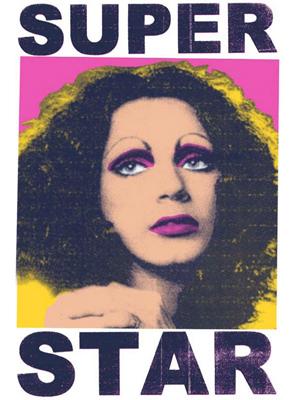
holly_1Holly Woodlawn was a movie star back when I was in high school. She was on the cover of the Rolling Stone, an amazing picture I can’t find, but one that certainly mixed up a young person’s head about the possibilities in this world.

When I was in high school we ate up Paul Morrisey’s trashy movies, Flesh and Heat, Dracula and Frankenstein 3D, some of which starred Holly Woodlawn.

When I heard that she’d passed yesterday I recalled the long and ridiculous dialogues she and Joe Dellasandro had in Trash, Holly’s nasal insistence the opposite of glamorous, but at the same time so full of its own sense of value, so real, that it also felt brave and heartening and hugely personal.

Vincent Canby got it right in his review of Trash in the New York Times:

“Holly Woodlawn, especially, is something to behold,” Vincent Canby wrote in his review for The New York Times, “a comic book Mother Courage who fancies herself as Marlene Dietrich but sounds more often like Phil Silvers.”

Which is why her place in rock ‘n’ roll history is cemented by these lines:

Holly came from Miami F-L-A,

Hitchhiked her way across the U.S.A.,

Plucked her eyebrows on the way,

Shaved her legs and then he was a she.

She says Hey babe,

Take a walk on the wild side

Said hey honey

Take a walk on the wild side.

You can read her New York Times obit here. The Rolling Stone obit is here.


LINK: Casio MT-40 and sleng teng riddim

casiomt40magshotSeems this simple Casio keyboard contained a preset rhythm track that, some claimed was derived from Eddie Cochran’s Somethin’ Else, or maybe the Sex Pistol’s Anarchy in the UK.

The writer tracks down the musician (a reggae fan) who created it, in 1981, as a rock track, and puts together a long and twisted history of how this single preset ended up being used in hundreds of reggae tunes.

And, it turns out, it was based on a rock song from the 70s, but not Anarchy in the UK. Which one?

Jet Boy Jet Girl Update

With Peter magazining and Gene and Lawr temporarily AWOL, I figured I’d do my part.

Since we discussed this a little a week or two ago, I did a google on “Jet Boy Jet Girl.” It led me to this Damned version (had never heard it before) and the Wiki listing, which told me:

a) this song was covered by many, including Sonic Youth,

b) its plot line about a young boy who has an affair with an older man only to get dumped for a woman, resonated with many young fellows.

The Damned version sounds kind of shitty at first, but grows on you if you let it play all the way through. Strange to say, but it’s kind of subtle compared to the original Elton Motello version. Plus Brian James looks like an exploded pineapple.