There was a period in my life when I often wrote the words to a song by the Yachts on bathroom walls.
“I wouldn’t climb any mountain for you
Ford every stream
That’s a daft thing to do
Because I’m cynical cynical cynical
Through and through.”
That’s a clever but obvious turn on Climb Every Mountain, but is it worth the effort? Almost certainly not.
In hindsight, for any graffiti I wrote, I was an ass.
From the current perspective, this is a pretty weak new wave song with a cleverly cynical lyric (and energetic Farfisa organ). I loved this song enough to write it on bathroom walls. That doesn’t reflect well on me.
Some time back Lawr wrote about the producer T-Bone Burnett, who produced Counting Crows’ first album, August and Everything After. That led me to tell a story about hearing a song on the radio, ordering the cassette, and then to my surprise discovering that I didn’t like the record at all. I don’t think I told that I took my copy and sent it to my brother in law, which he appreciated. He became a fan, as did much of a broad swath of America. A story that ran in Grantland recently says 7 million bought August and Everything After.
He really likes Counting Crows, finds Adam Duritz to be a compelling lyricist and performer and song craftsman, and he lays out a really interesting case about why Nirvana and Counting Crows are looked at now, 20 years on, so differently (and it isn’t just that one depressive songwriter shot himself and the other depressive songwriter numbed himself with medicines). The piece is a little long, and has those cute/dangerous/irksome footnotes that Grantland is known for, but I’ll let you read Hyden’s story for his explanation of the nature of sad songs, which I think is very smart and on first thought at least, right.
But I’m pretty sure he’s not right about the equivalence he makes between In Utero and August sonically. I mean, maybe some Alternative Radio stations played both, it’s possible, but these two records couldn’t be less alike in terms of their approach to music.
In Utero is a rock record with some quiet songs, while August is a poet’s record, with a jazz/folk rock accompaniment. The difference shows up most clearly in the relationship between the words and the music. Cobain and Nirvana seem to build the sound, the arrangement first, then figure out how to fit the words inside. I’m not saying this is exactly how they do it always, and it isn’t that Cobain doesn’t care about the words, but listening to Nirvana the words are always set inside the sound. Have a listen to one of the band’s quiet songs:
Adam Duritz, on the other hand, surely concocts his story songs on long pieces of paper, maybe typing madly a la Jack Kerouac and his rolls of On the Road. He’s not logorrheic, he’s a poet getting the story down, but his talent is weaving together long shaggy dog stories full of emotionally hurt people doing their best, subject to digressions and qualifications and an occasional hook. That’s the start, and it is hard to listen to a Counting Crows song’ and hear a song, per se, except for the one that is in Duritz’s vocals. Apart from that, the band does a nice job filling in around the edges, but the center of the songs are the words, not the sounds of music.
I’m not sure that this is always a weakness, but it doesn’t help if you find Duritz to be a tiresome voice. As I do. Without chops and musical drive, you keep landing on his quavery whine. But that’s a personal taste. Steven Hyden hears in Counting Crows’ songs emotions and connections that are rarely explored by rock bands, as he discusses in the article, and he finds that valuable. That’s his choice and he’s welcome to it.
I posted earlier today a short bit about the new Clash box set of remastered albums, with a bunch of video, and then I came across this history of the Clash video, which I think came out today on Google Play. I’ve watched part one and it’s quite direct and nice to hear the band tell their story, plus there’re a lot of good clips. There are five parts, here’s a link to part one:
1) If I’d have heard this back then when I was nine, I’d likely be dead or in jail now.
2) Give me some of whatever Wayne Kramer is on.
3) Kramer’s second guitar solo is probably my favorite cliche rock solo riff of all-time. If every guitar solo had those arpeggios in it, I wouldn’t mind. For you youngsters out there, learn that technique and you will instantly sound HOT!!!
There has been a lot of banter among us about what really constitutes rock ‘n’ roll.
For those of us who have contributed to the site–as well I suspect to those who have been kind enough to read us–we all have our interpretations and definitions of the musical form that ushered our generation into control of the various airwaves.
For certainly no matter what else be said, when Led Zeppelin and Steppenwolf and even the Beatles Revolution are the sound backing mainstream TV commercials (for the cynics, note that Joni Mitchell has never let a song of hers be used for advertising purposes) then the influence of rock in our culture simply cannot be denied.
But, it has struck me with the first challenge tunes going back to the very early days of the genre Alan Freed so aptly named, the real soul of the music belongs to the African American community.
Not that I am the first to note this, but when we do talk about the music and its roots, and what it really means, Bill Haley always gets a nod. And, that is fine for Haley was a trendsetter, and had a great band and deserves some respect there.
But really it was Shake, Rattle, and Roll, recorded in February of 1954 by Big Joe Turner, five months before Bill Haley covered the same tune and three months before Rock Around the Clock was recorded and released, that probably owns the title of the breakthrough song pushing the then new form to the masses.
Of course, what cannot be denied is that irrespective of the quality of either version of Shake, Rattle, and Roll, it is the Haley version that got the ink and reaction and coverage in those days. It was also a much bigger hit, as was his cover of Rock Around the Clock.
However, it is important to remember the context of why, and the large reason Haley enjoyed more success than his African American counterparts was that in 1954, the civil rights movement was still in its infancy.
So, aside from the fact that Haley reached a bigger market, white America’s attitude to the African American community was such that music, styles, food, hell virtually anything from the rich culture that emerged from slavery, and to a large degree out of the notion that necessity is the mother of invention (guess whose band grabbed at that one?) was driven by evil dark forces.
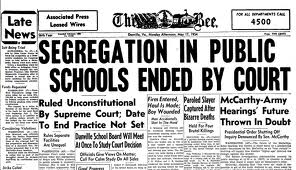
It was in May of 1954, that the Brown v. The Board of Education case declared that segregation, and the notion of “separate but equal” was unconstitutional. And, that decision, was 15 months before Rosa Parks and her dog tired dogs, after a hard day of work, refused to step to the back of the bus.
Even with that, it was seven more years until James Meredith was granted admission to the University of Mississippi, the first African American to gain entrance to that institution, and one that met with a fair amount of violence at the time (I still remember reading the headlines, and not being able to understand who cared who went to what school as a then nine-year old). Mind you, that was almost a decade after segregation was ruled unconstitutional.
But, as with Pat Buchanan, inexplicably announcing before his dismissal from MSNBC a few years ago that America was built on the backs of white people, the real grunt work of the country–and like it or not, our current music scene–can completely be owned by that same African American community in the same sense that the Egyptians or the Romans can take credit for their great civilizations, but the building of the cities and the pyramids was completed by slaves.
And, while I can give that respect to Haley, for example, I can give none to Pat Boone for bastardizing the true rock ‘n’ roll of Little Richard. For, Richard, and Chuck Berry come as true to defining the form for me as anyone (and the truth is, it would not matter to me if they were pink Martians, they still rocked the shit out of what Boone and his ilk turned into pablum).
For Boone’s treatment of Little Richard was sanitized out of the fearfulness that the African American community–particularly their men–simply wanted to get white women drunk and/or stoned and then have sex with them, using music as part of the means to that end. And, if that sounds outrageous, try reading Daniel Okrent’s excellent narrative on Prohibition, Last Call: The Rise and Fall of Prohibition. (Also remember that the Volstead Act was repealed barely 20 years before the Brown V. the Board of Education decision.)
In fact, in reviewing Okrent’s tome to that troubled period in our history, Publisher’s Weekly notes that ” He unearths many sadly forgotten characters from the war over drink—and readers will be surprised to learn how that fight cut across today’s ideological lines. Progressives and suffragists made common cause with the Ku Klux Klan—which in turn supported a woman’s right to vote—to pass Prohibition.”
If you wonder about this, here is a vid of Boone’s treatment of Tutti Fruitti:
And, now, here is the man, Little Richard showing us exactly how it should be done:
But, essentially the blues form, and rhythm and blues, and Motown, can all be looked to as the seeds of modern rock and pop whether anyone likes it or not, for virtually all modern rock ‘n’ roll stems from that 1/4/5 chord motif that the blues presented.
Further, if you look to the British wave of music, that followed Haley and Richard by ten years, the bands who made a difference–The Beatles, The Who, The Stones, for example–all cut their early chops playing a heavy dose of Motown and Soul music.
In fact, it really was that amalgamation of American rhythm and blues and the Noel Coward sort of tin pan alley that formed the essence of the Brit-pop that invaded America and changed the musical scene around the world forever.
Oddly, despite now being almost 60 years beyond Brown V. the Board of Education and Shake, Rattle, and Roll being released, we are still essentially fighting the same stupid fights, with laws about immigration and diversity (which are the essence of America’s success) and voting rights.
It is easy to get sanctimonious about all of this, but, at the end of the day, as noted by another great freedom fighter, Mohandas Gandhi, “in the end, the truth is still the truth.”
Long live Chuck, Richard, Turner and rock! They started it all (with a little help from their friends).
My site mate Mike Salfino really touched on a subject so near and dear to my heart with his piece on listening to the radio–and pretty much only the radio–during his time in Southern California in the early 70’s, that it really spurred me on to state just how much I love the radio.
Say what you will about cable and streaming and dish and CDs and downloads and instant gratification: I come from time where no one had to walk six miles to school through a driving snow storm. My version of childhood deprivation is that we only had three TV stations in the Sacramento Valley (four in the Bay Area) and as a kid, local radio was AM only.
Since it was the universe in which we lived, we did not think much of it. FM was as odd and obscure as was cable TV, when it was offered at hotels a few years later for an extra charge.
But, whatever you wanted was out there on AM at the time. In Sacramento KROY was the station in the early 60’s, and though I hungered for time in Berkeley–which meant decent bookstores, and extra TV station that showed Dodger/Giants games, and much better radio–with my grandparents while I was too young to move back to the Bay Area, there were some ok things about what I now refer to as “excremento.”
The main was the original Tower Records store, about 3.5 miles from our home, which seemed to make for a formidable bicycle ride for an eight-year old (don’t ask me, no one wore helmets then, bikes had maybe three speeds, and if you wanted to ride your bike to the record store, yay, we were out of the house for three to four hours) in 1960-61.
Tower was a treasure trove, though, with listening booths and stacks of current stuff and oldies, and since part of the deal was to build a record collection, it was not out of the question to buy “The Wa-Watusi” as an oldie, as it was “The End of the World” as a current hit.
It was the radio that was our salvation, bringing the new, and to me the rockin’ and the loudest, inhabiting my every pore and cell so infectiously that I was almost paralyzed when I heard a song that sent me.
At night we could often draw in the cool Bay Area stations–KYA and KEWB–which somehow seemed to waste the local stuff in its sophistication, something I seemed able to discern that early in my years (I was also always drawn to The New Yorker at the Dr.’s office for some reason, and I don’t ever remember anyone suggesting I read it).
At the time–before I realized I had a contrary streak in me–I was also a Dodgers fan in Northern California, and sometimes I could adjust my radio against the evening sky and pull in KFI, 50,000 watts over Los Angeles, and hear Vin Scully and Jerry Doggett anounce my beloved team (sponsored by Farmer John and Union 76).
Before clock radios, and bedroom stereos, though, I would go to sleep, seemingly surgically attached to my transistor which was stashed neatly under my pillow, full volume, so I could hear it through the down feathers upon which my head rested.
Then, magically, as those same stereos and clock radios became more mainstream, so did FM radio, and San Francisco debuted the first free form station–KMPX–started by two ex-KYA jocks, Tom Donahue and Jim Washburn.
Within a year or so there were political issues at KMPX, so Donahue fled and started KSAN, right around the time I moved back to the Bay Area for good in 1972 (that station lasted until around 1983).
Much like listening to my shuffle, though, it was great. I will never forget a set that featured a movement from Swan Lake, Brother Jug by Gene Ammons, Chelsea Morning by Joni Mitchell, and She Said Yeah by the Stones.
All so different, and yet all so great, and none of it disrupted by commercials or any of that crap.
To this day, listening to radio like that–be it music, or especially baseball which still translates so beautifully via the radio medium–is and will always be my favorite.
I don’t really do Sirius/XM, or even play CD’s much any more.
But, there is something so right and intimate about listening to the radio, hearing a familiar voice describing a 53 ground out, or telling us about a new Jake Bugg tune.
So, I must share the station I have been listening to for almost the last year: KTKE, 101.5 in tiny Truckee, California (population around 10,000).
Truckee is about 40 miles southwest of Reno, and about 20 miles from the North Shore of Lake Tahoe, and as we have some property in Soda Springs–about ten miles east of Truckee–I simply discovered the station by accident, surfing through the car radio dial looking for any signs of intelligent programming.
When I found KTKE, though, it was paydirt.
To give an example of the breadth of what they play, here are the last ten tunes they list on the live stream that showed as I write:
Time to Move On (Tom Petty)
Further On (Bronze Radio Return)
Radio Girl (John Hiatt)
Vaporize (Broken Bells)
They Told Me (Sallie Ford and the Sound Outside)
Smile Happy (War)
Louie Louie (Black Flag)
I’m Shakin’ (Jack White)
Sugar Craft (Medeski Martin and Wood)
When You Were Young (Killers)
I admit, I don’t know Medeski Martin and Wood, nor Bronze Radio Return, and I could do without the Killers, but War, John Hiatt, Black Flag, Jack White, Tom Petty, and Sallie Ford all in the same set?
And, that is pretty much why I gave up tracking the news all day, or simply listening to my shuffle, as I love streaming KTKE, hearing the funky commercials from the Tahoe area (like Smokey’s Cafe and Burger Me) and the great playlist of new and old from really good and personable jocks (whom I also feel like I know).
Mostly, I love this though because I really do love listening to the radio.
Just traveled to California and drove up and down Laurel Canyon and thought not only about Joni Mitchell, who has been such a source of controversy here, mostly backstage, but my love of music very generally and where it began.
In 1972, my mother moved us (parents were divorced) to the Mojave Desert — Yucca Valley, CA. Geologically and geographically different from Laurel Canyon, yet sharing that same artsy vibe (only the poor artists live in the desert).
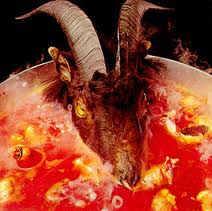
The people we hung with, the new friends and relatives, aunts and uncles I hardly knew, were mostly listening to that Canyon music — Mitchell, Carole King, Carly Simon, Todd Rundgren, Crosby, Stills, Nash & Young, Linda Ronstadt, Jackson Browne, Seals and Crofts and, of course, some non-California acts like the Rolling Stones. (I especially remember the hours I spent staring at Goats Head Soup’s cover and how horrified I was of the image of that soup where, now, what’s truly horrifying about that album is how it marked the beginning of the end of the greatest Rock and Roll Band in the world.)
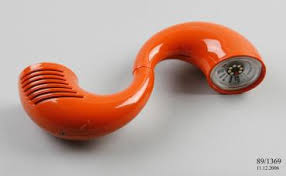
At gatherings, the adults provided the soundtrack. But back home, in my room, lying on my waterbed, the radio was the only free form of entertainment I had. The scoops of ice cream cost $.05 cents at Thrifty’s and I think the occasional drive-in was $5 per car. I was before and am again now a TV junkie. But I never even saw a TV at any adult’s house. Not only was it looked down upon, but there was no reception in the high desert. Yet I still stubbornly spent many hours the first few weeks, maybe even few months, trying to get some signal from the black and white set I badgered my mother into bringing west. Alas, there were only faint ghosts of images, and only at night — nothing remotely watchable or even listenable. (Yes, I would have given anything to even LISTEN to TV.) So all that was left for me was my transistor radio — this model, I swear.
Only the Hits station came in. I can’t say if that period was particularly good for music — that would be like asking the starving man to rate the hamburger you just gave him. But 1972’s top 100.it sure seemed good to me.
I loved “American Pie,” it was the first time I really noticed dramatic changes in sound within one song. And it was the first song where I really paid attention to the lyrics. “Brand New Key” by Melanie was inescapable. I didn’t like it then or now. But another kitschy song, “The Lion Sleeps Tonight” was pure childhood delight for me. I loved “Alone Again (Naturally),” oblivious to how sad it was. My love of soul music was forged here: “I Gotcha” by Joe Tex was most popular but I preferred Al Green’s “Let’s Stay Together,” “Lean on Me” by Bill Withers, “I’ll Take You There,” “Backstabbers,” “Oh Girl”…. I heard them all so many times that I may as well have owned the records (which nine year olds don’t buy even if they could afford to, which I couldn’t).
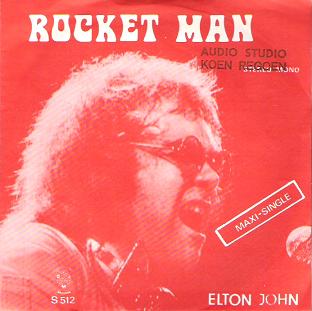
“Rocket Man” by Elton John sounded different from everything else, yet was so catchy and was the first time I heard one of those great Elton choruses that I grew to love so much. While I really liked more iconic, Rock Remnants-certified rockers like “Long Cool Woman in a Black Dress” by the Hollies, “Go All the Way” by the Raspberries and “Bang a Gong” by T-Rex, I had ample room in my juvenile musical palate for Cat Stevens’s “Morning Has Broken,” too. That was the first time I really noticed how beautiful a piano could sound. I could hardly afford to hate much when hating required me to turn off the radio and thus my only connection to the outside world. I looked for things I liked in everything I heard and if I really hated something, like Melanie, I had to tolerate it anyway and give it every chance to change my mind (as some songs did — like “Hocus Pocus” by Focus — learned to love the guitar riffs, still hated the yodeling.)
1973’s top 100 gave me “Me and Mrs. Jones” by Billy Paul, which seemed so grown up and off limits, but man, did I love it on those lonely desert nights while trying not too hard to go to sleep. But I also loved polar opposite songs like “Frankenstein” by Edgar Winter (Hocus Pocus without the yodeling!) and “Little Willy” by Sweet, which may as well have been The Archies to my ear. It was pure kid music, barely less silly than “The Monster Mash,” another 1973 hit. And about monsters! “Will It Go Round in Circles” by Billy Preston was a pleasure for me every time, as was “Superstition,” “Stuck in the Middle with You,” “Live and Let Die,” “Daniel,” “Superfly,” “Love Train,” “That Lady” and the also-so-grown-up “Wildflower” by Skylark. “Bad, Bad Leroy Brown” seemed like it was written just for nine-year-old boys and how could it be that this song inspired Freddie Mercury of all people? Music is such a wonderful chemistry experiment, a fact that comes into sharp relief when you can do nothing else but immerse yourself in it for two, long formative years.