I was having my monthly Skype conversation with my cousin Eve, and her husband Jim last Tuesday when they mentioned that the wonderful Ray Davies had been knighted.
Eve and Jim live in London, and Jim, in particular, is as huge a Kinks fan as am I, and Eve is not that far behind, I suspect.
So, I thought that alone was worth mentioning, but in deference to Coachella and what seems to be a lack of anything creative or new or interesting–at least to us–in the music world, I thought going back to this great Kinks cut from a vastly underrated Kinks album, Muswell Hillbilly was perfect.
I do think of all the songwriters to come out of the rock era, Ray was the cleverest lyricist and social critic while also being the Noel Coward of the last wave of pop tune-smiths, hence the knighthood is really appropriate.
As for Jim and my love for the Kinks, my grandmother’s house, on Holders Hill Road, was in Finchley, just up the road from Muswell Hill, so I always think if Granny and the Davies family being neighbors.
I was listening to the Bristol Sessions tonight. There was an open mike recording session in Bristol Tennessee on July 29, 1927, hosted by the Victor Talking Machine Company. They made record players, and wanted to make records.
Singers, songwriters, musicians from all over the south travelled for an opportunity to record their work and sell it. These were the beginning days of the record industry. The Carter Family and the Jimmie Rodgers recorded their first sides that day. That stuff is gold.
But the tune that caught my ear was a standard and classic murder ballad, Darling Cora, recorded by a guy named BF Shelton. This song is something of a banjo requirement, and it is irresistible because of its structure and chorus, but this early version does something wonderful and hypnotic with the sound. Singer and banjo, alone, play and sing with a hypnotic rhythm, and the banjo sounds like a trance instrument and chime, rather than a, well, banjo. That’s good. Check it out.
Although Shelton went on to record some other sides, the only surviving cuts of his are from the Bristol Sessions. So there is the chance that his lovely spectral banjo sound is an artifact of the recording process, but when you listen to another of his recordings that day, a less captivating song by spades, his picking is still pretty awesome. Here’s Oh, Molly Dear:
These old cuts bring so much extraneous noise they alienate us from the start, but when you dig in it is revelatory to find pickers and players who are rocking new sounds out of the traditional. Shelton is doing that for me. Which is why it excites me to listen to old stuff.
Today’s SotW will recognize another important milestone in Rock history – The Doors’ self-titled debut was released 50 years ago this month. Most rock fans agree that it is one of the best and most influential albums ever released.
In the summer of ’66 The Doors were “discovered” by Elektra Records producer Paul Rothchild during the band’s residency at LA’s Whiskey A-Go-Go. He was impressed with the rock and roll stew they concocted – Ray Manzarek’s classically influenced psychedelic keys, Robbie Krieger’s jazzy guitar runs, John Densmore’s Latin influenced drumming and, of course, Jim Morrison’s charismatic baritone vocals and poetic lyrics.
The SotW is the lead track, “Break on Through.”
“Break on Through” was the lead single from the album but flopped as it stalled at #126 on the singles chart. It wasn’t until an edited 3 minute version of “Light My Fire” (shortened from the 7 minute album cut) was released and reached #1 in the Summer of Love that people started to pay attention to The Doors and their album.
It is common knowledge that The Doors took their name is tribute to Aldous Huxley’s book The Doors of Perception – an essay documenting his experiences on mescaline. “Break on Through” then is the perfect salute to lead off The Doors’ classic album.
Check out the complete track list:
Break On Through (To The Other Side) 2:25
Soul Kitchen 3:30
The Crystal Ship 2:30
Twentieth Century Fox 2:30
Alabama Song (Whisky Bar) 3:15
Light My Fire 6:50
Back Door Man 3:30
I Looked At You 2:18
End Of The Night 2:49
Take It As It Comes 2:13
The End 11:35
An eclectic mix of styles and not a dud in the bunch.
The Doors was recognized by Rolling Stone as #42 in its list of the 500 Greatest Albums of All Time. Mojo has included it in their list of the Greatest Albums of All Time as well.
Until a few days ago, I didn’t know about Angel Olsen. But then I noticed her album, My Woman, showing up on end of the year Bests lists.
I assumed someone named Angel Olsen was a country singer. Not that there is anything wrong with that, but I’d already listened to the highly acclaimed Miranda Lambert album, The Weight of These Wings, and appreciated a lot of it, but if Olsen’s album couldn’t beat Lambert’s, I wasn’t that excited.
Eventually, I played Olsen’s elpee. She has a quavery voice. She sings like a folk singer. The mix gives her a fuckload of reverb or tremolo or whatever you want to call it. And it isn’t country music. Not at all. So I listened again.
Here’s the standout song. I think I’ve heard this on the radio.
Standout, but not great. Weird, and it turns out, a much bigger performance than Angel Olsen usually delivers. For instance, her early tracks were kind of folk-weird. Nothing wrong with that, but the minimal setting was a far cry from Shut Up Kiss Me.
I’m a fan of poetic women poeticizing, but on both the minimal early recordings and the recent best of year disk, I’m concerned by the reverb that enriches her voice, and diminishes our ability to process it.
In any case, I’m not expert on Angel Olsen. My interest is in her highly-touted 2016 release. And here there is a weird disconnect. On the song that precedes Shut Up, Never Be Mine, she taps a Shangri-Las vibe, but the band never gets into it. Her vocals are strong, but the band fades into the back. A song that needs giant strings, and epic ambitions, fades into who cares.
And when I listen to Not Gonna Kill You, I hear a hard backing track that turns into muddle because of the soft reverbed vocals. I think of how Debbie Harry might have handled these words, this arrangement. How PJ Harvey, who built a career singing against a rock guitar, would have confronted the sound of the band. But Angel doesn’t. She’s too folkie for her band, and it hurts.
I have to try to understand why rock critics buy this flawed presentation. I think it pushes the rock referential buttons, and everyone loves a pretty young woman fronting a rock band. Even a wimpy one. And this band isn’t that wimpy when it’s allowed to play. Another reason critics might get into it. Not Going to Kill You rocks once the you get past the vocals.
But that’s the key. I think Angel Olsen is one of those folkie talents who ends up rocking, because that’s the best shot at being something. Even if the business doesn’t fit. Or maybe she’ll make it fit. That would be a subject for a David O. Russell film.
Very Strokes-ish, which means it sounds pretty good. It’s two years old, and would be a welcome sound on the radio. On the other hand, could there be a worse band name than Mainland?
Listening to other tunes, they are pretty good at mining the same commercial rock vein as the Strokes, but the rhythm section doesn’t hit quite as hard, and the songs aren’t quite as good. And the arrangements can veer toward, ugh, the commercial crap we try to avoid (and ambitious rockers sell their souls to achieve).
But this one just dropped, and apart from the fake English accent it’s pretty jangly and rocking.
Today’s post comes to you from sunny Jamaica. So I feel compelled to go with the obvious and feature some reggae music from Bob Marley. But beyond the Jamaica connection, the other reason to pick Marley for today’s SotW is because today is New Year’s Eve. As we put 2016 and the ugly presidential election campaign behind us, we need to focus hard on positive messages for 2017.
Bob Marley offers that to us with the lead off track, “Positive Vibration” from the 40 year old album, Rastaman Vibration.
Rastaman Vibration was the first Marley album that I really paid a lot of attention to, so it is one of my favorites. When it was released in the first half of 1976, it went all the way to #8 on the Billboard album charts. That was Marley’s best showing in the US.
Interestingly, Rastaman Vibration included some of Marley’s most political songs such as “Crazy Baldhead” (racial themes), “War” (adapted from a speech by Haile Salassie to the UN) and “Rat Race” (Jamaica’s role in the cold war). One wouldn’t think this would be the music embraced in the US at the height of the disco boom but I guess they were totally different audiences.
Another peculiar thing about Rastaman Vibration is that not a single song from this popular album was included in Marley’s massively successful “best of” album, Legend; not even the popular “Root, Rock, Reggae.”
If you check out the writing credits for the compositions on Rastaman Vibration, most of them are by friends and relatives of Marley. However there’s no question about it the Bob Marley wrote the songs. Apparently he did this due to a contractual dispute he was having with his publishing company at the time.
So let’s get back to “Positive Vibration.”
Rastaman vibration, yeah, positive
Live if you want to live
I’n’I vibration yeah, positive
Got to have a good vibe
I a man Iration, yeah, Irie ites
Positive vibration, yeah, positive
If you get down and you quarrel everyday
You’re saying prayers to the devils, I say, wooh
Why not help one another on the way?
Make it much easier (just a little bit easier)
Say you just can’t live that negative way
You know what I mean
Make way for the positive day
‘Cause it’s a new day
And it’s a new time
Yes, it’s a new feelin’
Said it’s a new sign
Oh, what a new day
Lindsay turned me onto these guys a couple of years ago, and I really liked the cut she sent, The King of Carrot Flowers, Pt. 1. But, I sort of forgot about the band and while I was Xmas shopping on Amazon, up the band Neutral Milk Hotel appeared along with that wonderful, “people who bought this also bought nnnnn” where “n” is the variable for what you bought or are buying.
So, I dropped the album on my Spotify playlist and it is kind of fun: Every once in a while a song from the album pops up, like this really nice cut, Ghost.
I like these guys. And, it is fun to have some new shit to listen too. I am a cranky old man: so hard to please.
Remember Sheer Mag? Hardore-y band from Philly with a chick singer who Peter discovered a while back. I liked what Peter posted, but they didn’t have any kind of CD or album one could buy at the time (at least easily), so they kind of fell by my wayside.
Well, apparently somewhere along the line, they made a full-length CD and this track was mentioned as a Best Song of 2016 in Washington Post today.
Kicks ass IMHO. I’m gonna order the CD on Amazon immediately. Start with Thin Lizzy duel guitars and you always have me halfway there right off the bat.
When Howard Stern’s on vacation (seems about a third of the time between four-day weekends and two-week vacations every couple months), I’ll listen to Little Steven’s Underground Garage on my XM in the car. It could be way better for sure, but it’s as good as radio gets these days, by leaps and bounds.
Complaints:
1) Way too much Joan Jett
2) Garage is the main course (of course – and that’s OK), but when it’s not garage the leaning is more toward Americana than the hard rock I’d prefer. Some hard rock gets played, but not nearly enough.
3) Seems The Ramones I hear is always of the later “suck” variety.
For me, The Ramones are 80 percent the first three albums – all masterpieces, whichever one I’m listening to is the best. The fourth, Road To Ruin, is pretty damn good. The Phil Spector album has its moments. After that, it’s shit city.
I hear this song on Underground Garage more than any other Ramones and it’s horrible. Where’s Johnny’s guitar? The hard edge is completely gone in a wash of poppy, keyboardy drivel. If The Ramones were this from the beginning, I wouldn’t even like them.


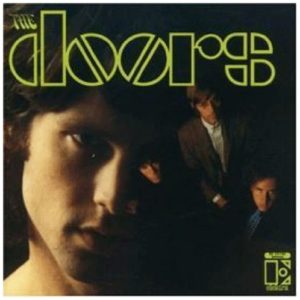 Today’s SotW will recognize another important milestone in Rock history – The Doors’ self-titled debut was released 50 years ago this month. Most rock fans agree that it is one of the best and most influential albums ever released.