The centenary is a big one, and Ella’s is coming up next week. She’s perhaps the greatest of jazz singers, without a doubt in that conversation and most likely on top of the heap, but rooting around in her discography yesterday I came up with a record called Sunshine of Your Love, which was recorded in San Francisco’s Fairmont Hotel in 1968.
It isn’t a rock album, but it takes it’s title from Cream’s classic rock song.
I find the cover of Hey Jude, which precedes this on the elpee, to be the worst of rock-jazz fusions, but this is different and pretty hot. Not Cream, but rockin’. I can just imagine the hep cats in their Nehru jackets at the Venetian Room, waving their cigarettes over their Scotch on the rocks as they listen in time.
Oddly, thinking about jazz and rock and what can work across the genres got me thinking about Anything Goes, an old Cole Porter chestnut that happened to be a hit single for a band called Harpers Bazaar in 1967. Ella covered it in 1956, and unlike the willful nostalgia of the insipid Harpers Bazaar version, and other cute stage versions of the tune, her version is absolutely adult and knowing. An acknowledgement of the ways and passions of the grown ups in the room.
This doesn’t make the music rock, the song is an 80-year-old show tune, but it connects the tune to the emotional directness and honesty that grew out of jazz and soul and r&b in the 50s into much of the best rock songwriting of the 60s and 70s. The singer does that, with the help of a crack band.
Roy Harper has been a successful performer and recording artist for over 50 years but he is not nearly as well known to Americans as he is to his fellow countrymen in the UK. For instance, he earned a Lifetime Achievement Award from the BBC and Hero Award from MOJO magazine.
His extensive discography contains plenty of terrific albums including one bona fide classic – Stormcock. If you haven’t heard it, you should. (Led Zeppelin’s Jimmy Page plays on it under the pseudonym S. Flavius Mercurius.)
Today’s SotW comes from his 1970 album Flat Baroque and Berserk. “Don’t You Grieve” is timely during this Easter weekend as it has Harper getting into the head of Judas Iscariot and justifying the kiss that locked his place in history for all time. After all, it was something he had to do.
I was the master’s best friend
He was the only man I knew
It’s been a tall harvest
And he turned us all on two
But my lips are sealed by history
And my tale I cannot tell
My name is Judas Iscariot
My home address is Hell
So baby don’t you grieve after me
No no no, don’t you grieve after me
So baby don’t you grieve after me
No no no, don’t you grieve after me
Baby you don’t grieve for me when I’m here
Don’t grieve for me when I’m gone
It was two hours gone midnight
When he called me to his side
He said, hey Jude, I need you boy
I need you to take a ride
I want you to tell those guys down town
My time’s almost due. But wait a minute
Jude don’t stick around
‘Cos no body’s gonna love you
Now you’ve got all the silver
But no forgiveness in your heart
And I’ve got 20 feet of rope
To end just where?
Your guessing game starts
I’ve got endless books to write you
But my tale I cannot tell
The only way you’re living is
If you’re living in the same Hell
The song is played and sung in a style reminiscent of very early Dylan – just guitar and nasally voice. Perhaps Dylan is the link back to Woody Guthrie, who’s “Sally Don’t You Grieve” must have influenced Harper.
Other trivia related to Harper? That’s him taking the vocals on Pink Floyd’s “Have a Cigar” from Wish You Were Here. Led Zeppelin III has a song called “Hat’s off to (Roy) Harper”, a tribute to their old friend and musical influence.
John Miller came into the lunch room at Smithtown Central and said something like, I’ve got the new Rolling Stones. What he meant was he’d heard the J. Geils Band’s first album.
It turns out that the J. Geils Band wasn’t the new Stones, the Stones themselves were just escalating into an incredible streak of great music, but the J. Geils Band was great fun. Especially before they became sexy hitmakers. Good for them to make the money, but the love was in those early cuts, like this one.
If you’re a regular reader of the SotW you know that I consume a significant amount of print space exposing my readers to the buried treasures of rock music. I spend a considerable amount of my free time reading books and magazines and listening to music in order to uncover underappreciated artists and acts.
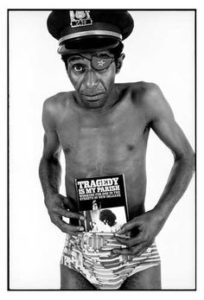
Now and then I’m blown away by someone that I’m unfamiliar with and can’t quite grasp how they eluded my consciousness for so long. That happened to me a few weeks ago when I caught a documentary on Netflix called Bayou Maharajah: The Tragic Genius of James Booker.
As it turns out, Booker was one of the greatest New Orleans style piano players ever to grace our planet. He could play classical (he loved Chopin), jazz, blues, R&B and rock – making it all his own. In MOJO magazine, journalist Jim Scheurich chronicled his diverse talent:
As at home in the church as he was amid New Orleans’ shore-leave Babylon of clubs and bars, the young Booker was also at ease with the classics as he was with R&B and pop. To Booker, it was all grist to the mill of an extraordinary musical mind, freewheeling spirit of playfulness and dazzling digital dexterity.
How in the world did I miss this guy? It just goes to show, “the more you know, the more you know that you don’t know.” (Aristotle)
Booker was a flamboyant character that played with everyone that’s anyone in 50s-70s rock and R&B — Little Richard, Ray Charles, Joe Tex, Aretha Franklin, John Mayall, Dr. John, Ringo Starr, Jerry Garcia, Maria Muldaur, and the Doobie Brothers among others.
Booker even gave piano lessons to a young Harry Connick Jr., as a favor to his district Attorney dad in exchange for legal help he provided.
Booker’s first charted release was the 1960 organ instrumental called “Gonzo.”
Legend has it the song was a favorite of Hunter S. Thompson and was the inspiration for calling his writing style “Gonzo Journalism.” Booker himself picked up the term from the name of the character Felice Orlandi played in the 1960 crime film The Pusher.
The recording that best exhibits Booker’s style is his take on the1930 jazz standard “On the Sunny Side of the Street.”
In the documentary Connick deconstructs the parts that Booker plays to demonstrate how complicated, challenging and creative his version is. An article written by Tim Penn gives this technical description of Booker’s playing style:
In terms of Piano Style, he was classically trained and had an incredible technique, using a lot of filigree decoration in the right hand — not in quite the same ‘ lazy rolling baroque’ N.O. style as Dr. John. However it was his left hand style that sort of set him apart. He used a sort of syncopated stride style a lot — but instead of doing a root note jump to chord, fifth jump, root jump, fifth jump style, he would either:
1) Break the root note octave quite heavily into 2 notes (from the thumb down to the little finger) i.e. ba-doom jump chord ba-doom jump chord — best exemplified on say his version of On the Sunny Side of the Street. A lot of piano players will break the root octaves a bit when doing a stride piano style, mainly out of laziness etc. (it seems to make accuracy a bit easier) — but Booker’s break was really pronounced and heavy.
OR
2) Uses a double bounce on the root and jump chord like so dum-dum (root or fifth) da-da (top chord) dum-dum (root) da-da. (top-chord) (Like doing a stride piano — in a 16ths shuffle rhythm). This style was his real trademark and he used it on his versions of Junco Partner and Goodnight Irene. Of course this style would possibly not transfer very well to a band situation!!
Booker was an unbelievably colorful character. The documentary is filled with anecdotes about how he lost his eye, his bouts with addiction and mental illness, his paranoia, and many others. I don’t want to be a “spoiler” so you have to see the movie for yourself (or research him online).
Sadly, Booker’s life ended at the young age of 43 in 1983. Even his death had an interesting and tragic angle to it. Apparently some unknown person put him in a taxi cab and sent him off to New Orleans’ Charity Hospital. He died, sitting in a wheelchair in the ER, while waiting to be seen.
But don’t let that be the final word. Watch Bayou Maharajah and discover the full story of this obscure genius.
I did very badly on the quiz, but got the last question right, which led to this band that I’d heard of but had never listened to.
This is a San Francisco band from the 90s that I think still mittens on. This clip is the entirety of their seventh elpee, which I’m listening to as I type, and which I’m liking quite a bit. Retro, but also fresh. Good rockin’ sounds that could spiral into dancey camp, like the B-52s, but don’t. Unfortunately cute name, however.
If One Way Out was originally The Man Down There, this Jimmy Reed answer song reverses the angle and tells the story from the other guy’s point of view. “I’m tellin’ you boy/Don’t you walk down those stairs.”
So, looking into the Sonny Boy Williamson/Elmore James/Whoever song, One Way Out, I came across this single by a band called Melvins from Sweden in 1965, derived from the old song. This isn’t blues, it melds Coasters/Platters gimmickry to an old narrative, with a touch of the Mersey beat. Chances are when you listen you’ll be one of fewer than 700 who have heard this in recent times. Pretty cool!
Sonny Boy Williamson wrote this song, or maybe he wrote it with Elmore James. Or they wrote it together with another guy, too. Someone knows the story, and he’s probably gone.
This cut is live, comes from the Fillmore East but was from the last show ever at the Fillmore East, in 1971, not at the other shows in which the band made their bones at that place.
It’s a remarkable cut. Berry Oakley is percolating and that great rhythm section is propulsive. The guitars are sweet, and Gregg sings. You taught me good. This band was great at getting jazzy and improving and turning meh lyrics into musical profundity, but given this piece of meat they come back concise, energetic, and unbeatable. In other words, with the best.
Back in 1983 I was living in Boston and my girlfriend (now wife) was working for an ad agency as a media planner. Her position had the side benefit of receiving invitations to lots of cool events and I was lucky to be her “plus 1.”
That summer WBOS surprised the people of Boston by converting from an adult rock station to a country music format. (In the early 80s Boston was NOT a hotbed for country music.) They celebrated the switch with a party at the Aquarium that included live music by some of the top country music acts of the day. We were invited.
I remember Dwight Yoakam on stage performing for an audience of one – me. Later Reba McEntire took the stage as men in women in business suits munched on shrimp and drank cocktails, oblivious to her presence. I wish I could remember the rest of the acts that were there that evening.
Watching these people perform up close gave me an appreciation for their talent and caused me to pay more attention to country music for a few years. That included acts like Randy Travis, Ricky Scaggs and Rodney Crowell.
Another, lesser known group I followed was Foster & Lloyd. Today’s SotW is “Suzette” from their 1989 album Faster & Llouder.
Radney Foster & Bill Lloyd’s style of music is a country tinged version of power pop — a close cousin to the music of Marshall Crenshaw who makes significant contributions as a guest on the album.
“Suzette” chronicles a couple in a dysfunctional relationship of constant fighting and making up.
Suzette, I get so upset about us
We keep fighting we keep falling in love
All the games we play we always regret
Let’s forgive and forget, I love you Suzette
Today, country music is more popular than ever, even in urban areas. I don’t really follow it anymore but I did listen to Sturgill Simpson’s great 2016 album A Sailor’s Guide to Earth.
Have still been thinking about Chuck Berry’s passing and I’m most always thinking about my beloved Hellas. This morning I woke up realizing how this song that knocks about in my head from time to time is little more than souped up “Sweet Little Sixteen.”
And by the way, the righthanded guitarist (not lefty Nikke the singer) died in February.