More former Dil Tony Kinman from the really good read Left Of The Dial:
“I would not compare the Ramones album to what I consider the single greatest moment of rock ‘n roll history. It’s in Little Richard’s recording of Lucille. Little Richard is screaming so loud that he overdrives his mic. On the hit version, there’s actually distortion recorded on that. I don’t care if you are even recording for a shitty indie punk rock label. Punk rockers would not let that happen, nowadays. That was a major hit song by a major hit performer of the time. I am speechless just thinking about it. To me, that is the single greatest moment because of what it is, which is incredible, how it sounds is great, and because of the context. He’s overdriving the mic, but the way things were back then was, ‘C’mon Richard, that sounds good enough. We’re done here. Let’s go, man, I’m thirsty, or whatever, or we better get to the gig.’ The era, the primitive rock era and the way those guys worked back then. . .And to this day, that song still has more truly astonishing passion and emotion in it, real terrible energy in it, than anything that has come since.”
I can’t hear distortion in this, but I think I know what he means. Maybe it’s shitty youtube or something. I especially like watching the drummer here. He amuses me:
Then, it occurred to me that Little Richard reminded me a lot of a character out of my childhood. Cesar Romero’s Joker (always will be my favorite Joker). The wild eyes, the hair, the maniacal smile. If Romero’s Joker wasn’t at least partially influenced by Little Richard, it’s a helluva coincidence. Even the moustache (which I always loved that Romero kept even under the Joker makeup).
More making-dinner music. Sort of. I was cooking tonight and put on Little Richard’s Essentials album, because Moyer mentioned him the other day.
I love Little Richard. I know I’m piling on, but for me he’s the quintessential Ur-rock guy. Others played rock before. Others were trying to play it at the same time. But at that point Little Richard was better than all of them. Maybe put together.
But while making dinner, totally blown away again by Rip It Up and the Girl Can’t Help It, I kept trying to remember the name of the soul tune of Richard’s that first made me realize that he wasn’t just a rock n roll oldies guy, but was instead a rock giant. (No slight to him, that was my mistake.)
This is is. And sometimes I even moan.
I think we could hear any number of soul masters perform this excellent tune just fine, but I would bet not one could match Little Richard when the day was done.
He’s hardly an overlooked genius, but I think the towering of his talent and style and achievement is often overlooked.
Oh, and it turns out the guitarist in this band is the young Jimi Hendrix.
As a result of my posting of Bruce Springsteen’s Prove it all Night, a discussion ensued that sort of points to not just the essence of art, but the packaging of said commodity.
Peter noted that indeed the E-Streeters were a well rehearsed machine, conveying the The Boss’s message, however he noted the message was indeed that of Bruce, and while Steve does give cred to Bruce’s early material, he did not think that much of the band live.
Fair enough.
In fact, Steve noted in addition that the Bruce and Co. had pretty much become mainstream–the stuff of “average Joe’s”–and that in general, that told him he was not interested.
Again, fair enough.
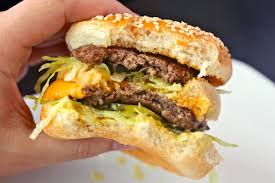
Personally, I agree with both of them, and I use the argument of McDonalds, for the company of the Big Mac is surely the most popular and successful food selling machine in our country, let alone on the planet.
But, that does not necessarily mean the “BM” either tastes good, or is good for us.
Truth is, I like a Big Mac once in a while for some perverse reason, which is indeed odd since I do all of our cooking and prepare almost exclusively from scratch.
But, I also suspect the had we gone to the original McDonalds in Southern California in 1957 and ordered a double cheeseburger, it would have been good like a burger at Burger Me, in Truckee, would nail it today. I think both would hit the spot, just as were Burger Me suddenly franchised, the animal I would eat today would probably not be like the sandwich I would get in ten years.
I think as part of the musical parallel I pointed to, I loved the Clash through their first albums, and even saw them four times during their early years. But, once Combat Rock became anthemic to the “average Joe’s,” I lost interest, no matter how good the album might have been (I have obviously heard some cuts from it, but I never owned it, unlike London Calling, or Give ”em Enough Rope, or the first Clash album).
But, I do pose the path of three artists, starting with the great British folker, the late Nick Drake, who died of an amphetamine overdose in 1974, but never got a chance to make it with the average Joe’s. Although, his great tune, Pink Moon was used as a soundtrack for an ATT commercial, and two of his tunes, Magic, and River Man, did make the charts 30 years after his death after the release of a compilation album (Made to Love Magic) and related tributes in 2004.
Had he lived, would Drake still be so dark, so moody, and to me so hauntingly accessible (we could ask the same about Buddy Holly, but please leave the over-rated James Dean out of the conversation)?
How about the bay area band Jellyfish, who had a killer debut album (Belly Button) in 1990 that fostered a big time signing, and three years later the over produced (Queen sang back-up) and under delivered Spilt Milk which resulted with poor revues and the dissolution of the band. Heard of them, average Joe?
I thought not.
Then there is Steve’s childhood fave, KISS, whom he stands behind over their first few albums, who developed as dedicated a following, and as staged a performance as Springsteen et al. And, a band the average Joe’s love, it seems, as much as the Boss.
So, it seems the way of art is that bands or writers or painters or whatever do indeed start with a vision, and with the pain that was too much for Drake (who suffered from depression), and then either become another animal, as in Jellyfish and give up, or they simply evolve, succeed, and become boring and the apple of the average Joe eye?
Hendrix’s first posthumous album, Cry of Love, popped up in my new releases list today, so I guess there is a rerelease going on.
I’d probably heard this disk when it came out, but not since then. It’s pretty good. Hendrix was great, as long as you like having no space between guitar noises. Then he was really great. So this disk is good, entertaining, I’m not nearly enough of a scholar to say anything about the history, except that when the song Astro Man came on I was caught short.
This is a tune that starts like a punk song, with airy autobiographical mythmaking, without guitars for maybe the first 20 seconds. Incredible.
But even when it settles into a more jamming groove, the sound of the twining guitars (both Hendrix, I’m pretty sure) gets close to Television. Especially the more upfront lead, which invents Richard Lloyd’s sound while he was a boy in short pants.
Not a great song, I suppose, but a different sounding one, with great playing.
This trad tune has been recorded by just about everyone. I first heard it by Bob Dylan, but the Carter Family did a definitive version.
I had always thought this folk song was the perfect expression of 20th Century American angst, in that understated down home way. But I didn’t know Devo thought so, too.
One of the funny things that happens when you wade into a mass march is you worry about a police riot.
The marchers are penned into a limited space, and if something were to go wrong the stampede effect might be bad.
My family and I marched today with a lot of folks, and except for one instance where a cop asked us about our respect for authority because we marchers kept breaking a fence joint (she got a lot of laughs), there was no tension. We were walking, the police were protecting, and we hope everyone else was watching.
That wasn’t the case on May 4, 1970. Though everyone ended up watching. Four dead in Ohio.
The Biletones have had as busy a summer–one that has compounded just how crazy my day job has been–playing no fewer than five gigs since June, with one more benefit ahead mid-October.
Demanding or not, it is big fun, not just playing, but playing live is among the greatest feelings I have experienced.
Unfortunately, because the band does have day jobs and busy lives, we only manage practice once a week, and with that many performances on top of one another, we have pretty much kept the same set list all summer.
And, needless to say, we have become sick of most of the songs we play, no matter how much we might like them at the core.
Since there is roughly a month between the last two shows this run, we did troll one another for song suggestions, coming up with roughly ten tunes new to us to throw onto the possibles for the October soiree.
One that made the cut was The Boss’s Prove it all Night, a great cut from his equally great Darkness on the Edge of Town record.
Darkness made my Essential 50 albums, and it clearly stands as my favorite Springsteen album amongst a very strong body of work.
Say what you will about Springsteen, being a superstar, dismissing his “art” due to his fame along with the spectacle of arena rock that follows him, but, mark my words, his band is as strong and tight as any other group whoever hit the stage, and no one is more dedicated–performance by performance–to delivering a quality and entertaining show to his minions as is Springsteen and his cartel.
Similarly, Bruce is an excellent song writer, penning a variety of numbers over the years that do indeed explore the angst and uncertainty of life that we associated with rock’n’roll. In fact, because Bruce and his band have endured, we have seen him grow and reflect upon life, not just as an artist, but as an aging and maturing one who accepts his life and fate and is able to translate that experience into songs that hit a chord with his audience.
If there is a problem with Bruce and the band, he has a voice, and they have a sound that seem to make it hard to break out. Rarely do the songs from album to album differ in essence and approach as say the Stones do when you compare Aftermath to Beggar’s Banquet to Their Satanic Majesty’s Request.
True, Bruce has had his more than interesting explorations, such as the uber-satisfying Nebraska but as noted, the essence of the band has been constant over the years, and thus I think as a result he gets dismissed a little.
In fact, Springsteen and the band have been largely missing from this site (there are other bands too I have thought of that deserve reminders of just how good they are) so I thought I would try to right.
The clip below is and excellent example of the Springsteen way, which is basically concocting a four-minute gem for an album, and then blowing it into a ten-minute tour de force live.
What is different about this clip, is that Bruce is the lead guitar player, and he delivers killer notes and tone (thank you Mr. Telecaster!). Roy Brittan also provides a lovely keys in this treatment, but the guts all go to Bruce.