I went to film school, so I know where most of the cuts in this video come from.
In the 1980s I was in my 20s, mostly, so I know where most of this New Wave/Disco hybrid comes from.
As a band name Juveniles seems pretty great, no matter what age.
And I bumped into this while listening to the new Belle and Sebastian single, which explores similar sonic ground. Belle and Sebastian’s tune is richer, but it doesn’t have these gals, the director’s playful prudity, and the sex-role play (or disambiguation, if you prefer) of this video.
Nicely done, Juveniles. But next time we want newer music. (Or as Steve might say, music that doesn’t suck.)
Okay, I didn’t know about this 1979 U2 song, and its humiliating video. But it’s U2 and they weren’t yet famous, so they were working it. Hard to blame them. Still…
A year before that The Only Ones released this tune, which is one of the great romantic tunes of all time. Disambiguated, of course. But please dare to compare not only the hook, but the ambition and imagination.
I liked the first U2 album, in large part because of this song, which feels like it is going to spin out of control, but it never does, all the while rueing the day that control was lost.
This live version doubles down on that conflict, and maybe signifies why this rock band has always come across as more in control than ecstatic. I love the way Mr. Vox yanks his sweater out of the public’s hands, and uses that as a way to wade gently back into the fray topless.
I was a big ELO fan, at least till they became sort of redundant in the Moody Blues sense, and punk exploded and I abandoned all things progressive and over-produced.
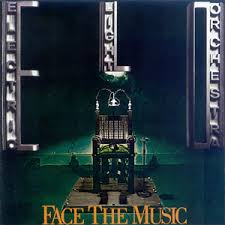
That said, El Dorado still is a pretty good listen depending upon my mood, as is Face the Music which does have one of the best album jackets ever.
But, the first time I heard Do Ya, it was a cover by Todd Rundgren. I loved it at first listen, but as I tried to track it down, I discovered the song was originally written by Jeff Lynne and Roy Wood. Wood was the genius behind The Move, and dragged Bev Bevan and Jeff Lynne to that band, which eventually morphed into ELO.
ELO did recreate Do Ya, with strings, and though I had not yet completely “a-band-doned” them (I think it was on A New World Record) that version does not even come close to the kick-ass original by The Move.
I don’t do coffee much anymore in the mornings (green tea, please), but this does get my adrenalin going.
I’m reading the second volume of Karl Ove Knaussgard’s My Struggle, a novel that reads like a memoir, but is narratively satisfying. Like a novel. In the book the teenaged and young man Karl loves Ian McCulloch and Echo and the Bunnymen. So I played some of the songs today, trying to recapture what it was about those early 80s bands from the UK (also U2 and Joy Division and Simple Minds and Tears for Fears and many others) that just didn’t grab me.
Many were very popular, and critically acclaimed. I don’t know. I did like the Cure. But when I listen to this (and even the best early U2) I feel like I’m listening to a folk rocker who got loud. The words and the singer’s elongated syllables are what matter, and things like syncopation and melody are laminated by atmosphere. These songs don’t feel like songs, exactly, even though clearly they are. In fact, they’re passive aggressively anthemic, with ringing chords and patina-ed vocals and drums that walk along with you, rather than getting into your head and bashing it.
Nice enough tune, but not enough tune.
I should say that I chose to write here about what I don’t like about this style of rock tune from a certain time. This wasn’t meant to be a fair evaluation. That wasn’t the point. Feel free to agree or disagree in the comments.
I waded in and these videos are so goofy and the songs rock in the most unenergetic ways I thought it might be fun to share. If you hate them, turn it off.
What’s with the wood chopping? On this one the drums are also abstracted.
My buddy Moe moved to Germany to get married. He was one of the Warren Street All Starz, our stickball team, which convened every Sunday in a parking lot on Warren Street and Greenwich Street back in the days when nobody lived down there near the World Trade Center.
We all had nicknames. Moe’s was the Name Changer. If you had a nickname and wanted a different one, or if someone thought someone should have a different nickname, Moe had to approve.
Moe sold books and spent a good part of his time traveling around the world, going to book trade events. Moe worked for a book company, Schocken, that had the rights to Franz Kafka’s novels, and we called our parking lot ballfield Kafka Park. When Moe wasn’t in New York on a Sunday he would phone in to the pay phone across the street from Kafka Park. Collect. We always accepted the charges.
Moe fell for a German woman named Julie, and they married. Moe moved to Hamburg, where he learned German by watching TV and going out to eat with Julie’s friends. At some point he sent me a 45 of a record by a group called Trio. It was a goofy bit of catchy electronica, in German, that was utterly lightweight and internationally jaded (read: louche) at the same time.
The chorus translates as I love you not and you don’t love me. Too sexy for my turntable.
A few years later the song popped up in an ad for the Volkswagen Golf.
Ten years ago television commercials started to use some really cool music. I’m not sure if that was because marketing departments became more hip or because artists began to cash in, no longer fretting over the “sell out” label. HP used The Kinks “Picture Book” to advertise a line of printers. (It was named “Campaign of the Year” in the February 7, 2005 issue of Adweek magazine.) Apple used The Vines’ garage rock influenced “Ride” and U2’s “Vertigo” (their last great rocker) in their iPod campaign.
Today’s SotW, of Montreal’s “Everyday Feel Like Sunday”, was even used in an ad for NASDAQ. NASDAQ!?!
This wasn’t the first, or last, time that of Montreal licensed a song for a commercial. “Wraith Pinned to the Mist” was used earlier for a popular Outback Steakhouse ad. Later Comcast used “A Sentence of Sort in Kongsvinger” and T-Mobile used “Gronlandic Edit” in their campaigns.
Athens, Georgia based of Montreal is the main creative outlet for Kevin Barnes. Describing their style is very difficult because it has changed and evolved so many times since the band formed in 1996.
Beside their repertoire of eclectic songs, the band also has a very unique stage presence. I was able to see the once in San Diego in 2009 and the show lived up to expectations. Much like The Flaming Lips, their show is an extravaganza of music, costumes, lights, props, etc. In a word – bizarre. There are plenty of examples to check out on YouTube.
The first thing you notice is that this Jackie Jenkins tune, written by Jackie Avery, hints at what Stevie Wonder later creates in Superstition.
When Atomic Rooster covers the tune, cleaning up some of the murky atmosphere and toning down the propulsive drumming, it becomes more Blind Faith than swamp rock. With a guitar solo.