I remember reading about this movie last year, when it was released in theaters. It seemed crazy, one of our greatest actors, Michael Fassbender, spending the whole movie in a giant baseball of a mask, as well as a movie about a guy in a rock band who wears a mask all the time (not just on stage).
It turns out, after seeing the movie on Netflix, that this is a music movie about integrity and relationships and ambition, like most music movies, but this one has an arch humor and a steady intelligence guiding it. The music is emblematic, each tune meant to show something in the context of the film (rather than as a song in its own right), and there aren’t too many songs. Instead we have characters who seethe with passion, jammed and jamming together in a somewhat challenging situation, which is where tempers and ardor and hatred flare.
Recommended to those who generally like Sundance hits, or at least who don’t hate them.
It seems that Frank’s head is derived from a comic character from UK TV in the 1980s named Frank Sidebottom.
Frank Sidebottom was the creation of a comic artist named Chris Sievey, now deceased, about whom a documentary has been made. Frank, the movie, was obviously inspired by Sievey’s creation, but seems to be a reimagining of Sievey, rather than a rehash. All very weird and wonderful. This is a trailer for Being Frank, the Chris Sievey story.
We start off with a Norwegian punk band called Rowdy and Raunchy, which sounds promising, but they have made an energetic little song that sounds like bad theme song for a jeggings brand (whatever that is, I don’t know).
Coincidentally, a Jamaican band in the 70s called the Gladiators did a smash up job with a song also called We Are the Warriors.
After college I had an office job, working as projectionist and advertising manager for an independent film distributor. Maybe not your typical office job, though I did a bit of filing, too.
Our offices were in the Lincoln Building, across the street from Grand Central Station. It was a weird job, perhaps because I really had no idea what it meant to work in an office. And spend part of my time in the projection room, recommending movies that would become classics (but were rejected), like Ms. 45 and Diva, to company owners who made some smart choices on their own, like Breaker Morant and Eating Raoul.
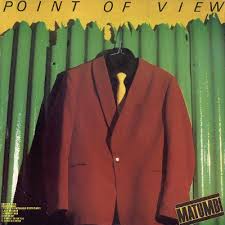
One of the distractions of the day was hitting the Disco-mat store across the street on my way home from work. I bought the US version of The Clash there, and the Rolling Stones Emotional Rescue. I also found an album by a band I’d never heard of that seemed promising because of the cover, which was a thin-collared brown suit on a field of green and yellow. It was the opposite of two-tone, and yet seemed unheard of a piece. Perhaps more importantly Dennis Bovell, producer of the Slits, was in the band.
The second Matumbi album is a brilliant commercial roots reggae move. It has giant ambition stamped on it, though it landed like a cult item among US reggae fans who didn’t mind the polish. And this song charted in 1979, for obvious reasons.
After the initial rush of great punk UK bands there came a cascade of second-wave punk bands that were so clearly copping punk rock’s simple structures that there should have been outrage about the copying (and there was), but who brought catchy tunes and direct subject matter and filled a hunger for new material that the best bands alone couldn’t keep up with.
Sham 69 was one of these bands. A party band, to be sure, with the deft cartoonishness of the Ramones filtered through the eyes of English estate lads, with just enough outrage to seem politically relevant and enough sense of the drinking song singalong to touch all the bases. In other words, strong attitude and solid execution trumps any type of originality.
Bob Dylan won an award the other night from a group called MusicCares, which I gather has an emergency fund for indigent musicians who need help. Dylan’s speech is a marvel of candor and self grandeur and interesting connections from Bob to the songs that fed his creativity. If I was a professional blogger I’d summarize the whole thing, but since I’m not let it suffice that he doesn’t mince words and rips Merle Haggard and Tom T. Hall and others new ones.
He also claims that he is the sole singer to get criticized for lack of range and excessive growling, while Tom Waits, Lou Reed and Dr. John get off scot free. Some of it is kind of batshit.
But a lot of it does make connections, and the one that matters most praises MusiCares for taking care of Bob’s friend Billy Lee Riley, who never really had a hit, but was nominated for a Grammy for his 1997 comeback album, Hot Damn!
But the song that made Bob Dylan fall in love with Billy Lee was this one (with Jerry Lee Lewis playing piano), which he heard on the radio in 1957, when he was a boy with dreams in Minnesota.