Night Music: The Rolling Stones, “Star Star”

Lee Siegel is an essayist, and he’s written an essay decrying the coarseness of our culture these days.

It’s hard to argue with that, but Siegel seems to be blaming the internet and social media (maybe, he’s not entirely coherent), for making it easier to be blatant than it used to be. He cites his bona fides by mentioning that his favorite movie is Last Tango in Paris, and that he considered once writing a book about the eff word. He’s no prude, he says.

I think he gets it so wrong because he fails to recognize the big difference in the culture when he and I were young, and the culture today. Back then, until the 80s really, the popular culture was (mostly) monolithic. For example, when punk broke all the news and magazine shows did stories on punk music and culture because it looked like it was the next big thing. It was assumed back then that when something grabbed the populace, like the Beatles, that everyone would soon be into it. Everybody paid attention because such seismic shifts affected everyone. Time and Newsweek put them on the cover.

But really, ever since punk, or at least since around then, our culture has splintered. At about the same time came the introduction of the personal computer and the rise of cable television, and in the intervening years, of course, came the overlay of the internet over almost everything. It isn’t that the internet didn’t matter, but that the internet helped us create millions of separate individual cultures. They overlap, of course, but they are tangential to the mass collective culture that they ultimately make up.

Siegel says the culture has coarsened because we now have the brazenness of Beyonce instead of the subtlety of Elvis. Really?

In fact, we still have the subtlety of Elvis. We are not wedded to today culturally. We can pick and choose historically and geographically. Same with movies, and books, and just about everything. The world is our oyster as far as cultural consumption goes. The price we pay for that is that we share less culturally than we used to. It is relatively easy to ignore the popular culture these days, if you want to.

In reality, my family actually is in the middle of the popular culture, because my daughter listens to pop music. A lot. If not for her I’m sure I wouldn’t know anything about Lorde and Miley Cyrus and Ellie Goulding and Birdy, among others. And even when I hear these pop songs she listens to, many of which I actually like, I’m under no illusion they represent the culture. Most of my peers I talk to about them don’t know this music, have no interest in it, are totally separate from it. To be sure, they are a sliver of the total output. And when I tire of hearing them in my house, echoing down my hall, I have my ear buds. Bye bye Lorde.

What has become the popular culture of today isn’t the one thing that everyone gets behind, at least out of obligation, but rather it’s now the one thing that everyone allows to be foisted upon them. As in the movie Idiocracy so goes the MTV Music Awards. The popular thing has to break through the weave of our personal cocoons the way nut-busting does, and so Miley creates her provocative theater. And for our soundtrack, we hear the pop tunes in the grocery, sometimes, but then didn’t we always?

Siegel, early on, uses the Rolling Stones Brown Sugar as evidence that subtlety is better. This, he says, was a dirty transgressive rock song that grabbed hold and is still with us 40 years later. It intrigued and captivated us with its subtle evocation of the slaver-slave dynamic(!), and the caucasian black-music lover and the feelings of the black musician being loved (or ignored). This is complicated stuff. Two years later, Siegel points out, the Stones made another, coarser song, called Star Star (Starfucker). Few remember it, he says. Which may be true. Star Star is a straight ahead rock riff, a Chuck Berry vamp amped up and impeccably layered by the Stones with about 300 overdubs, but decidedly lacking in ambition or achievement. It’s a better rock song than almost anyone else could do, but it is pretty rote for the Stones.

Brown Sugar is a classic. Not for its restraint or subtle coarseness but because of its riffs! It doesn’t sound like a Chuck Berry tune. The lyrics are ambitious, ambiguous, allusive, redolent of power and privilege and I hear the recognition that that power and privilege are crimes, though perhaps unavoidable ones. That’s human nature. The song endures because of it’s excellence, not its restraint.

You can read the Lee Siegel piece and maybe you’ll agree with him. I agree that you hear the eff word more these days, so there is that. But I think if we were to live a long time we would hear this exact same argument, again and again and again, from other old guys who have children and who think the world should make them feel more comfortable. So they gripe. But it isn’t going to soothe them, and more importantly, it never did.

Night Music: Howling Wolf, “Spoonful”

I was at a fundraiser for my daughter’s school tonight. Drinks and food at another family’s house in the neighborhood, around the corner.

It was nice, actually, a chance to see and meet neighbors who intersect in a variety of important and less important but relentless ways. But after a while I wandered into the kitchen and there was a band, a trio, setting up. Our host, it turns out, plays bass. They had a list of tunes and played for about an hour. Some Chicago blues, some rock ‘n’ roll, all very nicely played. Our host said they were a blues trio, but the standout song was a kind of bossa nova version of I’m Waiting For My Man.

The cool thing was these three oldish guys, probably younger than me, sounded really good. They were loud, but you could stand 15 feet away and talk. Our host, the bass player, later told me that they didn’t always play blues. He said they’d worked out some Morphine songs replacing the sax with guitars.

I want to hear that. But until then, go with the best…

Night Music: The Faces, “Three Button Hand Me Down”

A few weeks back Peter wrote about Humble Pie and their terrific tune, I Don’t Need no Doctor.

Humble Pie was led by Steve Marriott, who not only had among the best and most recognizable rock voices, but was also a founding member of the great Brit pop band, The Small Faces.

Mostly known in the states for their catchy psychedelic hit Itchycoo Park, The Small Faces were far more than the bulk of the states ever appreciated. Their 1968 album Ogden’s Nut Gone Flake broke as many rules as an album could in those days. First, the cover of the album was totally different than anything before. It was released in a plastic sleeve, with a fold-out that surrounded the record.ogden Add to that the entire second side was a fairy story song about Happiness Stan’s search for what he thinks is the missing half of the moon. (BTW, Ogdens Nut Gone was one of my Top 50 essential albums.)

The remaining Faces–Ronnie Lane, Ron Wood, Ian McLagan, and Kenny Jones–all hung  with the departure of Marriott, adding Rod Stewart as their new lead singer (Wood invited Stewart to join after the pair worked together on Jeff Beck’s first album, Truth).

The first album the new quintet produced was a fun, bluesy, and listenable work called The First Step, and the other day, as I was streaming KTKE, my Truckee radio station, damned if they did not play a cut from that album, Three Button Hand Me Down.

The Faces were such a great band, both with Marriott and Stewart, and in a way, they were sort of Triple-A Rock and Roll, to the Majors where the players wound up.

Stewart went on to his sort of over-the-top glam career, while Wood joined the Stones, with McLagan supporting the band at times. Kenny Jones drummed with The Who for a while after Keith Moon’s demise, and Ronnie Lane played bass on all of Pete Townshend’s early solo material.

That is a pretty good resume.

So, here is Three Button Hand Me Down

Night Music: Graham Parker and the Rumour, “Don’t Ask Me Questions”

Sneering defiant white reggae from a smallish man who made his voice big and his passion’s large. Sounds good. They put out a remix of the song a couple of years later and took the reggae and the heart out of it. Or maybe it’s just the Graham looks funny lipsynching with such venom. This is the original mix from the original great album produced by Nick Lowe. Don’t Ask Me Questions is a live cut.

Night Music: Pavement, “Range Life”

Hat tip to my friend Angela who posted this yesterday on Facebook. I’m so busy approving pages to the Fantasy Baseball Guide I can’t really think. But listening to this I’m struck by the linkages between Pavement and the Kinks.

I don’t have time to do the work for you now, but believe me, it’s soooo cool. (Dig Pavement in their Hillbilly’s phase.)

Night Music: Petra Haden and The Who, “Armenia City in the Sky”

Peter’s fantastic Chet Baker and Charlie Haden post of earlier today got the gears in my brain going.

That is because Charlie’s daughter, Petra, did one of the most amazing musical feats ever accomplished: Petra redid The Who’s fabulous, and my very favorite album of theirs, The Who Sell Out. The catch is that Haden did the entire album with voice only: that is, the singing, harmonies, guitars, effects, bass, drums, everything was sung by Petra.

To make the whole thing complete, she even copied the crazy cover of the album, substituting her own beak as necessary for the members of The Who. To me, this is as loving and beautiful an homage to any band or album as anyone could ever do.

Below is Haden’s cover of Armenia City in the Sky, the opening track of the phenomenal 1967 album:

And, as a means of comparison, here is the original by my all time favorite band:

Night Music: Charlie Haden and Chet Baker (w Enrico Pieronunzi and Billy Higgins), “Silence”

I found this tonight because my friend Angela posted a Chet Baker version of Elvis Costello’s Almost Blue that was overlaid on a series of black and white video shots of really heavy snow on a farm. It was lovely.

Haden and Baker are notable because they always slow things down. Watching Haden in concert is magnificent. For one, he always plays with great musicians. For two, he has this striking confidence that the music will win. It doesn’t need to sell. And so he tends toward slow tempos, tonal poems that often make you wonder why the drum is there at all.

Chet Baker is the epitome of the California cool jazz guy, except that he missed out on all the fun. He likes to let the feeling come out of the laggardiness (not a word). And it does.

I’m blue tonight, I’m working way too hard to make sense, and listening to these guys play a tune called Silence hits the spot. Turn it up!

Night Music: Cream, “Tales of Brave Ulysses”

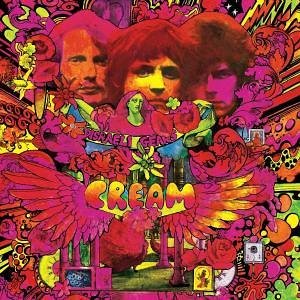
10251Martin Sharp, the designer of the covers of Cream’s albums Disreali Gears and Wheels of Fire, died this week. There’s a nice overview of his psychedelic work here.

Which seems like a good reason to play another bit from Cream, from Disraeli Gears.

I was turning 11 I guess and it was my birthday and a friend’s mother asked what I wanted. I said, “I’d like the album Disraeli Gears,” and she said, in a Monty Python old biddy’s voice I hear it now, “oh, my, an album. That’s a little too expensive,” apparently thinking an “album” was a box of records. My friend set her straight and that’s what they gave me. Good present.

My good buddy Jimmy A. and I loved Jack Bruce’s singing on this one, which was written by Clapton and, surprise, Martin Sharp. The only problem is it isn’t long enough.

Here’s a video of the making of the song, with interviews with Clapton and Sharp.

Night Music: Ronnie Montrose “Town Without a Pity” and Sammy Hagar “I’ve Done Everything for You”

I was sitting with my friend/mentor/guitar teacher yesterday and while we were talking about 70’s bands we both loved and abhorred, Ronnie Montrose came up.

Of course the real frame of reference for Montrose in the Bay Area was his first album that featured Sammy Hagar, and had the tune Rock Candy, on it.

Montrose and Hagar did it together for a few albums, but by the late 70’s Sammy went on to his own successful, if somewhat loud solo career.

Montrose continued to play, and released a wonderful instrumental album in 1978 entitled Open Fire, and that disc contained the guitarist’s well known cover of Town Without a Pity, a tune I had not thought of in years till Steve and my conversation went there.

Of course, discussing Montrose invariably led to Hagar, who had a bundle of catchy rockers around the same time such as Red  and You Make Me Crazy.

But, the song I’ve Done Everything for You,” also released in ’78, was always my favorite, though I don’t believe it ever appeared on an album till Hagar released a compilation disc (I still have my 45 of the single with Otis Redding’s Dock of the Bay on the flip side).

I guess at best you could call the vid below a guilty pleasure, as well as a nice time capsule of spandex and big hair. It does rock, although I am sure if Hagar appeared today with the giant pic of himself in the background, #Humblebrag would be all over him.

Still, it is a great cut.

Night Music: Cream, “White Room”

A long drive yesterday, taking what should have been a four-hour trip in a world with normal traffic, led to lots of radio listening. Some of it classic rock programming on WPLR, a Connecticut station that was playing the same songs when we listened to it in high school.

One of them was Cream’s Badge, decidedly difficult to sing along with, though o so familiar. Which got me to thinking about which of this one-time one-of-my-favorite-band’s song’s I would really like to hear. This one.