Gimme Danger is finally out in a medium we can easily watch.
I streamed it for $4.99 last night on Amazon. In the beginning of the movie, it says “Amazon Studios” so this might be the only place it’s currently available.
Was it as good as advertised? Abso. Fucking. Lutely.
If anyone wants to watch it and talk about some rock ‘n’ roll, I’m here.
In the process of discussing our teen favorites, Tom pointed to the incredible run of brilliant albums Steveland Wonder released and I commented, noting that I felt Talking Book, Fulfillingness First Finale, and Innervisions were on my list of artists who produced three just brilliant albums in a row.
Also added in were:
Blue/Ladies of the Canyon/Court and Spark (Joni Mitchell)
Beggars Banquet, Let it Bleed/Sticky Fingers (Stones)
Revolver/Rubber Soul/Sgt. Pepper (Beatles)
Bringing it all Back Home/Highway 61/Blonde on Blonde
Elvis Costello (first three) and Neil Young (Goldrush through Harvest) also made it once the list was initiated, and Prince just missed. But Steve made suggestions of Alice Cooper, the Ramones, and AC/DC which I quickly dismissed
This does not mean I don’t love Road to Ruin and Love it to Death but if we look at Cooper and Steve’s example, maybe I can explain the difference, at least as I mean it.
Love it to Death triggered three wonderful albums from the Alice Cooper band, but the third, School’s Out was a little thin in my view, and Love it to Death included the throwaway Black Juju, an immediate disqualifier.
Why, you ask?
Because in looking at the records produced by the Beatles for example, in Rubber Soul the band clearly kicked their songwriting to a deeper level with the focus of their lyrics moving to a new level, not just for the band, but for pop music. The Fab Four continued this growth, both lyrically and sonic-ally with Revolver, and then even further with Sgt. Pepper. The same can be said about Wonder, Dylan, Mitchell, the Stones, Costello, and Young, all of whom have challenged themselves and their sound, pushing into new directions, and delivering breathing works that pushed the groups collaborative art to a new level.
Not that Love it to Death isn’t art, or a fantastic album, but as good as the record is, by Killer, the band was still spot on musically and lyrically, but while 18 might really fit what I defined above, nothing else on any of the three suggested Cooper albums suggests or provides any kind of growth of the group’s art and sound any further than where it was.
Not that this means Cooper or AC/DC or any performer(s) should be dismissed, but, there is a major difference between releasing three very strong discs that contain great songs, but all basically of the same ilk, as opposed to the other artists who truly moved their skills and experience to a different level.
Snotty? Maybe.
Elistist? Maybe.
But, well, hard to argue? I don’t know.
Have at it, and just to show I understand my roots, let’s leave with Alice, and as good a garage tune as you will ever hear. It is just the individual tune does not the album or artistic value of the relative catalog make.
Just added Love It To Death, Killer and School’s Out to the album troika list, then decided I had to hear me some Alice. Went to youtube and stumbled upon this.
Appears to be a genuine attempt at a music video, way before music videos were a thing.
Not an A+ Alice song, nothing extraordinary about the video either, and guessing you guys have seen this before, but it’s very cool to see footage of Alice and the band in their prime.
I recently discovered the self-titled album of a New York based band called The Mystery Lights. The retro psych group records for the Wick label, the rock subsidiary of soul imprint Daptone; home to Charles Bradley and the recently deceased Sharon Jones.
The description of the band on the Daptone website is enlightening:
“… the Lights’ sound has evolved into a fuzz-fueled hopped-up 21st Century take on 60s garage pebbles, and artful 70s punk, that is all their own.”
That description certainly applies to today’s SotW – “Follow Me Home.”
The band has been together since they met as teenagers in school in Salinas, California, famously the birthplace of John Steinbeck.
I remember seeing Pink Flag in a record shop window on Eighth Street in the Village in 1977. It was an import, expensive, and I hadn’t even heard of the band, but the look was clean and lovely, different than the artwork that smudged across a lof of the new punk music elpees, and it made me curious. Not long after, reviews started appearing and Wire were quickly critics’ darlings. That’s what short and incisive pop noise and catchy melody does.
I waited for the US release, I think, a few months later to finally hear what I’d been reading about. I was rewarded, with a punchy tunes that got in and out quicker than you’d want, but more powerfully than you could hope for. Pink Flag is one of the great rock ‘n’ roll albums of all time. Rolling Stone says No. 412, NME says 378, Steve Moyer says 32. I say closer to Moyer than NME, but whatever.
So, this comes up because Wire has a new song out. They’ve been releasing records off and on for the past four or five years, and even more off and on through the aughts and 90s. I have to admit that I haven’t been paying attention, so I can’t speak to what they’ve been doing, but this is a good one. Short Elevated Period.
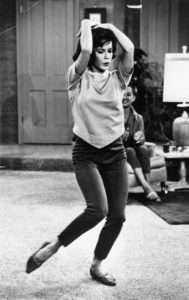
I posted here about a Husker Du cover the Mary Tyler Moore show theme song a few years ago. Not sure why, at that point.
This week, Mary Tyler Moore died. Which is a reason think about her. That is why we die, right? We hope someone thinks about us.
In my life I thought a lot about Mary Tyler Moore. I loved the Dick Van Dyke show, I loved the Mary Tyler Moore Show, I liked that she made an issue of Pale Male. MTM ranks in my pantheon of cultural gods, a list I should probably inscribe on the surface of excellent knishes. Or something.
Enjoy the clip, which I think shows just how essential Joan Jett is and how unfortunately that didn’t change the world.
Gad ,what a bad run of obits here the past few days. Now, the great time keeper for the Allman Brothers Band has passed on, just shy of 70 years of age
Trucks, who was with the band starting in 1968, had that great swinging percussive style that drove, complemented, and cemented the otherwise fluid playings of the band, just as Bill Kreutzman was at the bottom of the Dead, with Jai-Johanny Johnson playing the rhymthic counterpart to Trucks that Mickey Hart was to Kreutzman.
I guess that is a pretentious sounding sentence of nothing, but what I mean is the band certainly could interplay as on One Way Out , a song that holds arguably the best live trading of licks/solos anywhere ever with a pair of ass-kickers knocked out by Brothers Duane and Betts. But, beneath the guitars, check out the drumming, which is so there and in time behind some very difficult time and phrasing.
And, well everyone who owns a Bic lighter knows the drive that Whippin’ Post held,
and, the band could also be so melodic and soulful with tunes like In Memory of Miss Elizabeth Reed.
Trucks’ DNA is also linked to nephews Derek Trucks (Tedeschi-Trucks Band guitarist) and Duane Trucks (drums for Widespread Panic).
Pete “Overend” Watts, bassist for Mott The Hoople, has died at 69 of throat cancer. There are several important Motts still left (I’ve heard Ian Hunter’s latest is really good and I plan to get it), but this makes two down as drummer Buffin died a year or two ago.
I didn’t see Mott The Hoople, just Mott a little later, but Overend was certainly the rock ‘n’ roll shit, strutting around with his seven-inch heel boots and hairstyle you’d probably know better as Johnny Ramone’s.
MTH meant and still means a lot to me. My first taste came from an 8-track of The Hoople that I bought off a kid I worked with at Dorney Park in the summer of 1976 for a couple bucks. It’s one of my all-time faves, making both my top 50 when we did those lists a couple years ago and my Teen list last week. In usual backwards style, I first got into the last-gasp Hoople, with Ariel Bender on guitar, then “progressed” to Mott (probably because they existed) and then went back years later to catch up on the also-excellent earlier Mick Ralphs stuff. Maybe it’s due to the order I learned it, and surely it’s Dave Marsh heresy, but I always preferred Bender’s more over the top guitar style to Ralphs’ subtlety. It’s all good.
Before someone posts one of the obligatories, I’ll give you Pearl ‘N’ Roy, from The Hoople, maybe my favorite track on one of my favorite albums, arguably my favorite Mott song of all. Particularly love the sad, wailing guitar solo as the song fades.
When I moved to New York late in 1976 punk was breaking. Patti Smith’s Horses was already out, and the club scene was lively and exciting. New records, new great records seemed to come out every day, and the music press, the Voice, the Soho News, NME and others were crazy with coverage and analysis of the vibrant music and the scene that came with it. It was an astonishing time to be in New York, a city that was bankrupt and dangerous and eating itself from within, but also reinventing the world.
While the punk scene was centered in the East Village, and I visited all those clubs there, I somehow ended up hanging out in the Village itself, mostly at Gerdes Folk City on West Fourth Street, and Kenny’s Castaways on Bleecker Street. There the music was also hot, artists were being signed, but it was a singer-songwriter scene that was evolving, birthing a new generation of folkies, these far less interested in folk songs per se and far more interested in songwriting and confession and reflections on the quotidian and how life is lived by everyone and themselves.
I would have to do a little research to find a list of names of performers from that scene, some of whom I’m sure got a little famous and some of whom did not, but the two acts I admired most and saw many times were Steve Forbert and the Roches. Forbert wrote aching songs and sang with an aching voice, but the result wasn’t morose. His honesty and clever melodies are compelling and enduring, at least from his first two elpees, and it was hearing him live on the radio play a rocking careering version of Telstar on his acoustic that helped me develop the idea that the rock ‘n’ roll spirit isn’t just about volume and drive, but also about an honest and straightforward accounting of whatever you’re doing in song.
Which brings us to the Roches. The three sisters were delightful, funny, vivacious, and clever. They lit up the stage as presences, even Maggie the shy one, and lit up the room with their clever and lovely and surprising harmonies. We is their far too cute origin song.
As Tom recounts below, their first album as a threesome was produced by Robert Fripp, the famed progressive and experimental rock guitarist. The result is a spare and resonant sound, full of room without obvious reverb. Pretty and High was a song by Maggie, it closes the album with surreal drama and poetry and a clanging guitar. Play it loud, as if it rocked.