Breakfast Blend: One Track In Spurts

I may have had this thought before, but this song from the Heartbreaker’s LAMF is basically the same song as Richard Hell and the Voidoid’s Love Comes in Spurts.

Hell was in the Heartbreakers, but left. One Track Mind is credited to Walter Lure (who sings) and Jerry Nolan. Love Comes In Spurts is credited to Richard Hell.

Here’s a live version of the Heartbreakers with Hell playing Love Comes in Spurts. Interesting how similar the arrangement is to the album version recorded with Richard Gottehrer later.


Night Music: John Lennon, “Oh Yoko”

I was in a bar tonight, the Gate, with my buddy Jon.

For my beery friends I had a Bell’s Java Porter, a Captain Lawrence IPA x 2, and a Boat Beer from a brewery in New Jersey.

The Bell’s is fantastically rich and wonderful, desert, dinner and an aperitif all at once. The Captain Lawrence is super hoppy, while the Boat Beer, a session lager, was a little citrusy, but also reminded that the New Jersey water isn’t perfect. Not bad at all, but not delightful.

As for the jukebox, it was prime. But the tune that stood out was this one, which seems to have a pretty nice slide show to go with it. Unless you have a unnatural hatred for Yoko. I don’t. I loved her movie with the camera tilts up legs.


Night Music: Canned Heat, “Rollin’ and Tumblin'”

This is a Muddy Waters tune, and Canned Heat does a great job. Enjoy.

At the same time, it should be noted that these are the least authentic looking but good sounding Blues guys you can imagine. I mean, the band was never in danger of being sharecroppers.

So, big surprise, nerdy Blues aficionados rocking the blues. It happens in every college town. And has forever.

But Bob Hite is a charismatic guy with an original bluesy voice.

The filmmaker seems mostly interested in the gals.


Song of the Week – Better off Dead, La Peste

TheRatInWinterIGNORED OBSCURED RESTORED

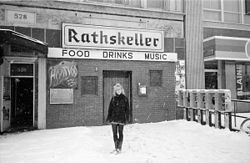
In the late 70s – early 80s the best place to see and hear rock ’n roll in Boston was basement club The Rathskeller – known as The Rat, for short. For those of you who were never in Boston back in those days, The Rat in Kenmore Square was Boston’s equivalent to New York’s CBGB’s.

Not only did The Rat have great music, it was also home to the ground floor rib joint called the Hoodoo Barbeque. The Hoodoo was relocated to The Rat after its predecessor, The Rainbow Rib Room (at the corner of Mass Ave and Newbury St), closed. Chef James Ryan had a recipe for the best ribs and barbeque sauce I’ve ever tasted and the onion rings were out of this world. They were cooked by comedy sitcom writer/producer Eddie Gorodetsky who was then a student at Emerson College and entertained his customers with his humor, cracking wise while performing his fry cook duties. Both spots had fantastic, eclectic juke boxes with records by everyone from The Clash to Tom Waits to John Coltrane.

But I digress.

The radio station I was a DJ at (WZBC) was transitioning at the time. We were quick to pick up on the US and British punk/new wave music of the day – before the big Boston commercial stations, WBCN and WCOZ. We also played the music of a lot of local bands, doing our best (with only 1000 watts) to help break them. Human Sexual Response was a favorite at ZBC. If you’ve never heard them, check out their first album, Fig. 14, on Spotify as Fig. 15. Or better yet, try to find a live performance on YouTube. They were really performance artists, so the visuals were as important as the music.

The song I’ve chosen for today’s SotW is by La Peste – one of the local scene’s most notorious punk rock bands that appeared frequently at The Rat.

“Better off Dead” is also a straight ahead punk rock record – three in-your-face chords and angry, abrasive lyrics about a daughter having under aged sex that the parents can’t do anything about.

The band was a trio fronted by Peter Dayton. Their recorded output was very slight but “Better off Dead” alone is good enough to keep their memory alive. Dayton is now a fine artist based in Long Island.

This is just one example of the vibrant local rock scene in late 70s Boston.

Enjoy… until next week.

Night Music: Bob Dylan, “Stuck Inside of Mobile with the Memphis Blues Again.”

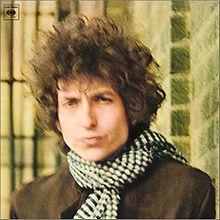
Bob_Dylan_-_Blonde_on_BlondeBob Dylan has been mentioned all over the place on the site since we started waxing quasi poetic about what music means to us. And, Dylan’s phenomenal Blonde on Blonde made the group’s consensus Top 50.

But, I cannot remember a Dylan song actually being singled out in the same way all the other stuff works its way to the top of our collective creative urges.

Blonde on Blonde is my favorite Dylan album by a long shot, and that actually says a lot.

But, my  love for it traces back to around April, 1967, when my parents celebrated their 25th wedding anniversary. For that year, in honor of the occasion, my father bought my mother–and I suppose the family–a big Magnavox stereo in a big piece of mahogany furniture.

That was ok, but what it really meant was that I could lay claim to the family’s portable Admiral phonograph, which I then stashed in my bedroom.

I had pretty much stopped buying singles by that time anyway, so every night, before free-form FM worked its way to the Sacramento airwaves to which I would be stuck for a few more years before I could return to my beloved bay area for good, I would drop a stack of albums on the spindle to lull me to sleep.

The Beach Boys All Summer Long and Surfin’ USA were staples in those days, along with early Beatles and Stones. But, since albums cost a lot–$4 in those days, which was a lot–I did not purchase too many, too often. Meaning like when I first was buying 45’s, five years earlier, I would listen to both sides of everything simply because the song was there and I could.

So, every night side two of disc one, which feature I Want You, Leopard Skin Pillbox Hat, Just Like a Woman, and the clip link linked below, of Blonde on Blonde hit the changer as well.

With Al Kooper on keys, and Robbie Robertson on guitar, along with Rick Danko and Joe South among others, Blonde on Blonde was recorded both in Nashville, then New York.

And, well, spending the past few days in New York, in anticipation of Tout Wars, I thought a number of times about early Dylan while enjoying walking up and the streets, cos New York is such a great walking city. But I also thought of the man, and just what a great artist, singer, songwriter, and generally pretty good guy he has been, and is.

Further, I would like to think that his deconstruction of his own catalogue over the years has been brilliant, keeping him and his songs fresh and valid in a way the audience might not appreciated, but that I hope I do.

In fact this version of Stuck Inside of Mobile with the Memphis Blues Again is quite different from the one I fell in love with as I went to sleep in the later 60’s, but it is just as great and fun.

Love ya Bob. Always will!

http://youtu.be/_hKSEIAXzCU


Night Music: The Stooges, “The Passenger”

Unless Rachel Kushner is referring to an actual incident, she beggars my imagination.

Here are the Stooges with Iggy, not getting pissed on his satin pants, pulling off a pretentious bit of white reggae and also sounding fine. More than fine, really.

Reading The Flamethrowers

elle-the-flame-throwers-de-mdnRachel Kushner’s novel about life in New York in the late 70s is really lively. Her protagonist lived on Mulberry Street in the late 70s, between Spring and Prince. I lived on Mulberry between Prince and Houston. This is a book with historical resonance for me, and dissonance when something is wrong, since Rachel Kushner most definitely was 10 years old when the action was going down.

Not much is wrong, but there is a subplot about a revolutionary group called the Motherfuckers that pushes credulity. A chapter is devoted to their “actions,” including robbing banks, that seem appropriately cool rather than outrageous. Except for this one action:

“Beat up a rock band from Detroit called the Stooges. Beat the shit out of them for not being tough enough, and having a reputation for intensity though it was unearned. The Stooges had played at a rock club on Second Avenue, and just after their set ended word spread that the band was piling into their limousine and heading off to Max’s Kansas City for dinner with rich people and celebrities. The crowd became enraged, dragged the singer and his bandmates from their limousine and forced them back inside the club. The Motherfuckers concentrated on pummeling the singer and then pissed on his satin pants. Which he was still wearing as he lay on his side, groaning. Not quite in the same way he had groaned and yowled onstage, trying to peddle his fake intensity to the young girls, among them Love Sprout and Nadine, Fah-Q’s and Burdmoor’s respective womenfolk. Fah-Q and Burdmoore crossed streams of urine over the body of the singer, and Burdmoore knew that brotherly pacts ended badly. But he was in it to the end. He was ready for badly.”

Gaming Spotify.

A band needed money to tour. Which makes sense, since album sales are nothing. And touring costs money.

They made an album of short songs with no noise, called it Sleepify, and posted it on Spotify. Then had friends of the band play the record over and over. Repeat and repeat. Slowly, the royalty rate added up to a full tank of gas. Now that’s rock.

Brilliant, and unsustainable. Have a great time on the road.

Breakfast Blend: Peter Callandar is Dead.

When I think of the worst song of all time I think of two songs that played incessantly in the storm window factory I worked in the summer after I graduated from high school. That would be Paper Lace’s “The Night Chicago Died” and Bo Donaldson and the Heywoods’ “Billy Don’t Be A Hero.” Both had lyrics written by the Englishman Peter Callander, may he rest in peace. The music for these two 1974 No. 1 hits can be credited to Mitch Murray. It should be noted that Paper Lace did a version of Billy Don’t Be a Hero that is not as good as the Heywoods’ version.

Night Interview: Bob Dylan

Bob Dylan hasn’t done many interviews with major television, so this one with 60Minutes for CBS was significant.

Enjoy. What he says is important. So are other things.