This doesn’t seem to be a version of Pa Pa Power that Sweet Little Demons’ guitarist Lydia Night played on. There is no guitar here. Instead it is an epic music video, longer I think than Scorsese’s Thriller for Michael Jackson, featuring the band of actor Ryan Gosling performing at a nursing home or extended care facility, with a choir of children singing. And everybody eventually dances, too.
There is even a segment with puppets in a field in the middle, kind of like Children of the Corn, but only one child and not all that scary.
The comments on Youtube are full of people raving about the genius of Gosling, asking how could any one person be so talented. That wasn’t my reaction, but at the same time I kind of admire him for embracing (in the other Dead Man’s Bones songs and videos, too) an aesthetic of messy edges and crepuscular whimsey. He could have done many things better that would have been far worse.
I came across this band today, just browsing around, and the first thing you notice is their appalling youth. I assumed that they just looked really young, but a little research shows that they’re REALLY YOUNG!
Guitarist Lydia Night is maybe 14 years old now, while the drummer, Marlhy Murphy, is maybe 11.
They were the youngest band to ever play SXSW in 2013, then 12 and 9 years old respectively. Night also plays in the actor Ryan Gosling’s band, Dead Man’s Bones, which we’ll have to check out.
In the meantime, prepare for an excess of cuteness, which comes naturally to the prepubescent playing in the power punk genre, and here is better than most.
This one has an overly long intro, which has something to do with the log lady from Twin Peaks, and scientists looking through microscopes, but also does a creditable job of hitting the White Stripes notes. You can click to about halfway through to get to the actual song.
If you want to know more, here is a fanzine Q+A. Lydia’s favorite bands? Queens of the Stone Age and the Andrews Sisters. Perfect.
I finally saw the Richard Linklater movie over the weekend, though not in a theater, unfortunately. Which meant that living room distractions crept in, and we stopped a couple of times to eat dinner, and then later to eat dessert.
The movie has a shambling narrative that is anything but slack, but doesn’t turn on the classic arc. This is a movie about a boy becoming an older boy, tweaked by the healthy and impressive gimmick of being shot over the course of the 12 years it takes to get from there to here.
Linklater is a rock ‘n’ roll fan, of course. His second movie is named after a Led Zeppelin song, and his first movie became the name of a music streaming service. And as you might expect, there is music all over the place in Boyhood. For one thing, the boy’s dad is a musician, at least he is at the start, and lots of time is spent in bedrooms and cars, places where music plays.
What struck me after seeing the movie, however, was how little of the music I knew. Some of that is because the opening song was by Coldplay, who i’ve never really listened to much, and some is because I didn’t listen to that much indie rock and rap in the aughts. But the music is an important part of the film anyway, and I wasn’t bothered by it’s general unfamiliarity to me.
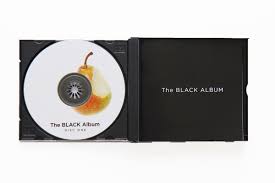
Jack Hamilton has a story in Slate today that, while somewhat pretentious, I think really gets to what’s so excellent about the Boyhood soundtrack. If you get past some of his “oooh-critical!” language, he comes to describe the scene where dad gives boy a copy of the Beatles’ Black Album powerfully and gets it exactly right.
If you haven’t seen the movie and that doesn’t make sense to you, you only have one option. Go see the movie. In a theater, if you can.
Diane and I, as noted here before, don’t have a lot in common musically.
Surely, my partner has a shuffle, and a bunch of tunes she likes to listen to when she is running, but virtually none of the songs are ones that interest me. She likes hip hop, and dance songs from the 90’s, mostly, although occasionally an AC/DC (Dirty Deeds Done Dirt Cheap) or Boston (Foreplay/Long Time) song will sprinkle into her play list.
Not so, JCSS, which, when we discovered we each loved, caused me to download the original 1970 version from Amazon. Diane also was most familiar with that version, that featured Ian Gillian and Murray Head, although she also likes watching the movie when it appears at Easter (kind of like I enjoy watching Ben Hur at Christmas time).
What is also funny, was shortly after we both discovered a mutual love for JCSS, I was at our local recycle center, where in addition to dumping cardboard and styrofoam peanuts, there is an area where folks dump books and old records and DVDs (well, more like VHS tapes), and what was on top of a stack of vinyl but a copy of the original album (no liner notes, though). So, I grabbed it, and played it last week going through my vinyl binging.
When that album first came out, in 1970, I confess that I knew virtually nothing about Jesus historically. Having grown up as a nice Jewish boy in Suburban Sacramento, the subject just didn’t come up.
But, I did buy the cassette for some reason back then, and at least learned the Rice/Lloyd Webber take on the final week of Jesus’ life. And, I thought (and still do) that the whole work–vocals, lyrics, arrangements, and the musicianship–are just fantastic.
In particular, that body of players who delivered the guitars and bass and drums were indeed the part that has intrigued me most. Culled largely from the Grease Band, who toured behind Joe Cocker (check them out at Woodstock: killer) the principle rock musicians in JCSS play so beautifully, and appropriately, that it is almost sick.
Led by Henry McCullough (the Grease Band, and Wings) and Neil Hubbard (the Grease Band, and Roxy Music) on guitars, bass player Alan Spenner (the Grease Band, Mick Taylor, Alvin Lee, and Roxy Music), and drummer Bruce Rowland (Fairport Convention, and the Grease Band), Jesus Christ, Superstar is arguably the best of that oddity known as the rock opera. That means I like it better than either Tommy, or Quadrophenia, both of which I love to pieces, meaning this is high praise.
I do puzzle, though for usually rock’and’rollers don’t sight read symphonic charts, which I would guess is what was produced, and conversely, I have a hard time with Rice/Lloyd Webber thinking in terms of bending an “A” to a “B” starting on the seventh fret of the fourth string, with a little bit of reverb for a fill, so I do wonder just where the collaboration starts and stops.
Fortunately, it is simply a philosophical question, and in no way interferes with just how dead on the drums are, how the strumming and guitar play just enhances the words (which are very good), and how the bass interplays with both.
You can look down your nose at this work, and it might not even be your cup of tea, but no doubt these guys can seriously play.
Been listening to a lot of Blue Oyster Cult lately. Specifically, the “black & white period” BOC, which is the first three albums – the real BOC. They followed with a great live album, which was essentially a review of the b&w period. Then they followed with Agents Of Fortune which was the transition album from the excellent, mysterious, fascinating BOC to the commercial, obvious, boring BOC. Then there was the album with Godzilla on it. Then they made about 10 more albums I don’t know or care about. (Kind of like the excellent early ZZ Top as compared to the boring beards and spinning guitars ZZ Top.)
I’ve always thought the debut album trails the masterpiece second and third albums, and I still do, but it’s been climbing lately.
But the reason we’re here is to highlight the genius of this track from the debut:
which uses the same lyrics as this track from Tyranny And Mutation. (Take note that Lamb does hint at Red And Black at the end.)
Notes:
1) What other two almost completely different songs share the same lyrics (not counting traditional lyrics or something like that)? The only thing I can think of are the two Thank You songs from Sly Stone, although that’s not quite the same as this.
2) Buck Dharma sure is a helluva lead guitarist. I had kind of forgotten about him. He sounds like a country chicken picker amidst a hard rock symphony, but it definitely works. I gotta do a Steveslist of my favorite lead players sometime. Pretty sure BD would make the cut.
3) There’s nothing else quite like the early BOC. If you know something else that sounds a lot like it, do tell. I did listen to the classic first Captain Beyond album the other day and there are some similarities there. Both bands arrived at the same time so if someone was copying, I don’t know who it was.
4) Can’t go without mentioning the best BOC album, the third – Secret Treaties. It’s the highlight of their mystique. Can’t tell you how many hours I spent as a young teen looking over that album cover with the Nazi overtones, particularly the slaughtered German Shepherds in the snow on the back, trying to figure out what the hell the words were/meant. Who needed love songs?
These guys never broke out in any meaningful way, but in those golden days of rock ‘n’ roll they were soldiers on the front line. I loved this song, played this single constantly for a while, because it was so clued in to all the different sounds we rocked to. Anthemic without being bossy, devoted without being chaste.
You tell me the year. The We Are Family Pirates were playing the Orioles in the World Series. I was working for a film distribution company, specializing in arty European movies. We had a hit with a bit of sexploitation called Wifemistress, about (if I’m remembering correctly) an Italian revolutionary who had to go in hiding in a barn across from his old apartment, and thus witnesses his beautiful wife’s liberation, after which she chooses to bed many of his old foes and friends. Laura Antonelli was brilliant as, The Wifemistress.
On this particular October day, it seems that we had a routing problem with the prints of the film, and the only way to get a copy of the movie to the theater in Old Roslyn, on Long Island, for its Friday opening, was for me to personally drive to Harrisburg and pick up the print after the last show on Thursday night, then drive back and deliver the print on LI when the theater opened the next morning.
I listened to the World Series on the radio that night, drove through the PA night past Three Mile Island, which had only recently almost gone China Syndrome, stayed in a cheapo motel somewhere, and then hit Long Island the next morning, delivering the print in time for them to begin their regular schedule. Success!
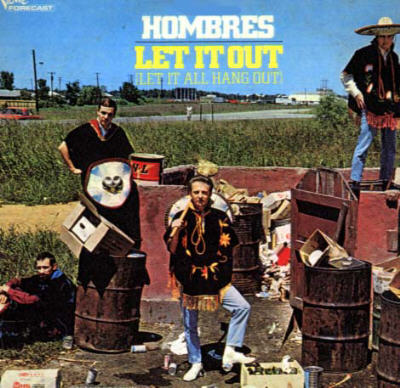
There was a record store in Old Roslyn, and it was there I found a copy of the Hombres’ Let It All Hang Out. I bought it because of the cover photo, which shows the band dressed in serapes and those big round Mexican hats, hanging out around a dumpster. Also, probably because it was cheap. Maybe fifty cents or a buck. The revelation came when I got home.
This was cheese. These guys were going for the novelty hits, the way, let’s say Sam the Sham and the Pharoahs did, but they were just as tight and fun as Sam et al were. This was cheese with chops. The bottom line was, if you take off from this post and play any of the songs on the elpee, including the hit, Let it All Hang Out, or the cover of Lee Dorsey’s Ya Ya, or whatever, you will be charmed. By an album that coughed up one semi hit and laid down a winning mix of New Orleans/Memphis style rock roots tunes and soul.
I give you Hey Little Girl, tonight, which reflects the band’s blue-eyed soul roots, an abiding interest in the rhythm part of I Fought the Law, and a video of ace go-go dancing. The band’s organist was brother to the bass player in the Box Tops, for what that’s worth. Memphis is a small town it seems. Let It All Hang Out.
On February 15, 2007, some high school friends started the Phil Collins Day celebration, to explore together the meaning and complexities of love. Or so they say.