Afghan Whigs, led by singer-songwriter Greg Dulli, have released a new single, “Duvateen,” their second new song of the year.
Formed in Cincinnati in 1986, Afghan Whigs carved out a singular niche in alternative rock, fusing the grit of indie rock with the emotional intensity of classic soul and R&B. Dulli’s brooding songs and restless ambition helped the band stand apart from their grunge-era contemporaries and earned them a devoted following that has endured for decades.
“Duvateen” opens with a sparse piano figure and a steady drumbeat. Layers of synthesizer gradually wash over the arrangement, creating an ominous atmosphere as the song builds toward its soaring chorus and ultimately its dramatic climax.
According to the press release, “The title of the song is a nod to the actual light-manipulating material, which here serves as a symbol for mortality, the dark abyss always framing the background of our lives.”
The 61-year-old Dulli elaborates:
“When I finished ‘Duvateen,’ it felt like my life passing before my eyes. The references to the teacher chasing me down the hall reminded me of my childhood. Digging a hole was an obvious allusion to a grave. I’m at a precipice in life where I can look behind and clearly see the forest of my youth, but I can also see the path to the other side. And it’s going to inform what I do for the rest of my days.”
At this stage of my own life, that’s a sentiment I understand all too well.
One of the most unlikely muses for rock musicians was an American woman named Chris O’Dell. Though she lacked relevant experience, she was hired by Beatles insider Derek Taylor — whom she had met in L.A. — to move to London and work at Apple Corps. She compensated for her lack of experience with grit, determination, and an unwillingness to take “no” for an answer.
Using those qualities, she made herself an invaluable part of the Beatles’ organization and later witnessed some of its most famous moments. She was invited to sing on the closing chorus of “Hey Jude” and was on the rooftop at 3 Savile Row when the Beatles gave their final public performance on January 30, 1969. And those are just two highlights from a remarkable résumé.
But O’Dell achieved a different kind of immortality when George Harrison wrote and recorded “Miss O’Dell,” released as the B-side to the 1973 single “Give Me Love (Give Me Peace on Earth).”
Harrison was inspired to write the song after O’Dell arrived late for a meeting at his Malibu home in 1971. The song opens with a reference to the famine in Bangladesh, a cause that deeply affected Harrison, before taking a sharply humorous turn. He sings about California smog, waves crashing toward his porch, and the hangers-on of the L.A. scene — hipsters carrying drugs while trying to gain access to a Beatle. Why isn’t Miss O’Dell there to rescue him?
(Extra-credit trivia: the phone number “Garston 6922” that Harrison mutters at the end of the song was Paul McCartney’s childhood phone number in Liverpool.)
The song’s loose, playful spirit is heightened by the three moments where Harrison breaks into laughter after flubbing lines in the verses — mistakes he chose to leave in the finished recording. The backing track is equally relaxed, featuring Harrison on acoustic guitar and harmonica, with Klaus Voormann on bass and Jim Keltner on drums.
But “Miss O’Dell” was not the only song inspired by Chris O’Dell. Leon Russell wrote “Pisces Apple Lady” while the two were falling in love during a passionate four-month affair. O’Dell was a Pisces and, of course, closely associated with Apple Records.
O’Dell had originally met Russell when she recommended him as a substitute for Nicky Hopkins on sessions for Jackie Lomax, who was recording for Apple. Russell and O’Dell connected immediately.
O’Dell later recalled that she first realized “Pisces Apple Lady” was about her while sitting in a studio control room with Eric Clapton during a playback of the track.
And those two songs do not complete O’Dell’s musical legacy as a muse. Russell would later write a second song about her as well: “Hummingbird.”
The Lemon Twigs – the brainchild of brothers Brian D’Addario and Michael D’Addario – released a new album, Look For Your Mind!, yesterday. The lead single is the irresistible “2 or 3.”
The song is steeped in the ’60s psych-influenced power pop that the Lemon Twigs trade in so well: ringing guitars, tight harmonies, a singable chorus, and even a key modulation for the final refrain. What’s not to like?
Brian said the lyrics came to him in a dream. “I had to interpret what ‘she’s lived 2 or 3 as many lives as me’ meant,” he explained. “It made me think of a guy who wasn’t cultured or worldly enough for his girlfriend and had to pretend to be interested in fine art and history.”
After one final East Coast date in Washington tonight (May 9), the Lemon Twigs head west, including a June 17 stop at The Fillmore in San Francisco.
Susan Lucas (aka Soo Catwoman) was known for her distinctive hairstyle and makeup that made her one of the most recognizable faces of the mid-to-late ’70s British punk scene. iconic fashion aesthetic — part feline glare, part art-school provocation — helped elevate her to a kind of underground celebrity, with her image splashed across magazine covers and emblazoned on T-shirts.
Soo’s insider proximity to the scene also gave her a foothold as a performer. She appeared with the band the Invaders and occasionally stepped out on her own, less as a traditional frontwoman than as an extension of punk’s anything-goes ethos — where attitude and presence could matter as much as technical polish.
Today’s SotW is her 1998 solo cover of “Back Stabbers”, originally recorded by The O’Jays. Here, Soo handles the vocals, backed by Derwood Andrews (Generation X) on guitar and Rat Scabies (The Damned) on drums — a lineup that immediately signals a very different intent from the silky precision of the original.
Musically, the transformation is striking. Where the O’Jays’ version glides on lush strings, tight harmonies, and a groove rooted in Philadelphia soul, Soo’s rendition strips the song down to its bones and rebuilds it with a jagged, punk sensibility. The rhythm section hits harder and more directly, Andrews’ guitar slashes rather than soothes, and Soo’s vocal trades refinement for attitude — more sneer than croon. The result is less about seduction and more about confrontation, turning the song’s theme of betrayal into something raw and immediate.
While the O’Jays’ original remains impeccable, this cover earns its place by reimagining rather than imitating. It’s a reminder that a great song can survive radical reinterpretation — and sometimes even reveal new edges when filtered through a completely different lens.
Rock stars from the ’60s and ’70s classic rock era are dropping like flies these days. Some of these passings hit me hard; usually, I can see it coming. But when I learned this week that Dave Mason died on April 19, I was surprised by how deeply it affected me.
I’ve long been a fan of Traffic, and it’s sobering to realize that only Steve Winwood remains from the original quartet. I followed Mason not only through Traffic, but also in his work as a sideman and across his solo career. I won’t attempt a full recap of his accomplishments here; the recent obituary in The New York Times does that far better than I could.
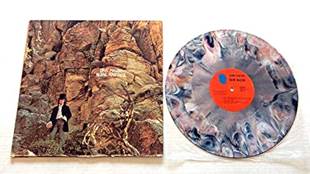
To honor Mason in today’s SotW, I’ve chosen “Only You Know and I Know” from his debut solo album Alone Together, memorably released on collectible marble vinyl on the Blue Thumb label.
“Only You Know and I Know” was later popularized by Delaney & Bonnie, who covered it on their 1971 album D&B Together — a record Mason himself played on, alongside an impressive roster that included Eric Clapton, Duane Allman, and Leon Russell, among others.
The track has a driving yet laid-back feel, pairing a catchy pop melody with a loose, rolling groove. It gallops along on a sturdy bass line and shuffle beat, accented by Mason’s distinctive, fluid guitar lines.
Although Mason is credited with writing a number of rock classics — most notably the oft covered Traffic track “Feelin’ Alright” – “Only You Know and I Know” may well stand as his true masterpiece.
I’m posting today from New Orleans, where I’m back in town for another French Quarter Festival — a weekend of great food, plenty of drinks, and fantastic local music.
Keeping with that theme, today’s Song of the Week is “Cocaine and Chicken Fricassee” by John “Papa” Gros.
Gros (pronounced “Grow”) is a multi-instrumentalist and a fixture on the New Orleans music scene — an active performer and an in-demand sideman. His style is a true gumbo of rock, funk, and blues — in other words, quintessential New Orleans music.
Over the years, he has released albums featuring both covers of NOLA classics and his own compositions, first with his band Papa Grows Funk and later as a solo artist.
He has also contributed keyboards on sessions for Little Feat, Better Than Ezra, The Neville Brothers, The Funky Meters, Bonerama, and Anders Osborne, among others. He appeared as a performer in the HBO series Treme and was part of the house band for the 2014 all-star tribute The Musical Mojo of Dr. John: Celebrating Mac and His Music, produced by Don Was — a show I was lucky enough to attend thanks to the foresight and generosity of my cousin Kevin J.
When you can experience this level of talent for free, it’s easy to understand why I look forward to the “Quarter Fest” every year.
The British band Pulp, led by Jarvis Cocker, released More in 2025 — its first studio album in twenty-four years. The record was met with widespread critical acclaim, landing on numerous year-end “best of” lists from publications such as AllMusic, The Guardian, Mojo, NME, and Rolling Stone, among others.
A standout track is the album’s opener, “Spike Island,” which has enjoyed heavy rotation on Sirius XM for months.
Critics have noted the song’s disco inflections. In its October 2025 review, Clashmusic.com observed: “It starts with a high-pitched whistle, a cymbal count-in, then erupts into glorious, technicolour Pulp. Accompanied by a bassline that’s just begging for a remix (no doubt on its way), the guitar lick is brand new yet instantly familiar.”
The title references the legendary 1990 concert promoted by the Stone Roses’ Phil Jones and attended by an estimated 28,000 “baggy people in bucket hats.” Cocker’s lyrics were inspired by a story from the song’s co-writer, Jason Buckle, who had been at the show and recalled a DJ repeatedly exhorting the crowd – “Spike Island, come alive!” — a phrase that ultimately became the song’s hook.
I suppose you had to be there… or simply listen to “Spike Island.”
The L.A.-based band War was one of the great soul/funk groups of the 1970s, and one of their finest achievements is “Slippin’ into Darkness.”
A true collective effort, the song was written by band members Charles Miller, Harold Ray Brown, Howard E. Scott, Lee Oskar, Leroy ‘Lonnie’ Jordan, and Thomas ‘Papa Dee’ Allen — with only bassist B.B. Dickerson absent from the songwriting credits.
Built around a repetitive, almost trance-like groove, the track draws on African and Latin rhythmic elements. It’s less about traditional verse-chorus structure and more about circular motion — music that feels as though it’s caught in its own hypnotic loop. Over this foundation sits a strong lead vocal, supported by sweet, soulful harmonies.
A gospel-tinged vocal introduction sets the tone for the seven-minute album version, which also features a second verse omitted from the shorter single edit.
Lyrically, the song traces a descent into isolation following the loss of a friend — possibly to alcohol:
I was slippin’ into darkness When they took my friend away
You know he loves to drink good whiskey (Wo ho ho ho) While laughing at the moon
In the second verse, a mother’s warning cuts through the fog, suggesting that grief is curdling into something more dangerous:
I was slippin’ into darkness When I heard my mother say Hey, what’d she say what’d she say You’ve been slippin’ into darkness (Wo ho ho ho)
Pretty soon you gonna pay, hey
This is a song that demands to be played loudly — ideally through headphones — where each instrument reveals itself in sharp relief: guitars, horns, harmonica, keyboards, and percussion all occupying their own space. It’s a small miracle of ensemble playing.
Today’s SotW is the next installment of my Contrast Series — this time on the subject of high school. Class is in session!
There’s a certain mythic power to the phrase “high school” in rock and roll — less an institution than a pressure cooker, a stage, a prison, or a launching pad. Across three different eras, Jerry Lee Lewis, MC5, and Ramones each seized on that setting and turned it into something revealing about youth culture at the time. Their songs – “High School Confidential,” “High School,” and “Rock ‘n’ Roll High School” — don’t just depict teenage life; they refract it through three distinct musical languages: rockabilly exuberance, revolutionary proto-punk, and bubblegum punk.
What’s immediately striking is how differently each song sounds, and how those sonic choices shape the meaning of the lyrics.
“High School Confidential,” recorded by Jerry Lee Lewis in 1958, is a masterclass in controlled chaos. Built around his pounding, percussive piano style, the track practically explodes out of the gate. The rhythm is loose but propulsive, driven by boogie-woogie patterns that feel both joyous and slightly dangerous. Lewis’s vocal is a yelp, a sneer, a laugh — all at once. Musically, the song embodies rebellion without ever fully breaking form; it’s still tethered to the swing and blues traditions that preceded it.
Lyrically, that tension plays out in a kind of wink-and-nod subversion. The “high school” of the song is less about education than about desire barely contained within institutional walls. The famous opening – “Come on over, baby, whole lotta shakin’ goin’ on” — spills over from his seminal, earlier hit into this setting, collapsing any distinction between classroom and juke joint. Authority figures exist only to be ignored. There’s mischief here, but it’s playful, coded, and very much of its late-1950s moment, when transgression had to be smuggled in under the guise of humor.
A decade later, “High School” by MC5 detonates that ambiguity. If Lewis’s performance suggests rebellion, the MC5 demands it. Musically, the band trades piano swing for overdriven guitars, a relentless backbeat, and an almost militaristic intensity. The groove is tighter, louder, and far more aggressive — proto-punk in its rawest form. Where Lewis plays with rhythm, the MC5 weaponize it.
The lyrics strip away innuendo and replace it with confrontation. This is not a mischievous high school fantasy; it’s a critique of the institution as a site of repression and conformity. The tone is urgent, even desperate. There’s a sense that the stakes have escalated — from sneaking around behind authority’s back to rejecting its legitimacy altogether. Context matters here: late-1960s Detroit, political upheaval, and a youth culture increasingly aligned with protest movements. The high school becomes a microcosm of a society that the band wants to tear down and rebuild.
The kids know what the deal is They’re getting farther out everyday We’re gonna be takin’ over You better get out of the way
By the time we get to “Rock ‘n’ Roll High School,” Ramones offer a third perspective — one that’s neither coded subversion nor outright revolution, but something closer to gleeful escapism. Musically, the Ramones distill rock and roll to its essentials: short, fast, hook-laden, and deceptively simple. The guitars buzz with a uniform, almost mechanical precision, while the melody carries an undeniable pop sweetness.
Lyrically, the song reframes high school as a battleground between boredom and liberation, but without the MC5’s ideological weight. The solution isn’t revolution — it’s rock and roll itself. Lines about not wanting to be taught and preferring music to textbooks aren’t calls to arms so much as declarations of identity. The Ramones turn rebellion into something communal and joyous, a shared language rather than a political program.
Well, I don’t care about history Rock, rock, rock ‘n’ roll high school ‘Cause that’s not where I wanna be Rock, rock, rock ‘n’ roll high school I just wanna have some kicks I just wanna get some chicks Rock, rock, rock, rock, rock ‘n’ roll high school
Their high school is oppressive, yes — but it’s also ridiculous, something to be laughed at, escaped from, and ultimately blown up through three chords and a chorus.
Taken together, these three songs trace an evolution in how rock music engages with youth and authority. Jerry Lee Lewis hints at rebellion from within the system, using musical exuberance and lyrical suggestion. MC5 reject the system outright, matching their radical politics with equally uncompromising sound. Ramones, in turn, sidestep ideology in favor of immediacy, transforming rebellion into style, attitude, and, perhaps most importantly, fun.
In that sense, “high school” becomes less a setting than a mirror — reflecting not just teenage experience, but the changing ambitions of rock itself.
The English rock band Humble Pie was born out of the ashes of several notable groups — Small Faces (Steve Marriott), The Herd (Peter Frampton), and Spooky Tooth (Greg Ridley) — in 1969. Yet after years of relentless touring and three albums on Immediate and A&M, the band struggled to live up to its considerable promise.
For their fourth album, Rock On (1971), Humble Pie enlisted legendary producer Glyn Johns. Johns evaluated the situation and decided the band was unfocused and needed direction. His solution was straightforward and firm. Steve Marriott would take charge as lead vocalist, while Peter Frampton would concentrate on lead guitar. For the others, the directive was simple — stay in your lane.
That discipline, combined with material the band had already road-tested, resulted in what is arguably Humble Pie’s most cohesive and fully realized studio album.
The standout track on Rock On is “Stone Cold Fever,” credited to the entire band.
Peter Frampton brought in the opening riff — one of those instantly arresting figures that anchors the song from the first bar. From there, the band shaped the arrangement collectively, including an unexpected jazzy midsection that allows Frampton to stretch out and reveal a more expansive musical vocabulary. Nineteen-year-old drummer Jerry Shirley holds the performance together with crisp, driving precision, while Steve Marriott delivers a raw, soulful vocal that locks in perfectly with Frampton’s more measured, melodic guitar work.
Marriott reportedly wrote the lyrics in about twenty minutes — and it shows. There’s little in the way of narrative; instead, the song leans on immediacy and emotional force, using the vocal as another instrument riding the groove rather than telling a story.
“Stone Cold Fever” stands as a testament to what Humble Pie could achieve when its considerable talents were aligned — focused, collaborative, and firing on all cylinders.