I wanted to write a post about some influential, all women rock bands but I was having a hard time getting started. Where would I begin? Who would I include? More importantly, who would I leave out? The more I thought about it, the bigger the project became. To tackle the subject thoroughly, I would have to write a book!
OK, so here’s what I’m gonna do – I’ll focus on pioneering, all women bands of the 70s. So don’t go crazy because I don’t mention earlier woman rock artists like Wanda Jackson, Janis Martin, Aretha Franklin, Janis Joplin, Grace Slick (not all women “bands” anyway) or all of the early 60s girl groups (perhaps all women, but usually just singers). And while it’s tempting to include the GTOs (Girls Together Outrageously), were they really a band or just a novelty side project Frank Zappa put together for a bunch of his more interesting groupies? Genya Ravan’s Goldie & The Gingerbreads almost qualify, but they’re from the 60s – anyway, more on that later.
And even though I’m focusing on the 70s, I won’t be discussing folk acts like Kate & Anna McGarrigle (though they’re worthy of a SotW), women in or fronting rock bands like Patti Smith, Pat Benatar, Bonnie Raitt, the Wilson sisters (Heart), Tina Weymouth (Talking Heads) and so many more. And I’m not talking about The Go-Gos or the Bangles – they’re too popular and were 80s bands anyway.
So who’s left? How about Fanny, Isis and The Runaways.
Fanny consisted of sisters June and Jean Millington, Alice De Buhr and Nickey Barclay. They were the first self-contained, all women rock band to get a major label deal. They signed with Reprise and it wasn’t based on the novelty of being an all women group. These chicks (sorry for the sexist adjective, but it fits here) wrote their own songs and could really play. Lowell George (no slouch of a musician) used to hang out at their rehearsal studio.
“Seven Roads” is the closer on their 1970 debut album. It opens with a very cool Hammond organ intro and a heavy guitar riff. Primal tom-toms enter for the chorus. Enough room is left for heavy guitar and organ solos.
Isis was an all women band that formed out of the ashes of the earlier mentioned Goldie & The Gingerbreads. Former Gingrbreads guitarist Carol McDonald and drummer Ginger Bianco formed an 8 piece horn rock band and released their first album in 1974 on the Buddah label. But major success eluded the band, partly because they had a pretty eclectic repertoire that was hard to pin down; and partly because they promoted overtly gay themes at a time when that didn’t play outside of New York and San Francisco. (Their debut album cover had the band standing naked but covered in silver paint and one of their songs was called “She Loves Me.”)
The Shadow Morton produced “April Fool” is my choice to represent the band. (Morton also produced the mini operas by another girl group from the 60s – The Shangri-Las.) “April Fool” has that big, bluesy, horn rock sound. But it is also driven by infectiously funky, Latin percussion beats. It is so cool, that the drum break was sampled by De La Soul and used on their song “Big Mouf.”
The Runaways were an L.A. based, teenaged, all-female group whose career was launched by manager/producer Kim Fowley. There were personnel changes throughout their history, but the core lineup was Sandy West (drums), Joan Jett (guitar/vocals), Lita Ford (lead guitar), Cherie Currie (lead vocals) and Jackie Fox (bass). The band’s heavy mascara, street tough image converged with the burgeoning punk movement of the late 70s, landing them in the category of a female version of The Ramones (though in reality they were closer to a female version of Aerosmith).
“You Drive Me Wild” was penned by Jett and was on the band’s first album release in 1976. It sounds like it might have been inspired by T-Rex. Jett took the lead vocal on this one. I’m not sure who played the stinging guitar solo, but I assume it was Ford.
It is also interesting how these bands were interconnected in ways beyond the obvious. Kim Fowley was also an early supporter of Fanny and June Millington played guitar the Isis’ second album, Ain’t No Backin’ Up Now.
I’m planning on putting together a Mekons 11 Songs set, because Steve asked for it. Not sure this tune makes that list, but it’s a guitar and drums rocker, with an atmospheric break in the middle.
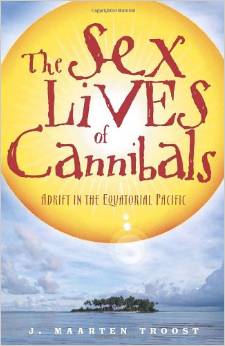
I packed thirty-odd discs that I felt could comprehensively meet any likely musical desire…[but] I forgot our CDs in my mother’s garage in Washington, thousands and thousands of miles away…
..I was thinking about these CDs a few months later, when once again I was being driven to the brink of insanity by an ear-shattering, 120-beat-a-minute rendition of “La Macarena,” the only song ever played on Tarawa. It was everywhere. If I was in a minibus, overburdened as always with twentysome people and a dozen fish, hurtling down the road at a heart-stopping speed, the driver was inevitably blasting a beat-enhanced version of “La Macarena” that looped over and over again. If I was drinking with a few of the soccer players who kindly let me demonstrate my mediocrity on the soccer field with them, our piss-up in one of the seedy dives in Betio would occur to the skull-racking jangle of “La Macarena.” If I happened across some teenage boys who had gotten their hands on an old Japanese boom box, they were undoubtedly loitering to a faint and tinny “La Macarena”…
…As I continued to be flailed by “La Macarena,” I took small comfort in the fact that at least no one on Tarawa had ever seen the video, and I was therefore spared the sight of an entire nation spending their days line dancing…
…What finally brought me to the brink was the recent acquisition of a boom box by the family that lived across the road… sometimes for hours at a time, and I would be reduced to an imbecilic state by the endless playing of “La Macarena.” It was hot. My novel—and this is a small understatement—was not going very well. My disposition was not enhanced by “La Macarena.” I wondered if I could simply walk across the road and kindly ask the neighbors to shut the fucking music off… and I asked Tiabo if she thought it was permissible for me to ask the neighbors to turn the music down. “In Kiribati, we don’t do that,” Tiabo [the maid] said. “Why not?” I asked. “I would think that loud noise would bother people.” “This is true. But we don’t ask people to be quiet”…
…As the months went by and “La Macarena” was etched deeper and deeper into my consciousness, I became increasingly despondent that our package of CDs would never arrive. Then, one day the stars aligned, the gods smiled, and as I rummaged among the packages I saw with indescribable happiness my mother’s distinctive handwriting. Oh, the sweet joy of it. I claimed the package, stuffed it my backpack, and biked like the wind.
“Tiabo,” I said, full of glee. “You must help me.” She eyed me suspiciously as I plundered through our box of CDs. “You must tell me which song, in your opinion, do you find to be the most offensive.” “What?” she asked wearily. “I want you to tell me which song is so terrible that the I-Kiribati will cover their ears and beg me to turn it off.” “You are a strange I-Matang.” I popped in the Beastie Boys’ Check Your Head. I forwarded it to the song “Gratitude,” which is an abrasive and highly aggressive song. “What do think?” I yelled. “I like it.” Damn. I moved on to Nirvana’s “Lithium.” I was sure that grunge-metal-punk would not find a happy audience on an equatorial atoll. “It’s very good,” Tiabo said. Now I was stumped. I tried a different tack. I inserted Rachmaninoff. “I don’t like this,” Tiabo said.
Now we were getting somewhere. “Okay, Tiabo. How about this?” We listened to a few minutes of La Bohème. Even I felt a little discombobulated listening to an opera on Tarawa. “That’s very bad,” Tiabo said. “Why?” “I-Kiribati people like fast music. This is too slow and the singing is very bad.” “Good, good. How about this?” I played Kind of Blue by Miles Davis. “That’s terrible. Ugh . . . stop it.” Tiabo covered her ears. Bingo. I moved the speakers to the open door.
“What are you doing?” Tiabo asked. I turned up the volume. For ten glorious minutes Tarawa was bathed in the melancholic sounds of Miles Davis. Tiabo stood shocked. Her eyes were closed. Her fingers plugged her ears. I had high hopes that the entire neighborhood was doing likewise. Finally, I turned it off. I listened to the breakers. I heard the rustling of the palm fronds. A pig squealed. But I did not hear “La Macarena.” Victory. “Thank you, Tiabo. That was wonderful.” “You are a very strange I-Matang.”
My foray into death metal has been interrupted by another Amazon Santa CD I received in the mail that I’d been wanting for quite a while – ’77’s 21st Century Rock.
These guys truly get what made AC/DC great and it has nothing to do with Brian Johnson’s screech or Back In Black. It’s three-chord boogie-woogie rock ‘n roll, the kind of music that makes one want to strut around the room like Bon Scott.
This song:
is the same as this song:
But they’re both great songs. (I must admit, the AC/DC is still better in the side-by-side taste test.)
Why doesn’t AC/DC sue the shorts off these guys? Maybe they understand that imitation is the best form of flattery and that 21st Century Rock is the best AC/DC album since Highway To Hell.
Anyone who isn’t smiling during three-chord boogie-woogie rock ‘n’ roll is no friend of mine. (OK, you still are, but it seemed like a fine phrase with which to end the post.)
P.S. – I’ve been through Wolverine Blues once now and it’s somewhat difficult. A little bit more of an aural assault than even I am used to. The good news is there are bits and pieces there that I found myself liking. Even one whole song. Again, I’ll keep you posted.
Cash’s studio recording of this on Unchained, his second album produced by Rick Rubin, was a revelation. I loved the original (Beck wrote it, it’s from his great album Stereopathic Soulmanure), but Cash’s deep voice and the simple backing of Tom Petty and the Heartbreakers rendered it just as darkly sad, but less petulantly sloppy.
On this live version Cash is a lot more wispy and the band is a lot more country, and it’s nice to listen to a fresh take.