I have to admit I never really know just how to compartmentalize Cake.
Surely, by Steve’s definition they are not rockers, and despite the trumpet, the band is neither soul, nor jumpin’ jive a la the Squirrel Nut Zippers, as an example.
The band’s vocals are not really sung, and well, if there is the beautiful ability of a band to coordinate back-up vocals and harmonies as Steve has pointed out, Cake breaks a those rules by shouting out the back-ups, in unison, and in tune, but hardly sung.
If I had to use a word for them, it would be quirky.
I believe the band hails from Stockton, California, a somewhat sleepy largely farm community about 40 miles southeast of Sacramento which also produced the equally offbeat Pavement.
My late wife, Cathy Hedgecock, was a reporter for the Stockton Record for a few years back in the late 80’s, in fact she was the first woman assigned to the farm beat in the history of the Record, something that may seem ho-hum these days, but at the time was a big deal.
Cathy actually wrote a collection of short stories called The Draping Effect that focused on the bizarre things that came through the newsroom of a community that was too big to be a town, and not quite big enough to really be a city. In fact, Cathy often said if there is a strange crime that occurs on the planet, chances are it was six degrees of separation from Stockton.
Anyway, here is my favorite Cake to go with your coffee this morning.
It is hard to appreciate just how on top of the Remnants Peter is till he leaves for a few days.
Meaning guilt is enough of an impetus for Steve and me to acknowledge the void, and to try and fill it up a tad.
So, I thought I would turn to a band I really have loved over their career, who have a great body of work, and yet who have barely merited a whisper in Remnantland.
I was a fan with my first listen to Radio Free Europe, and with their third album and the song Fall on Me the issue of buying their next disc sight unseen was beyond settled.
I do have all their albums, and I think I put their brilliant Automatic for the People on my essential 30 or 50 or however many albums we listed a few years back.
For a sample, I picked a rocker from the great Monster album, a song fostered by a news miscue elicited by Dan Rather, but not meant to be heard by the viewing public when he asked “What’s the frequency Kenneth”, ostensibly of the sound guy on the news show. This is kind of a fun live version, with a couple of different performances spliced together.
For a second piece, a live treatment of the beautiful Man on the Moon that concludes said Automatic for the People as perfectly as does The End wind up Abbey Road.
We are up at the Tahoe house for a week which means no TV (save DVDs) and no radio (save streaming). Right now it means pouring down rain banging off our metal roof, and maybe in a few hours it will mean the first snow drop of the year. Irrespective, we need the water, so bring it on.
But, it also means I am near KTKE HQ in Truckee, and while streaming this morningDJ Lindsday with an A spun this great Marshall Crenshaw tune from his equally fine self titled debut disc from 1982.
I had high hopes for Crenshaw and his Hollyesque delivery (these days I reserve that for Jake Bugg) and saw Crenshaw in the early 90’s at the Fillmore. He was good enough (and paired with the great Jimmy Dale Gilmore) but he hadn’t really advanced much beyond that first album.
Which is ok, I suppose. I just hope for growth out of an artist I like. Still, a tight little cut.
We all have our likes and loves here in Remnantland.
Peter certainly has the widest palate of taste and experimentation, with Steve sticking to a core sort of set of criteria that constitute rock’n’roll, while Gene, steeped in his working class New York roots, is drawn to the arty side of music Peter, but his soul pushes more from the influence of doo wop through the Ramones, via Johnny Thunders.
I think essentially it is all good stuff.
As for me, I am drawn to the pop sensibilities, and for me, the wit of the British tongue, merged with American rhythm and blues, is what I love or gravitate to most, but I dig Beethoven and Roland Kirk, as well.
But, one of things I had been trying to do here is remember to highlight bands and artists who we tend to forget about, hence, the Moody Blues, who were, along with the Who and the Kinks, my favorite band back in 1967-69.
Before Pink Floyd, before Rush, before Yes, and before Spiritualized, there was the Moody Blues, the first real prog rock band.
The Moodys first hit in 1966 with a hit, Go Now, that featured Denny Laine (later of Wings) on vocals, in 1965, but after that tune, Laine left the band and re-emerged with John Lodge and Justin Hayward as their principles.
In 1967–the year of Sgt. Pepper–and the group produced the Days of Future Passed, a concept album that featured the beautiful cuts Tuesday Afternoon and Nights in White Satin at a time when Pink Floyd was still seeing Emily play (a song I love).
The jump in concept and realization between Go Now and Tuesday Afternoon is kind of like the leap between Radiohead’s Creep as compared to Airbag.
Featuring the flute of Ray Thomas, and the unusual and haunting mellotron keyboard of Mike Pinder, Days of Future Passed was an attempt by the band to deconstruct Dvorak’s Symphony for the New World and on the liner notes of the groups follow-up, In Search of the Lost Chord, producer Tony Clarke regarded the band as the “worlds smallest symphony orchestra.”
This all might sound hoity toity snotty, and as having nothing to do with rock’n’roll in the Moyer sense, but this was the throes of the psychadelic era and I was a 15-year old new stoner and both Days and In Search were always on the changer (as were Tommy and Blonde on Blonde) and I still am knocked out by the band’s Legend of a Mind song.
Sadly, I saw a reunion performance of the band at Red Rocks 20-years or so ago, and it was embarrassing to watch, but, I still have to acknowledge that Moody’s played a pivotal part of my life for a few years back there.
In fact, I was into the Moodys before they made it, and started losing interest in the band with their next album, On the Threshold of a Dream, and by the time To Our Children’s Children’s Children came out the band had become a favorite of those ubiquitous average Joes, and that was the last album I bought by the band, turning instead to Atom Heart Mother.
Irrespective, the song Gypsy from Children’s remains one of my favorite songs of the group.
Way back in February, Peter wrote a Night Music piece on Paul Revere and the Raiders and I started to write this very article I am now updating.
I saw the band a couple of times in the early 60’s, opening for the Beach Boys, who played Sacramento a lot. In fact I was at the show that became The Beach Boys in Concert, and the Raiders played that gig.
The Raiders, headed by Paul Revere, were a more than entertaining collection of players who knocked out some very good pop hits. Just Like Me, Kicks, Louie Louie, and Him or Me, What’s it Gonna Be?, to name some.
But, Revere and band hold kind of a funny and dubious place in history.
At the time the first wave of British bands were washing onto the American shore and airwaves, the head of A&R at Columbia Records was none other than Mitch Miller. You know, the Sing Along With Mitch guy, who had a Van Dyke to give the illusion of beatnik coolness, but who in reality was as square as they come.
Convinced that long hair and Brit Pop were just a passing fancy, Miller dissuaded the Columbia powers that the company should not sign any of the zillion bands just waiting to be discovered, and by the time it was realized this was a business/tactical error, The Raiders were the first band signed, for a million clams.
Not that the band was bad: they were just a lot different than the British invasion bands.
Miller skedaddled from Columbia, and Clive Davis took over to a pretty successful run, but the plan definitely waylaid the company for a few years.
Anyway, Revere, the leader, passed away Saturday, perfectly enough at the age of ’76, and irrespective of Miller’s acumen, the Raiders were excellent showmen and musicians and songwriters.
As a result of my posting of Bruce Springsteen’s Prove it all Night, a discussion ensued that sort of points to not just the essence of art, but the packaging of said commodity.
Peter noted that indeed the E-Streeters were a well rehearsed machine, conveying the The Boss’s message, however he noted the message was indeed that of Bruce, and while Steve does give cred to Bruce’s early material, he did not think that much of the band live.
Fair enough.
In fact, Steve noted in addition that the Bruce and Co. had pretty much become mainstream–the stuff of “average Joe’s”–and that in general, that told him he was not interested.
Again, fair enough.
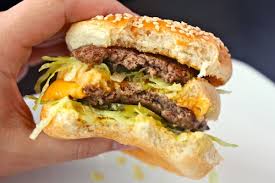
Personally, I agree with both of them, and I use the argument of McDonalds, for the company of the Big Mac is surely the most popular and successful food selling machine in our country, let alone on the planet.
But, that does not necessarily mean the “BM” either tastes good, or is good for us.
Truth is, I like a Big Mac once in a while for some perverse reason, which is indeed odd since I do all of our cooking and prepare almost exclusively from scratch.
But, I also suspect the had we gone to the original McDonalds in Southern California in 1957 and ordered a double cheeseburger, it would have been good like a burger at Burger Me, in Truckee, would nail it today. I think both would hit the spot, just as were Burger Me suddenly franchised, the animal I would eat today would probably not be like the sandwich I would get in ten years.
I think as part of the musical parallel I pointed to, I loved the Clash through their first albums, and even saw them four times during their early years. But, once Combat Rock became anthemic to the “average Joe’s,” I lost interest, no matter how good the album might have been (I have obviously heard some cuts from it, but I never owned it, unlike London Calling, or Give ”em Enough Rope, or the first Clash album).
But, I do pose the path of three artists, starting with the great British folker, the late Nick Drake, who died of an amphetamine overdose in 1974, but never got a chance to make it with the average Joe’s. Although, his great tune, Pink Moon was used as a soundtrack for an ATT commercial, and two of his tunes, Magic, and River Man, did make the charts 30 years after his death after the release of a compilation album (Made to Love Magic) and related tributes in 2004.
Had he lived, would Drake still be so dark, so moody, and to me so hauntingly accessible (we could ask the same about Buddy Holly, but please leave the over-rated James Dean out of the conversation)?
How about the bay area band Jellyfish, who had a killer debut album (Belly Button) in 1990 that fostered a big time signing, and three years later the over produced (Queen sang back-up) and under delivered Spilt Milk which resulted with poor revues and the dissolution of the band. Heard of them, average Joe?
I thought not.
Then there is Steve’s childhood fave, KISS, whom he stands behind over their first few albums, who developed as dedicated a following, and as staged a performance as Springsteen et al. And, a band the average Joe’s love, it seems, as much as the Boss.
So, it seems the way of art is that bands or writers or painters or whatever do indeed start with a vision, and with the pain that was too much for Drake (who suffered from depression), and then either become another animal, as in Jellyfish and give up, or they simply evolve, succeed, and become boring and the apple of the average Joe eye?
The Biletones have had as busy a summer–one that has compounded just how crazy my day job has been–playing no fewer than five gigs since June, with one more benefit ahead mid-October.
Demanding or not, it is big fun, not just playing, but playing live is among the greatest feelings I have experienced.
Unfortunately, because the band does have day jobs and busy lives, we only manage practice once a week, and with that many performances on top of one another, we have pretty much kept the same set list all summer.
And, needless to say, we have become sick of most of the songs we play, no matter how much we might like them at the core.
Since there is roughly a month between the last two shows this run, we did troll one another for song suggestions, coming up with roughly ten tunes new to us to throw onto the possibles for the October soiree.
One that made the cut was The Boss’s Prove it all Night, a great cut from his equally great Darkness on the Edge of Town record.
Darkness made my Essential 50 albums, and it clearly stands as my favorite Springsteen album amongst a very strong body of work.
Say what you will about Springsteen, being a superstar, dismissing his “art” due to his fame along with the spectacle of arena rock that follows him, but, mark my words, his band is as strong and tight as any other group whoever hit the stage, and no one is more dedicated–performance by performance–to delivering a quality and entertaining show to his minions as is Springsteen and his cartel.
Similarly, Bruce is an excellent song writer, penning a variety of numbers over the years that do indeed explore the angst and uncertainty of life that we associated with rock’n’roll. In fact, because Bruce and his band have endured, we have seen him grow and reflect upon life, not just as an artist, but as an aging and maturing one who accepts his life and fate and is able to translate that experience into songs that hit a chord with his audience.
If there is a problem with Bruce and the band, he has a voice, and they have a sound that seem to make it hard to break out. Rarely do the songs from album to album differ in essence and approach as say the Stones do when you compare Aftermath to Beggar’s Banquet to Their Satanic Majesty’s Request.
True, Bruce has had his more than interesting explorations, such as the uber-satisfying Nebraska but as noted, the essence of the band has been constant over the years, and thus I think as a result he gets dismissed a little.
In fact, Springsteen and the band have been largely missing from this site (there are other bands too I have thought of that deserve reminders of just how good they are) so I thought I would try to right.
The clip below is and excellent example of the Springsteen way, which is basically concocting a four-minute gem for an album, and then blowing it into a ten-minute tour de force live.
What is different about this clip, is that Bruce is the lead guitar player, and he delivers killer notes and tone (thank you Mr. Telecaster!). Roy Brittan also provides a lovely keys in this treatment, but the guts all go to Bruce.
To say I feel guilty from having been so pulled away from here is sort of rhetorical.
And, I see posts of some great tunes being spotlighted (and there are some I wanna get out there too).
Life seems to be slowing, thankfully, but, while dozing off last night, the Family Guy where Lois and Peter go to a KISS-fest was on. So, funny.
Anyway, this clip is really the only thing out there worth displaying, but it is indeed pretty good (was thinking of you Steve: maybe Perry is right and we should get a room?).
I had this piece in my head when back a few weeks ago when we were discussing those lost years of the 60’s, btween Elvis and the Beatles, which as Gene noted were not quite so lost if you knew where to look and listen.
I do confess that Top 40 and pop, and the Four Seasons and then the Beachboys ruled the airwaves in my bedroom during that time. Those were also the days of Bobbys Vee and Rydel and Vinton, all of whom were safer than Elvis, let alone Little Richard, and well, in 1961, When Gypsy Woman was released, I was still just 9 (didn’t hit 10 till the end of October).
I do confess to liking Vee’s Take Good Care of My Baby, and the truth is by then the Elvis who released tunes like Return to Sender bore very little resemblance to the bluesy guy who covered That’s Alright Mama so wonderfully during the Sun sessions.
Though I am sure there were a myriad of songs in between Peggy Sue, which really triggered my consciousness and subsequent love for rock’n’roll, and Gypsy Woman, somehow with each I remember thinking at first listen, “man, how could anything sound so good?”
So here it is, with greats Curtis Mayfield (who penned the tune) and Jerry Butler leading the charge.
Swear. I’ll be back soon. More tunes festering, and the “What makes a great song?” issue is something I tried to tackle almost a year ago but it went nowhere (lots of words, little point).