I’ve posted about Kathleen Hanna before. She was a leader of the Riot Grrl fanzine and band scene in the early 90s. There is a movie out about her, called The Punk Singer, which scored an 88 at Rotten Tomatoes.
In recent years she’s had a band called The Julie Ruin. Their album is a mixed bag, but this is a good one.
And let’s end with something of a Ted talk by Hanna at a show at Joe’s Pub in NY a few years ago. Good fun.
I hoped to end with a song by a band called Muttonchops, but such a thing does not seem to exist on You Tube.
It is always difficult to hear a new band in a new context and get a good idea about what they’re doing.
Radio Birdman ruffled some feathers back in the late 70s into the 80s. As alt-pop culture in Sydney this is important. As indie records culture in NY this means somthing, but how important it is overall is why we’re talking about it.
So, listen, and let’s try to figure out what comes next.
Peter posted last week on the ever-fun Lee Michaels (sigh, no relation unfortunately) and his biggest hit, Do You Know What I Mean?
I was a big Michaels fan back then, and I think I saw him at Winterland and Sound Factory and various little northern California venues four times with my childhood friend Stephen Clayton.
I never saw him play with anyone but his great and behemoth drummer, Bartholomew Smith-Frost aka “Frosty.”
Further, I always remember he was barefoot, and from what I could see, his feet were really dirty (even back then, he was a stoner after my own heart).
I remember loving Michaels’ first pair of albums–Carnival of Life and Recital–after which he released Barrel, the work the artist insisted was his first real album. That is because Barrel was just Michaels and Frosty whereas the first two efforts featured the likes of studio-men Eddie Hoh and Hamilton Watt and friends.
The problem is as much as I liked Michaels and Frosty live, similarly I thought those first two albums were full of great tunes and some decent crunch and psychedelia.
The song I picked here is Streetcar which was my fave on that first Carnival of Life album.
As I was searching for Michaels information to assemble this little ditty, I did come across his website, which is kind of a hoot in a “peace and love I am a bit of a scattered stoned out hippie but that doesn’t mean I am stupid or anything” way.
In 1974, an Australian band called TV Jones went into the studio in Sydney to record an album. They recorded a couple songs but things fell apart, the album was cancelled, the band broke up, the tapes were erased.
But they weren’t. In 2000, a cassette tape with the recordings was found. A single of Eskimo Pies b/w Skimp the Pimp was released.
Only later was it discovered that the version of Eskimo Pies on the single wasn’t the TV Jones version, but a demo of the song for the band’s guitarist/vocalist Deniz Tek’s next band, Radio Birdman. Bummer.
Radio Birdman later signed with Sire records in the states and had a storied and erratic career. By the way, Deniz Tek’s website is an excellent slice of the remnant side of rock history.
But it all started with TV Jones (which is also the name of one of the premier makers of guitar pickups).
That is my cheap shit excuse for neglecting to surrender my share of contributions to the Site here over the past weeks.
Truth is, my life is very busy, although I am in the process of transitioning from one of those more than demanding day jobs that really pays the bills and provides my health care, to the ranks of the retired. Although for me retired means writing four or five baseball columns a week, working on some fiction, being at the ball park, playing music, writing songs, and well, writing here too among other things.
Well, rest assured, just because I get distracted and forget to post stuff here, it doesn’t mean I am not thinking about it.
And, while I have a lot of fodder floating around in my grey cells, somehow when watching Family Guy a couple of weeks ago I saw this which demonstrates just how brilliant Seth MacFarlane and his mates can be.
I get if you hate Family Guy. Peter Griffin is as oafish and mostly offensive a character as we can imagine. In fact if The Simpsons has proved to be the best representation of American Family life ever recorded, the Griffin family has pushed that envelope by showing our basically soulless full of reality TV instant experts internet cell phone culture in an even more visceral way.
In other words, yeah: lots of fart and toilet jokes, too much blood and vomit, lots of gags that no one can let go of, and on and on.
However, if you can indulge creator MacFarlane just a little, when he is on, he is so on it is scary.
And, very often, that on is the result of some musical genius.
Not that we are talking Lou Reed or the Hellacopters or original music.
More like knowing that the ever-hot Lois Griffin banged all of Kiss as a young woman, something that makes her Trog husband Peter proud.
But, the show also riffs other songs and genres and stuff so brilliantly. As in the song/sequence below where MacFarlane and mates take on Disney, not only in song, but with just a few deft line changes from the animators, and a little creative use of metaphor, well, you get this:
OK, so it ain’t rock’n’roll, but it is funny and I do like it. It is also smart, which I also like.
When I think about it, in fact, most of my earliest exposure to classical music–aside from what my parents usually had going in the background–was the result of Looney Tunes, as in this great clip of Bugs playing Liszt’s Hungarian Rhapsody #2 (although when I first saw it, I had no idea what the music was):
To finish off, I am going back to Family Guy, again with a song and dance number that is so clever, and to pair with Bugs and his ilk, links back to the 30’s with the song Bag O’ Weed which totally riffs on the Marx Brothers and Duck Soup (I looked for a video clip of the brothers banging on the helmeted heads of the enemy Sylvanians with dubbed xylophone music that MacFarlane parodies, and could not find one).
However, if you watch carefully during the finale, you will indeed see a Groucho head spill out (at 2:49) among the images, giving credit where credit is due right after the Duck Soup riff (instead of helmets, Brian and Stewie are banging on bongs).
OK, so I got that out of my system, and I can start writing about some serious music. Like Foghat.
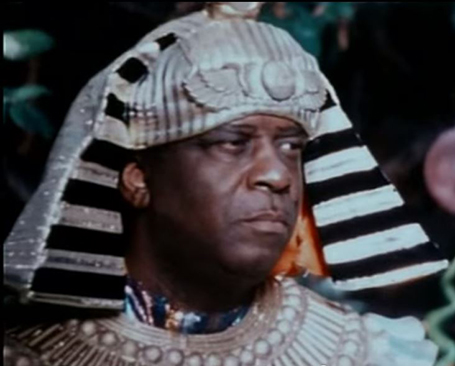
The bandleader Sun Ra would have been 100 years old yesterday. His Arkestra was a touring powerhouse and Sun Ra a huge composer and personality in the world of modern jazz. Of course, Sun Ra was his own person and had his own way of looking at things, so the idea of this or that may have had no currency to him. He did things his way, with a devotion and concentration and no thought of compromise. Which is what makes him a legend to this day.
His attitude, his belief that he came from a place beyond Earth, and that the music he made had no limits, made him a favorite of progressive rock fans back in his day, as well as jazz fans, and the Arkestra’s live shows around the world were historic and popular beyond jazz’s usual audiences. These were musical shows, but also spiritual, celebrating the passing from the leaden quotidian to the exultant and rapturous.
“Play with some fire on it,”Sun Ra would tell his musicians. “If you’re not mad at the world, you don’t have what it takes.”
John Jeremiah Sullivan wrote a long story for the New York Times Magazine published April 13 of this year, called the Ballad of Geeshie and Elvie, about looking for two women who recorded a handful of songs in 1931 (or maybe 1930) that still resonate today, but whose biographies have been lost. Sullivan first learned about them in Terry Zwigoff’s documentary about blues enthusiast and cartoonist, R. Crumb.
It is an oddly shaped bit of writing, partly because it starts out describing a void (the missing women), then floats through the world of serious blues enthusiasts, before actually getting into the actual story. These researchers have scoured the planet for old 78 recordings, and traveled from town to town trying to document the lives of the musicians who played this music locally but never came to national attention.
One unlikely hero in the story is Paramount Records, a large record company which was run by business folks, not enthusiasts. Untethered from aesthetic judgment, Paramount cut a wide swath through the south, recording everyone they could get their hands on, thus creating a sizeable library of the sounds of the time that would otherwise have been lost. It was in this sweep that they found Geeshie and Elvie, two blues guitar playing singers, and brought them to a recording studio outside of Milwaukee for their only recording session every.
Using material from perhaps our most tireless blues researcher, Mack McCormick, and aided by a young woman named Caitlin Rose Love, who hoped to spend her days working with McCormick, but didn’t, Sullivan gives shape to a vast and ungainly subculture, the art that spawned it, and some very particular stories about the blues life, the South and the ways history is filtered, found and sometimes lost.
You can play the music while reading the piece, but here’s Geeshie Wiley’s amazing Last Kind Words Blues.
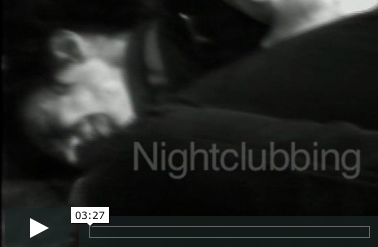
Pat Ivers and Emily Armstrong happened to have the excellent idea to shoot video of many performances at CBGB in the late 70s and early 80s, one of which is this performance of the Dead Boys.
Pat and Emily have been preserving their material, which is being archived at NYU, and through May and July will be showing the videos at the Museum of Arts and Design in New York.
They also maintained a blog for a while, with clips and good stories about the bands, which you can find here.
Many clips are hosted on Vimeo, under the name go nightclubbing.
As a result of some odd Tout Wars drafting machinations last weekend, I was prompted to write about that, and in the process, brought up Frank Zappa and his band The Mothers of Invention.
After which it occurred to me that we have never given the brilliant, funny, and iconoclastic–not to mention great guitar player–much due on this site.
So, I will try to rectify that.
My appreciation of the man dates back to 1968, when as a long haired kid I attended a John Birch Society meeting wherein the backwards rednecks presented a program on how rock music corrupts our youth, making them become long haired degenerate dope smokers (just like me?).
I went with a handful of friends, and it was very scary as these guys were–and still are–neo-Nazis, but now I can look back on the whole affair with some kind of romantic eye.
A few years later my oldest and closest friend, Stephen Clayton and I saw the Mothers, on one of the weirdest bills ever. Opening was the band founded by then ex-Quicksilver guitar player, John Cippolina, Copperhead. Next was the jazz fusion band, Weather Report (who I have since seen three more times), and then Zappa and his mates hit the stage, playing Chunga’s Revenge that I can remember.
Zappa has also been sort of an American version of John Mayall, with the likes Lowell George, George Duke, Terry Bozio, Ansley Dunbar, and eventually Mark Volman and Howard Kaylan (AKA Flo and Eddie, ex-patriots of the Turtles), among other luminaries, in his band.
The tune I picked for today’s edification is the eternally funny Eddie Are You Kidding from the album Just Another Band From L.A. (note too that Zappa’s influence moved, as year’s later the great Los Lobos paid homage by naming their compilation album, Just Another Band from East L.A.).
Just for fun, I also added this terrific clip of Zappa appearing before Congress in 1985, testifying before Tipper Gore’s stupid committee who were monitoring music and lyrics at the time for appropriateness. Note that Zappa, John Denver, and Dee Snyder–three artists who could not be more different–all testified, and all three dissed the whole process as a bunch of shit.
Rightfully so! Anyway, Zappa was smart, funny, and eloquent as you will see if you hit the clip below.
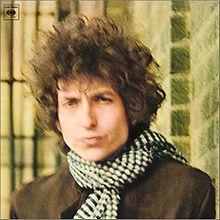
Bob Dylan has been mentioned all over the place on the site since we started waxing quasi poetic about what music means to us. And, Dylan’s phenomenal Blonde on Blonde made the group’s consensus Top 50.
But, I cannot remember a Dylan song actually being singled out in the same way all the other stuff works its way to the top of our collective creative urges.
Blonde on Blonde is my favorite Dylan album by a long shot, and that actually says a lot.
But, my love for it traces back to around April, 1967, when my parents celebrated their 25th wedding anniversary. For that year, in honor of the occasion, my father bought my mother–and I suppose the family–a big Magnavox stereo in a big piece of mahogany furniture.
That was ok, but what it really meant was that I could lay claim to the family’s portable Admiral phonograph, which I then stashed in my bedroom.
I had pretty much stopped buying singles by that time anyway, so every night, before free-form FM worked its way to the Sacramento airwaves to which I would be stuck for a few more years before I could return to my beloved bay area for good, I would drop a stack of albums on the spindle to lull me to sleep.
The Beach Boys All Summer Long and Surfin’ USA were staples in those days, along with early Beatles and Stones. But, since albums cost a lot–$4 in those days, which was a lot–I did not purchase too many, too often. Meaning like when I first was buying 45’s, five years earlier, I would listen to both sides of everything simply because the song was there and I could.
So, every night side two of disc one, which feature I Want You, Leopard Skin Pillbox Hat, Just Like a Woman, and the clip link linked below, of Blonde on Blonde hit the changer as well.
With Al Kooper on keys, and Robbie Robertson on guitar, along with Rick Danko and Joe South among others, Blonde on Blonde was recorded both in Nashville, then New York.
And, well, spending the past few days in New York, in anticipation of Tout Wars, I thought a number of times about early Dylan while enjoying walking up and the streets, cos New York is such a great walking city. But I also thought of the man, and just what a great artist, singer, songwriter, and generally pretty good guy he has been, and is.
Further, I would like to think that his deconstruction of his own catalogue over the years has been brilliant, keeping him and his songs fresh and valid in a way the audience might not appreciated, but that I hope I do.
In fact this version of Stuck Inside of Mobile with the Memphis Blues Again is quite different from the one I fell in love with as I went to sleep in the later 60’s, but it is just as great and fun.