Song of the Week – Still… You Turn Me On, Emerson Lake & Palmer

IGNORED OBSCURED RESTORED

The Rock world lost another legend this week. Greg Lake of the original King Crimson and Emerson, Lake & Palmer passed away on December 7th at the age of 69.

http://www.nytimes.com/2016/12/08/arts/music/greg-lake-dies.html?rref=collection%2Fsectioncollection%2Fobituaries&action=click&contentCollection=obituaries®ion=rank&module=package&version=highlights&contentPlacement=2&pgtype=sectionfront&_r=2

I’ve had an ELP cut on my SotW idea list for several months. So I guess now is as good a time as any to present it.

“Still… You Turn Me On” is a lovely ballad in the same style as one of Lake’s most popular songs, “Lucky Man.” It was on ELP’s excellent 1973 album, Brain Salad Surgery.

BSS was an ambitious album. On it the band tackled William Blake (“Jerusulem”) and classical composer Alberto Ginastera (“Tocatta”). While this isn’t my favorite ELP record – I’m partial to the debut and Tarkus – it has its moments, including “Still… You Turn Me On.”

It has another stunning vocal by Lake, a beautiful musical arrangement using multiple guitars (the wah-wha is awesome) and keyboards, and poignant lyrics.

Do you wanna be the pillow
Where I lay my head
Do you wanna be the feathers
Lying on my bed
Do you wanna be the cover
Of a magazine
Create a scene

Every day a little sadder
A little madder
Someone get me a ladder

I rediscovered the song a few months ago when reading an article by M.C. Antil called “50 Deep Tracks That Will Blow Your Kids’ Minds.” “Still… You Turn Me On” comes onto the list midway at #25.

M.C. Antil – 50 Deep Cuts That Will Blow Your Kids’ Minds

One of my bandmates, Chris H. shared a fine YouTube video of Lake performing his holiday classic, “I Believe in Father Christmas,” performed in 1975 with Ian Anderson. Since we’re in the season it is appropriate to share that too.

ELP’s “over blown,” pretentious approach to making records is often held responsible for the backlash that produced the DIY attitude of Punk Rock. I get that, but I think there’s room for both. Progressive Rock has not been treated kindly by rock historians. Evidence of that is the dearth of prog rock artists that have been inducted into the Rock and Roll Hall of Fame. That needs to be corrected.

Enjoy… until next week.
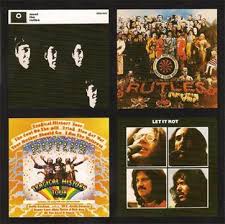
Song of the Week – Magical Misery Tour, National Lampoon; Ouch!, The Rutles

IGNORED OBSCURED RESTORED

This has been a very Beatle-y year. We marked the 50th anniversary of Revolver and their last full concert at Candlestick Park. Then there was the release of the new Ron Howard film Eight Days a Week that celebrated the touring years. The Beatles has such a significant impact on popular culture that we can expect the next few years to be Beatle-y as well. 50th anniversary celebrations of events from ’67-70 will be commonplace. Expect a media onslaught when we reach the 50th anniversary of the release of Sgt. Pepper next June.

Still, this year’s focus on Beatle history has allowed me to indulge in a few esoteric aspects of Beatle fandom. For instance, I’ve been building a playlist of Beatles covers. I don’t expect this project to have an end but it currently has over 700 songs.

Another has been to listen to Beatle parodies. The first SotW is the National Lampoon’s John Lennon parody, “Magical Misery Tour” aka “Genius is Pain.”

rutles

This song is a riot but if you’re offended by the “f” word, skip it! It was written by Tony Hendra (lyrics) and Chris Cerf (music). Hendra had the clever idea to take actual quotes from the famous Lennon Rolling Stone interview with Jann Wenner and set them to music. Brilliant!!! And that’s Melissa Manchester playing the role of Yoko at the end.

The greatest Beatles parody of all was the movie/soundtrack called All You Need is Cash by the Rutles. The 14 Beatle parody songs contained within were written by Neil Innes, formerly of Monty Python and The Bonzo Dog Band. You should check them all out but today I’ll treat you to the take-off on “Help” – the Rutles song “Ouch!.”

Of course there are other Beatles parodies worth checking out. In fact the Prince of Parody, “Weird Al” Yankovic, has done three himself – Generic Blues (Yer Blues), Pac-man (Taxman) and Gee I’m a Nerd (Free as a Bird).

Part of the charm that fueled Beatlemania was the Fab Four’s good natured irreverence. It’s only fair then that they take a little bit of their own medicine.

Enjoy… until next week.

Song of the Week – These Words, The Lemon Twigs

IGNORED OBSCURED RESTORED

The Lemon Twigs – teenage brothers Brian and Michael D’Addario — are a cool new band from Hicksville, Long Island. It’s no coincidence that their aesthetic is closely linked to their west coast brethren, Foxygen, since that band’s Jonathan Rado produced their debut album – Do Hollywood.

Today’s SotW is “These Words”, a song about self-identity, by the Lemon Twigs.

The brothers have told how their musician father, Ronnie, weened them on the music he grew up with and loved, primarily the Beatles. He taught the boys to avoid common, simplistic chord progressions and the value of vocal harmonies. Those lessons were learned well judging by “These Words.”

This song has a bit of everything thrown into it. It starts off with a funky piano, synth, bass romp that quickly evolves into a baroque rock power ballad. There’s a little honky tonk piano section in the middle that keeps growing to a massive crescendo of horns and harmony until it returns to the chorus.

Brian and Michael inherited one other thing from their dad… his vinyl record collection. These are boys after my own heart!

Enjoy… until next week.

Song of the Week – Everybody’s Crying Mercy, Bonnie Raitt

IGNORED OBSCURED RESTORED

Wow! It has been a rough couple of weeks for music lovers. In less than two weeks we’ve lost Leonard Cohen, Leon Russell and Mose Allison.

I planned to write about my favorite Leonard Cohen song, “Famous Blue Raincoat”, but I couldn’t find the time before my last post.

Then Leon Russell passed and I thought I’d write about his work with Marc Benno in the overlooked Asylum Choir. I especially like the Asylum Choir II album and suggest you listen to it on Spotify or YouTube if you’re not familiar with it. I already posted about Leon’s “Delta Lady” some time ago.

This past week has been full of MSM and social media attention to Mose Allison. Much has been duly focused on his own recordings. Other has drawn attention to cover versions such as The Who’s rockin’ take on “Young Man Blues” and the versions of “Parchman Farm” by bands as diverse as Blue Cheer, Cactus, Hot Tuna and Johnny Winter (among others).

So I’m left with few directions to take to pay tribute to these tremendous artists. But I think I’ve found a cut that hasn’t been overexposed that will do the trick. Today’s SotW is Bonnie Raitt’s rendition of Allison’s “Everybody’s Crying Mercy” from her 1973 album Takin’ My Time.

Bonnie’s recording is sultry and bluesy. The subtle harp, guitar licks, piano comps and late night bar bass all complement Raitt’s strong vocal performance.

Elvis Costello also took a run at the song on his covers album, Kojak Variety, from 1995. It’s not bad, but Bonnie’s hits the mark more effectively.

The SotW is all about exposure to songs that have been Ignored, Obscured or Restored. There are enough of those in the catalogs of Cohen, Russell and Allison to last for quite a while. Please treat yourself and go check them out.

Enjoy… until next week.

Song of the Week – Down Home Girl – Alvin Robinson, Rolling Stones, Taj Mahal, Nic Armstrong

IGNORED OBSCURED RESTORED

Today’s SotW is another installment in my ongoing “evolution” series. This one is solidly in the category of you can’t ef up a great song.

“Down Home Girl” was written by Jerry Leiber and Artie Butler and first recorded by New Orleans based Alvin “Shine” Robinson on the Red Bird Records in 1964. Red Bird was a label founded by Leiber and Mike Stoller after their long, successful run at Atlantic Records. They hit their stride with the Dixie Cups “Chapel of Love” and a series of hits by the Shangri-Las.

The original Robinson recording has a vocal that is reminiscent of Ray Charles’ singing style and was produced by Leiber & Stoller.

A year later, in 1965, the Rolling Stones covered the song.

Before Jagger and Richards began to have success as songwriters, they had an uncanny sense for selecting great songs to cover. Irma Thomas’ “Time is on My Side” and Bobby Womack’s “It’s All Over Now” are a couple of fine examples. The Stones use a harp to color the song a little more blue and translate the original’s distinctive horn riff with a guitar. Mick’s vocal is especially strong on this cut that was on the British album The Rolling Stones No. 2 and Now! in the US. Check out the movie Charlie My Darling for a cool, full live performance of the song.

“Down Home Girl” continued to attract more artists to take a run it. Later in ’65 the Astronauts, a Colorado based surf band, recorded it. The Coasters, who may have been the best interpreters of Leiber/Stoller songs, recorded yet another version in 1967.

Almost 30 years later, in 1993, Taj Mahal revived the song on his album Dancing the Blues.

Mahal expands the arrangement with a full horn section that’s featured about 2 minutes in and a sax solo that takes it through the fade out.

In 2004, retro rocker Nic Armstrong released his own version of “Down Home Girl.”

Armstrong’s take is similar to the Stones’. The novelty in his version is in the middle section where a guitar references Donovan’s “Sunshine Superman.” Do you hear it?

I’m aware of another, slower, country take by the Old Crow Medicine Show that came out as recently as 2006. And I’m equally sure we will be hearing new versions for years to com.

Enjoy… until next week.

Song of the Week – Don’t Do What I Did, The Continental Drifters

IGNORED OBSCURED RESTORED

Today’s SotW was written by Mark Vincent. Mark is a fellow music lover and multi instrumental musician (guitar, bass and recently drums). His current gig is with a band called The Occasionalists that specializes in bringing live karaoke to the Brooklyn, NY club scene. When he’s not indulging his passion for music he has a chiropractic practice in Manhattan.

My cousin Tom has invited me to be a guest contributor to SotW, a genuine honor that I’ve tried not to let disrupt my entire work day. We both share a significant musical influence in the person of my much older brother and his cousin, Tom Vincent, who introduced me to this week’s band, The Continental Drifters, in addition to numerous other acts over the past 40 years.

The Continental Drifters were formed in LA in 1991 and soon relocated to New Orleans, enjoying local success in both cities. The band’s lineup seemed to evolve throughout their 11 year existence, but at their peak of recording/touring (1997-2001) it included a number of big names — Peter Holsapple (dB’s), Vickie Peterson (Bangles), Susie Cowsill (The Cowsills) and founding members Mark Walton (Dream Syndicate) and Carlo Nucci, who was replaced by Ralph Brousard after their first album.

Their sound is about what you would expect from that mix of talent: power pop/college rock/alt country/soul with a layer New Orleans sweat. Vocals and songwriting were shared among several members, expanding their range and style.

Choosing a single cut is difficult since their sound varied considerably within their three albums. With a band full of vocalists, their harmonies standout on many songs, but you won’t hear that on my selection. Being a dB’s fan, I’m partial to Peter Holsapple’s contributions.

“Don’t Do What I Did” is a driving pop song with electric guitars battling Holsapple’s accordion to keep up with his vocals. The song is probably about some form of regret based on the title, but I don’t pay much attention to lyrics when there’s this much music going on. The bridge shifts to an even faster pace but it never feels manic or muddled; the luxury of having a band of great players.

Give a listen to other Drifters tracks to get a sample of their harmonies and musicianship, but listen to this one if you need to wake up.

The band dissolved soon after Cowsill and Brousard left early in 2002. They’ve played a few reunion shows and last year put out a 2cd set of previously unreleased originals, covers, live cuts, demos and European releases.

Holsapple has since done work with the dB’s and Chris Stamey among others. Carlo Nucci has continued to be a fixture in the New Orleans music scene and co-wrote the NFL Saint’s anthem “Who Dat”. Peterson and Cowsill still perform together as the Psycho Sisters and Cowsill has a band with drummer Brousard, whom she married. Walton has played reunion gigs with Dream Syndicate.

Enjoy… until next week.

Song of the Week – River, Terry Reid

IGNORED OBSCURED RESTORED

Pete Best was the original drummer for The Beatles. Just as they were about to break out with a recording contract, Best was sacked in favor of Ringo Starr. Eighteen months later The Beatles made their first trip to the US to perform on The Ed Sullivan Show and Beatlemania commenced. To be so close to worldwide stardom, then miss out, must have led to massive regrets that Best has had to live with the rest of his life!

But imagine, instead, if the missed opportunity was self-inflicted? So goes the legend of British musician Terry Reid who is most often noted for his decision to turn down an offer from Jimmy Page to join his then new group, Led Zeppelin, as its lead singer. Not only did Reid turn down the gig, but he was magnanimous enough to suggest to Page that he hire a young singer named Robert Plant instead.

Page’s invitation was not without merit. No less than Aretha Franklin was quoted in 1968 as saying “There are only three things happening in England: The Rolling Stones, The Beatles and Terry Reid.”

Later, in 1969, Reid was recruited to join Deep Purple and passed on that one too. The great Ian Gillian got the job.

Although Reid chose to go his own way, releasing five solo albums between 1968 and 1979, he toiled in relative obscurity. That’s despite a catalog of high quality recordings. My favorite is the Tom Dowd produced River, from 1973, and the SotW is the title song.

River is an album of two distinct sides. The first side had four more traditional rockers. Side two had three songs that were “jazzy” in the same way as some Van Morrison cuts but tempered with the folksiness of Nick Drake. None clock in at less than 4 minutes. “River” is a samba flavored jazzy cut. (In fact, Reid later became friends with Brazilian jazz legends Gilberto Gil and Carlos Jobim.)

So let’s return to the theme of regret. Reid has none. A recent article in MOJO written by Sylvie Simmons cites “in over four hours of interview, (Reid) hadn’t a bad word to say about anyone, nor a twinge of bitterness at how the road to fame and fortune went wrong.”

Enjoy… until next week.

Song of the Week – Wang Dang Doodle, Koko Taylor; 2120 South Michigan Avenue, The Rolling Stones

IGNORED OBSCURED RESTORED

An icon of Blues and R&B, Phil Chess, passed away this week.

Phil and his brother Leonard co-founded Chess Records in Chicago, home to such artists as Muddy Waters, Howlin’ Wolf, Etta James, Willie Dixon, Bo Diddley and Chuck Berry.

Here’s one of my favorites from Chess – “Wang Dang Doodle” by Koko Taylor

“WDD” was written by Willie Dixon and first recorded by Howlin’ Wolf, but it’s Taylor’s version that hit with an audience. The gender switch makes it really sassy.

I don’t know if you could say that The Rolling Stones, The Yardbirds, the initial Fleetwood Mac and Cream wouldn’t have existed without Chess Records, but it’s pretty safe to say without Chess they wouldn’t have sounded the same.

The Rolling Stones visited Chess Studios on their first visit to the US in June 1964. In fact, they were totally psyched to not only get to look around but to actually record in the same room as their blues heroes.

One of the tracks they laid down was an instrumental called “2120 South Michigan Avenue.”

The title of the song pays tribute to Chess Studios – it calls out the street address. The writing credit was given to Nanker Phelge, a pseudonym used by the Stones in the early days for group compositions.

The version heard in the US on the album 12 x 5 was only about two minutes long. I have a German release of Around and Around that has an extended version that runs about three and a half minutes. That version was used on the CD release of 12 x 5 and is the one I’ve presented here.

Phil Chess was 95 years old when he died in Arizona. May he rest in peace.

Enjoy… until next week.

Song of the Week – Atomic Bomb, William Onyeabor

IGNORED OBSCURED RESTORED

A few years ago a popular documentary was released called Searching for Sugarman. It told the story of an American musician named Sixto Rodriguez who was very popular in South Africa. The Detroit based Rodriguez — whose signature song was called “Sugar Man” — released a couple of albums in the early 70s that received little recognition before he retired from music. In South Africa he was rumored dead but some fans decided to try to find him to determine if the rumor was true. The rest is history.

Another artist, William Onyeabor, has a story with similarities to Rodriguez. The Nigerian born Onyeabor released a series of serious funk records between the mid 70s to mid 80s. His eight albums languished in obscurity after Onyeabor left the music industry and became a devoted born again Christian. A parallel with Rodriguez is that his fans were left with little idea where he was or how to reach him.

In 2013, Talking Head David Byrne secured the rights to reissue some of Onyeabor’s music on his Luaka Bop label on a compilation called Who is William Onyeabor?. That’s where I discovered today’s SotW, “Atomic Bomb.”

The song instantly finds a groove that ambles along for its full 8 minutes. At various points along the way it is punctuated with tastful guitar licks and the early synthesizer noodlings that Onyeabor was famous for – and would later be an important ingredient that Bernie Worrell brought to Stop Making Sense era Talking Heads music. I pay no attention to the mildly suggestive lyrics, but I do like the sound of the background singers’ call and response as well as their “atomic bomb” chant in the chorus.

A loose collective of alt rock artists formed in 2014 to perform Onyeabor’s music under the name Atomic Bomb. According to Wikipedia the group consists of:

“… music director Ahmed Gallab and his band Sinkane (composed of Jason Trammell on drums, Ish Montgomery on bass and Jonny Lam on guitar), Alexis Taylor (of Hot Chip), Pat Mahoney (of LCD Soundsystem), Money Mark (of the Beastie Boys) Lekan Babalola and Jas Walton (of Antibalas).

The group has also featured special guests including David Byrne (of Talking Heads) Damon Albarn (of Blur), the Lijadu Sisters, Pharoah Sanders, Jamie Lidell, Joshua Redman, Kele Okereke (of Bloc Party), Luke Jenner (of The Rapture), Ghostpoet, Dev Hynes (aka Blood Orange / Lightspeed Champion), Wally DeBacker (Gotye), Young Fathers, Mahotella Queens, Andrew Ashong, Zap Mama, Charles Lloyd, Cheikh Lô, Peaking Lights, David Murray, Para One, Mike Floss, Moses Sumney, Sarah Jones, and Green Gartside.

Enjoy… until next week.

Song of the Week – The Bridge, Sonny Rollins

IGNORED OBSCURED RESTORED

In one of the most humble acts in human history, Sonny Rollins interrupted his lucrative career as a jazz saxophonist in order to hone his craft more fully. Even though he was already well established in the jazz circles – having played with luminaries such as Miles Davis, Charlie Parker, Thelonious Monk and Ornette Coleman, and recorded more than 20 albums – in 1959, at the tender age of 29, he nevertheless decided he needed to drop out of the scene and woodshed in order to take his game to the next level. He spent the next three years in relative seclusion, practicing his playing under New York’s Williamsburg Bridge for most of each day, in all kinds of weather and through all four seasons.

In April 2015, Rollins told the New York Times:

“The problem was that I had no place to practice. My neighbor on Grand Street was the drummer Frankie Dunlop, and his wife was pregnant. The horn I’m playing, it’s loud. I felt really guilty. One day I was on Delancey Street, and I walked up the steps to the Williamsburg Bridge and came to this big expanse. Nobody was there, and it was beautiful.”

He returned in 1962 with his album titled The Bridge. Today’s SotW is the title song from that album.

In an article from the AV Club, Joseph Heller describes the beauty of the piece:

Like a runaway daydream, “The Bridge” is both frenetic and meditative, the sound of a scattered mind exulting in its own agility. Hall and Rollins trade solos like sparring tides; the rhythm section of bassist Bob Cranshaw and drummer Ben Riley lock into a fleet, liquid-tempo syncopation. But rather than trying to hop on the bandwagon of free-jazz abstraction, the Rollins composition reflects a very real set of coordinates in emotional space-time: when he stood below that bridge, day after day for months on end, pouring out his soul. What it must have been like to be a random passerby during those years, hearing the song’s embryonic skronk slowly coagulate into a masterpiece.

Indeed!

Enjoy… until next week.