Song of the Week – Hypnotized, Fleetwood Mac

IGNORED OBSCURED RESTORED

Fleetwood Mac has gone through numerous line-ups in its 50 year career though it’s been pretty stable since Lindsey Buckingham and Stevie Nicks joined in 1975. But for the first 8 years the band went through several incarnations. The first was the blues based band led by guitar hero Peter Greene. When Greene left, Danny Kirwan took over as the main songwriter. Version 3.0 came about when Bob Welch stepped forward with his songwriting and vocals.

Today’s SotW is Welch’s “Hypnotized” from the album Mystery to Me (1973).

In a 2012 article for Rolling Stone, David Fricke wrote “The best song Welch ever gave the Mac, “Hypnotized” was urgent noir propelled by a shuffling mix of guitars and (Christine) McVie’s electric-piano understatement, with Welch singing in a sleepwalking cadence like a Raymond Chandler detective musing to himself in a late-night rain.”

“Hypnotized” was released as a single, but it was buried as the B-side to Mac’s cover of The Yardbirds “For Your Love.” (If you’re a vinyl album geek like me, you’ll try to find a copy of the album that erroneously lists an unreleased song called “Good Things (Come to Those Who Wait)” that never made it onto the album because it was dropped at the last minute and replaced by “For Your Love.”) Fortunately for Welch and the Mac, “Hypnotized” became an FM rock radio staple in the 70s.

It starts with a very catchy Mick Fleetwood drum pattern – a snare crack and three beats on the bass drum under an insistent patter on the high hat. Once the beat is firmly established it’s followed by some slick guitar interplay. Christine Mac and Bob Weston provide soothing backing vocals.

The lyrics have an early 70s, Carlos Castaneda (The Teachings of Don Juan) inspired, mystical vibe.

They say there’s a place down in Mexico
Where a man can fly over mountains and hills
And he don’t need an airplane or some kind of engine
And he never will

According to Mojo (Jan 2013), “Welch apparently wrote this eerie electric blues after dreaming that a UFO piloted by a Navajo shaman had landed on the tennis court in Fleetwood Mac’s communal country pile.”

Sadly, Welch died of a self-inflicted gunshot wound to the chest in his suburban Nashville home in 2012. But he left us a strong legacy of music in his work with Fleetwood Mac and as a solo artist, especially the album French Kiss (1977).

Enjoy… until next week.
Song of the Week – Time Square, Destroyer

IGNORED OBSCURED RESTORED

Canadian Dan Bejar exercises his craft through two bands, The New Pornographers and Destroyer. I’ve long been a fan of The New Pornographers – their “Myriad Harbor” was the SotW on March 1, 2008 – but I’ve have had very little exposure to Destroyer’s 10 albums. So when their latest record, Poison Season, was released last September I decided to give it a thorough test drive. I’ve been on the road with it ever since.

The album has the same type of cinematic quality as Springsteen’s Born to Run album. (I’m thinking of songs like “Meeting Across the River” and “Jungleland.”) A fine example is “Time Square” in the first and last of the three versions of on the disc. But today’s SotW is the middle, more pop version of the song.

The lyrics merge biblical references with modern day New York City references to create some interesting and thought provoking imagery.

Jesus is beside himself
Jacob’s in a state of decimation
The writing on the wall wasn’t writing at all
Just forces of nature in love with a weather station

Artists and repertoire
Hand in hand through the grey doorway at dawn
The writing on the wall said, “Jesus saves”
The writing on the wall mentions Honey playing a game with the waves

You can follow a rose wherever it grows
Yeah, you can fall in love with Times Square
Times Square

The words capture something intrinsic to NYC in much the same way as many of Lou Reed’s lyrics. They’re vague enough to avoid any obvious interpretation, yet strikingly beautiful nonetheless.

This is all sung in Bejar’s fragile voice to a romping groove of acoustic guitars, piano, drums, congas and horns. The instrumental break after the first chorus is simply joyous.

Now I’ve got some work to do digging into Destroyer’s back catalog of those other 10 albums.

Enjoy… until next week.

BTW – Today is Record Store Day. Drop the digitized music for a couple of hours and go put your hands on some physical product today. It’s good for the soul.

Song of the Week – Keep It Warm, Flo & Eddie

IGNORED OBSCURED RESTORED

Mark Volman and Howard Kaylan first made their name in the music business as the creative force behind The Turtles. They scored a number of Top 40 hits with the likes of “Happy Together,” “Eleanor,” “She’d Rather Be With Me” and a cover of Bob Dylan’s “It Ain’t Me Babe.”

Their albums, part parody, part serious, generally were well received by critics but didn’t chart so well with the public. (They were largely a singles band.) One, Turtle Soup, was produced by Ray Davies of the Kinks.

By the early 70s Volman and Kaylan had had enough of The Turtles. They assumed the aliases of Flo (the Phosphorescent Leech) and Eddie due to contractual obligations with The Turtles’ recording label (White Whale) and joined forces with Frank Zappa for a series of albums – 200 Motels and Fillmore East – June 1971 (1971), and Just Another Band From L.A. (1972). That ended when Zappa was injured at a London concert in 1971, so the boys made a series of Flo & Eddie albums for themselves.

Today’s song of the week is “Keep It Warm” from their fourth album, Moving Targets (1976).

Musically “Keep It Warm” is a Beach Boys parody (dig the “Good Vibrations” reference about 2:30 in) mixed with grim lyrics that reflect the then current evening news headlines of the mid 70s.

Elect another jerk to the White House
Gracie Slick is losing her door mouse
Take her off the streets and keep her warm

Kill another whale with your power
Or shoot a bunch a kids from a tower
Snipe them in their cars, blood keeps them warm

Starting in the 70s Flo & Eddie began singing harmony/background vocals for other artists. They were regulars on T. Rex albums including Electric Warrior and The Slider. They also sang on songs by Alice Cooper, Blondie, the Ramones, Stephen Stills and Bruce Springsteen (“Hungry Heart”), among many others.

In recent years they’ve been doing summer “shed” package tours. I saw them a couple of times with the “Hippiefest.” This season they’re out with The Cowsills, The Spencer Davis Group (I assume sans Stevie Winwood), Chuck Negron (of Three Dog Night), Mark Lindsay (of Paul Revere & the Raiders) and The Gap Band including a couple of stops in New York in June and California in July. They’re still a very funny duo so you might want to check them out if they’re in a town near you.

Enjoy… until next week.

Song of the Week – Old Times Good Times, Stephen Stills

IGNORED OBSCURED RESTORED

Stephen Stills had a pretty good career going by the end of 1968. He’s already scored a hit with “For What It’s Worth” and several critically acclaimed albums with the Buffalo Springfield and recorded the Super Session with Al Kooper and Mike Bloomfield.

But it wasn’t until he teamed up with David Crosby and Graham Nash that he really broke through to super stardom with the release of Crosby, Stills & Nash in 1969 and Déjà vu with Neil Young joining in 1970.

By November of ’70, Stills was already trading on his brand with his first solo album, Stephen Stills. It’s a good, but not great album and contained another of his hits – the gospel infused “Love the One You’re With.” The album also holds the distinction of being the only album that both Eric Clapton and Jimi Hendrix play on (though not together).

Hendrix contributed to today’s SotW, “Old Times Good Times.”

The song’s lyrics trace from Stills’ youthful days in New Orleans through to his time in New York City and later California.

When I was young and needed my time alone
Jump in the pirogue, pole down the Bayou
Bogue Falaya river was dark and cold
Seven years old, I couldn’t find my way home

When I was twelve, I learned how to play the guitar
Got myself a job in a jax beer bar
Got myself together, went to New Orleans
Found myself workin’ for rice and beans
And it was good times

New York city was so damned cold
I had to get out of that town before I got old
California and rock and roll dream
Got too high and we blew our whole scene
But we had a good time

Old times, good times

It’s a rocker that follows the template drawn up with songs such as the Spencer Davis Group’s “I’m a Man.” It’s a vehicle for an R&B jam session, albeit a very short one. It chugs along with Stills on organ and Hendrix on guitar trading riffs most of the way through.

I don’t know the exact date of recording session for this song, but the album was recorded in June/July 1970. Hendrix died a couple of months later on September 18th, 1970, making this one of his last sessions. (Stills dedicated the album to Hendrix on its back cover.) Too bad, I would have liked to hear them work together again, perhaps with both on guitar another time. Sadly that’s wasn’t to be. But at least we have “Old Times Good Times.”

Enjoy… until next week.

Song of the Week – Dog on a Chain, Emitt Rhodes

IGNORED OBSCURED RESTORED

I’ve always been an Emitt Rhodes fan. I liked his early work with the Merry-Go-Round and his classic early 70s power pop solo records. In fact, I featured both in a SotW on July 16th, 2011. So I was very excited a few months ago when I read in Mojo that he would be releasing his first full length album since 1973. But I wondered if it would be even slightly possible that he could make an album up to his prior standards after all these years.

Well it’s out now and the answer is a resounding YES!

He can still sing, he can still craft a catchy melody and his lyrics reflect the maturity you would expect from a guy that’s had 43 years to sort out song ideas he’s kept stuffed in envelopes all this time. But what impresses me most is how much feeling these songs convey.

Rhodes, who was famous for playing all the instruments on his 70s solo albums is no one man band this time around. He’s enlisted the help of some younger power pop artists — Roger Joseph Manning Jr. & Jason Falkner of Jellyfish (refer back to SotW on May 23rd, 2015), Aimee Mann (‘Til Tuesday), Susanna Hoffs (whose Bangles recorded the Merry-Go Round’s “Live”), Taylor Locke (Rooney) and drummer Joe Seiders (New Pornographers). This was clearly a labor of love for all involved.

Today’s SotW is the album opener, “Dog on a Chain.”

It starts out like a folk song – just guitar and vocals. After the first verse and chorus the full band joins in and the song gets a lift. Aimee Mann provides a vocal harmony and Jon Brion, who was in ‘Til Tuesday’s touring band and played on Jellyfish’s Spilt Milk, adds additional harmony and a nice guitar solo. . (This is a very incestuous group of musicians, isn’t it?)

The lyrics tells the familiar story of a man who has sacrificed his own desires to please his woman only to find she no longer loves the man she molded him into and wants a divorce. With his tail between his legs he says:

I was led along like a dog on a chain
Out in the cold, out in the rain
I was led along like a dog on a leash
I did as told while she did as she pleased

and

She berates me
Calls me crazy
Certifiably insane
Once she praised me
Now she hates me
I can’t see how I have changed

The entire album is available on Spotify. Go check it out.

Enjoy… until next week.

Song of the Week – Dangerous Rhythm, Ultravox!

IGNORED OBSCURED RESTORED

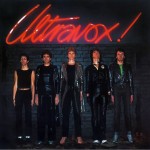
05d81eeca340635b3a868503a32d9e3f_fullUltravox! released their self-titled debut in 1977. They were extremely popular in the UK, having landed seven Top Ten albums and seventeen Top 40 singles there. But most of those hits were in the version of the band led by Midge Ure (dropping the ! from their name), not the original group led by John Foxx.
The original lineup straddled the turf between Roxy Music glam and late 70s British punk. An example of this is the Steve Lillywhite and Brian Eno produced, reggae influenced, “Dangerous Ryhthm.”

Upon its release as their first single, Sounds magazine opined “They might be rather like a younger early days Roxy Music but, oh my what a good model to copy. And their very youth bestows upon them a direct brashness missing in the recent Roxy. Rich emetic bass, precise Ringo drums, synthesiser cascades and Eno’s hand in the production make this the best and most confident debut single since ‘Anarchy’.”

The pulsating bass and staccato guitar (which is reminiscent of Elvis Costello’s “I Don’t Want to Go to Chelsea”, by the way) complements the way the lyrics convey the demimonde of the British club scene.

Surging and merging
Urgent and urging
Soft as a footstep on the stair

The red light is on now
My gravity’s gone and how
I can feel something in the air

It’s not like anything I’ve ever known before
And I don’t care

This number really captures the pulse of its time.

Enjoy… until next week.

Song of the Week – Turn to Me, Plastic Penny; Lady Samantha, Three Dog Night; Bad Side of the Moon, Toe Fat; Rock Me When He’s Gone, Long John Baldry

IGNORED OBSCURED RESTORED

elton_john-bernie_taupin

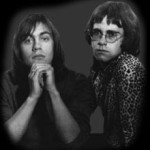
Elton John and Bernie Taupin began writing songs together in the late 60s. Many bands recognized their talent and recorded their songs before Elton John became a worldwide superstar, cementing their songs in rock history. Today’s post recognizes a few of them.

Plastic Penny was a psychedelic pop band from England and included drummer Nigel Olsson who later became a key member of John’s recording and touring band. “Turn to Me” was on their 1969 UK released album, Currency. To the best of my knowledge “Turn to Me” never received a proper recording by John although a demo version does exist and can be found on YouTube.

“Lady Samantha” was recorded during the sessions for John’s first album, Empty Sky but wasn’t included on the original album. Instead it was released as a single in January 1969. Three Dog Night found the song and recorded a version for their second album Suitable for Framing, released in June 1969, more than a year before John would gain stardom in the US with his first hit “Your Song”, released in October 1970 and peaked in the charts at #8 in January 1971.

Toe Fat’s recording of “Bad Side of the Moon” was on an album released in May 1970. The song came from the Elton John sessions but wasn’t on that 2nd album. It was the B-side to the single release of “The Border Song”, another cut from Elton John. It also came out on the live 11/17/70, a radio broadcast from WABC (later WPLJ) in NYC, that was released in the US in April 1971. Toe Fat featured multi-instrumentalist Ken Hensley who left the band to start the hard rock band Uriah Heep.

Long John Baldry recorded two albums with an interesting concept. Each had one side produced by Rod Stewart and the other by Elton John. His 1971 album It Ain’t Easy included a John/Taupin song called “Rock Me When He’s Gone.” This song was written during John’s Madman Across the Water sessions but didn’t make it onto the album. John’s version didn’t see the light of day until the 1992 release of his set of unreleased recordings, Rare Masters.

Enjoy… until next week.

Song of the Week – Was Dog a Doughnut?, Cat Stevens

IGNORED OBSCURED RESTORED

I always have an ear open for a great, new (or old) tune I’ve never heard before. You can never tell where it will come from. Many times before I’ve told stories about the odd circumstances under which a cool song with an interesting backstory has come to my attention. Here’s another one.

A few weeks ago I was invited to a cocktail party in San Francisco’s Mission district by my cousin Emilia V. She’s the event planner for a lifestyle website (1stdibs.com).

While mingling at the party I met one of her colleagues and quickly learned we share a passion for music. He told me he’d heard about a Cat Stevens song that was based on nothing more than a “ping pong” effect and asked if I’d ever heard of it. He’d never heard it and didn’t know the title.

Now I’m quite familiar with Cat Stevens work and this didn’t sound even vaguely familiar to me. So I dug into my “still haven’t listened to” box of records and found two Cat Stevens’ albums – Foreigner and Izitso.

I put Izitso onto the turntable first because it had two instrumentals. When I heard “Was Dog a Doughnut?” on side two, I knew I found what I was looking for.

“Dog…” is an interesting electro pop instrumental that doesn’t sound like anything you would associate with Stevens. Not only is it different, it is funky, especially for its time.

I did a little internet research on the song and found this great article from May 2015 by Christine Kakaire for Red Bull Music Academy Daily. The back story on the record is fascinating. I’d hate to simply paraphrase the whole thing for you here, so I highly suggest you click through to learn all about the song, equipment used and its influence on contemporary electronic and hip hop music.

Christine Kakaire – Key Tracks Cat Steven’s “Was Dog a Doughnut?”

Enjoy… until next week.

Song of the Week – Go Now, Bessie Banks

IGNORED OBSCURED RESTORED

Most of you associate The Moody Blues with their late 60s/early 70s progressive rock classics like “Nights In White Satin”, “Ride My See-Saw”, “Tuesday Afternoon” and “Balance.” But before that, they were a British Invasion pop band, playing a mix of originals and covers of American R&B (like most of their peers).

This early version of the band included guitarist/vocalist Denny Laine (who went on to greater renown as a member of Paul McCartney’s Wings) and had a #10 hit in the US with the Laine sung “Go Now” in early 1965.

If you’re a Baby Boomer you probably remember this song. If you’re a Gen Xer or Millennial, maybe not so much (unless your dad weened you on oldies radio when you were a toddler).

Still, I’ll bet most of you don’t know that the Moody Blues version of “Go Now” was a cover of an original recording by Bessie Banks (1964). Banks’ “Go Now” is today’s SotW.

It was produced by none other than the great R&B team of Leiber and Stoller. Purists think Banks’ version is the superior one. I love it too and that’s why I’m sharing it with you today. But I also like the Moody’s version. I’m going to cop out and call this one a toss-up.

Enjoy… until next week.

Song of the Week – I’m 16, Ros Sereysothea & Tiger Phone Card, Dengue Fever

IGNORED OBSCURED RESTORED

6_Ros-Sereysothea

Several years ago I downloaded a compilation of Cambodian rock music called Cambodian Rocks. I can’t remember what blog I found it on, but I remember that the article noted that the original disc provided very little in the way of song titles, artists or other credits. By the time I found the album most of the missing credits had been identified, but the whole backstory intrigued me.

So I was very excited when a documentary film called Don’t Think I’ve Forgotten: Cambodia’s Lost Rock & Roll and directed by John Pirozzi was being shown in San Francisco and Berkeley last May. Unfortunately it was such a limited engagement that I missed it. But now it’s available on iTunes so I was able to watch it in the comfort of my home recently. It’s not for everyone, but as a student of rock music I found it to be fascinating.

Here’s what I learned:

In 1953, Cambodia received its independence from France. Their new ruler, King Norodom Sihanouk, was a flawed dictator with a few redeeming characteristics. He wanted to modernize Cambodia and had a strong interest in the arts, specifically film and music. Artists in those industries were given tremendous creative freedom even though they reaped very little in terms of financial reward.

By the mid 60s, the Viet Nam war brought Armed Forces radio into the country and exposed them to the eclectic sounds of American rock music. Unencumbered with genre boundaries, the Cambodian rockers mixed French pop, Latin, psych, surf, R&B and Asian melodies into a big, boiling pot of rock and roll stew.

The country’s biggest star was Sinn S, known as the Cambodian Elvis. (With his pop crooning style, he sounds more like the Cambodian Nat King Cole to me.) Yol Aularong had a more authentic Western rock and roll style and merged it with overt political protest lyrics. (Let’s say the Cambodian MC5.)

Ros Sereysothea was the queen of Cambodian rock. Her “I’m 16” is today’s first SotW.

In a 2007 article about Cambodian rock in The Guardian, music journalist Nic Cohn writes of Ros:

Her voice was the perfect teen-dream confection, equal parts heartbreak, flirtation, and true romance. Even though I couldn’t understand a word, she affected me more strongly than any female pop singer since Ronny Spector of the Ronettes…

She was also a canny songwriter, her melodies twisty and surprising, yet instantly hummable…

On “I’m Sixteen”, her greatest hit and the signature anthem of Khmer rock, she sings: ‘Life’s like a flower/Spreading fragrances everywhere.’ So long as she keeps singing, she can almost make you believe it’s true.

This golden age of Cambodian rock lasted until 1975 when the communist Khmer Rouge, led by Pot Pol, captured the capital of Phnom Pehn. They evacuated the city and sent everyone to live the life of agrarian peasants… if you were lucky. Almost 2 million people (about 1/4 of the country’s population) were murdered during their near 4 year reign through 1979. Anyone that was suspected of being middle class, intellectual or artistic was executed in “the killing fields.” People disappeared under suspicious circumstances. That included most of the Cambodian rockers and explains why so little information about them survived.

Fast forward to 1999. Again from Cohn’s Guardian article:

… Ethan Holtzman, a Californian keyboard player, went backpacking in the Cambodian countryside and hitched a ride on the back of a pick-up truck. As Holtzman’s travelling companion, semi-delirious, suffered with dengue fever, the truck driver played a tape of Ros Sereysothea’s ‘New Year’s Eve’. Holtzman was knocked sideways. When he got back to America, he formed a Khmer rock band – himself on Farfisa organ, his brother Zac on guitar, plus drums, bass, and sax – and named it Dengue Fever.

For authenticity, a Khmer singer was needed. Long Beach, California – Little Phnom Penh – is the world’s largest Cambodian enclave outside the homeland, founded by refugees. There, Dengue Fever found Ch’hom Nimol. A popular performer at weddings, she came from a famous family of singers. Though she lacked a little of the range and raw power of Ros, Ch’hom was dazzling in her own right, with the seamless high vibrato characteristic of all the best Khmer female vocalists.

Today’s second SotW is Dengue Fever’s “Tiger Phone Card.”

Musically the song preserves the spirit of the Cambodian Rocks selections. It cleverly takes the form of a conversation between lovers. And I love the economical guitar solo that comes in at about 1:37.

Enjoy… until next week.