Valentine’s Day is just a few days from now so I thought I’d make today’s SotW appropriate for the occasion. I’m not going for some sappy love song. I’m going sensual with Afghan Whigs “66.” It is from their final album 1965 that confusingly was released in 1998.
“66” has a terrific opening line that sets the mood for the song:
You walked in
Just like smoke
The Afghan Whigs hailed from Cincinnati, OH and reached the height of their popularity during the grunge rock period of the 90s. The band was led by Greg Dulli who handled guitar and vocal duties and was also the band’s primary songwriter.
Be sure to put this one on your Valentine playlist.
IGNORED OBSCURED RESTORED
This week marks the 9th anniversary of the SotW; more than 450 posts and over 600 songs! Thank you for your continued support.
Elbow is a British group that is sometimes saddled with the description as a “modern prog” band. What does that even mean?
Yes, the band’s songs are moody and atmospheric but they don’t have many of the usual hallmarks of prog rock like uncommon time signatures and long solos. They are only prog in the same way that Radiohead, Talk Talk, or Coldplay might carry that mantle.
All that aside, Elbow is one of the best bands you probably never heard or heard of. They have been working together since 1990, but it took them a very long time to get off the ground.
In the late 90s they won a contract with Island Records and recorded an album but Island was sold to Universal and the band was dropped by the new company before the album was released.
It took until 2001 for the band to get a new contract with V2 Records and release their critically acclaimed debut Asleep in the Back. (Take that, Universal!) Band leader Guy Garvey said of the title:
“It’s a memory we all share, from when you were a kid and you were coming back from a holiday in the car with your folks. There was that moment where you heard the engine switching off and you knew you were home. That warm feeling. Your dad would scoop you up and carry you up to bed.”
That’s an apt summary of the vibe of Asleep in the Back. Take, for instance, today’s SotW, “Little Beast.”
It starts with a dreamy vamp with some Eraserhead like industrial sounding percussion. About halfway through the song gets a little lift with added instrumentation.
In an interview Garvey said “Little Beast” is about:
“… growing up in Bury, not being a fighter, and occasionally being in dangerous environments. When there’s nothing to do in a small town apart from what’s expected of you, you can get caught up in it all. My favourite lyric is “the whole town’s dripping down a hill like the spine of something dead”. There’s actually a mill town north of Bury where the street layout looks like the spine of a dinosaur coming over the hill.”
I recently discovered the self-titled album of a New York based band called The Mystery Lights. The retro psych group records for the Wick label, the rock subsidiary of soul imprint Daptone; home to Charles Bradley and the recently deceased Sharon Jones.
The description of the band on the Daptone website is enlightening:
“… the Lights’ sound has evolved into a fuzz-fueled hopped-up 21st Century take on 60s garage pebbles, and artful 70s punk, that is all their own.”
That description certainly applies to today’s SotW – “Follow Me Home.”
The band has been together since they met as teenagers in school in Salinas, California, famously the birthplace of John Steinbeck.
I just learned Maggie Roche, of the Roche Sisters, died yesterday after a battle with breast cancer. I’d like to pay tribute to her by resubmitting a SotW article I originally posted on December 4, 2010.
Ignored Obscured Restored
When I got my first career job out of college (1978, ouch!) the first priority I made for my new found “wealth” was to buy a hi-fidelity stereo system. Beside the money I had to set aside for rent, utilities, and a little for food and drinking – EVERYTHING else was squirreled away for that first big purchase. About nine months later I had $750 set aside for a stereo. (That’s the equivalent of about $2,200 in today’s money.)
I went out to the Tech Hi-Fi store on Commonwealth Ave in Boston (near BU) and bought an Onkyo receiver, Dual turntable and a set of Infinity Qb speakers. I loved those speakers and they’re still being put to good use at my cousin’s beach house in Florida.
My roommate Jimmy D had a pair of the same speakers, so we set them up in the four corners of our listening room in a faux “surround sound” setup. I can still remember lying on the floor listening to pure sound of certain vinyl records that we loved.
One of my favorite cuts to listen to this way was “The Hammond Song” by The Roches. Their self titled, 1979 album was beautifully recorded in warm, analog sound. It was produced in “audio verite” by Robert Fripp (King Crimson) which in this context means recorded “as is”, substantially without alteration or addition. The Roches wonderful three part harmonies are the focal point of the recordings. They have minimal instrumentation although Fripp provides a very tasteful guitar solo in the middle of “The Hammond Song.”
The lyrics are a bit obtuse abstruse but seem to tell the story of a woman that plans to visit her boyfriend, told from the point of view of her disapproving family.
If you go down to Hammond
you’ll never come back
In my opinion you’re
on the wrong track
We’ll always love you but
that’s not the point
If you go with that fella
forget about us
As far as I’m concerned
that would be just
throwing yourself away
not even trying
Come on you’re lying to me
The dynamics of the Roche’s vocal harmonies ebb and flow to capture the emotional apprehension of the story.
Enjoy… until next week. After this was posted one of my readers, Tom V., responded with further commentary that adds more insight into my original post so I’ve included it below.
“I’m a couple weeks behind in my SOW observances, so this one caught me by surprise.
Hearing The Roches for the first time at a party somewhere outside Atlantic City, I thought it was the dawn of a new era in songwriting. The words were so organic and conversational and musical all at the same time. “Mr. Sellack” is inspired. The way they leave syllables hanging, then resolve them in a way that should be bad lyric-writing but turns out to be genius. In subsequent work, even they didn’t live up to what I thought was happening that night.
But to the matter at hand, I’m convinced The Hammond Song is an appeal to a younger sister’s better instincts. She’s not visiting, she’s moving in. Moving away to be with him. She’s about to pass up higher education to follow some fella, (quitting school or not getting her masters, who knows)?
“That would be throwing yourself away, not even trying. Come on, you’re lying to me.”
And the lying part is her sisters knowing she’s bullshitting when she says she “really wasn’t all that excited about school in the first place” and how “there’s lots more opportunities in Hammond than you’d think,” and “he’s got a really terrific opportunity there” and on and on.
It just occurred to me that in some ways they were the musical children of J.D. Salinger.
And you’re right, I love the sound of this recording. Never a big Fripp fan, I love him for bringing us this.
A few weeks ago I heard from one of my many second cousins. She remembered that I am a vinyl record collector and wanted to know if I would like the collection that came from the home she grew up in. She even went to the trouble of hand writing out information about each disc (artist, title, label, and even condition!) and sent the list to me.
The collection included several hundred records, many of which were mid to late 60s rock. Everything from The Lovin’ Spoonful to Jimi Hendrix. But the one record I can’t wait to get my hands on is Introducing the Beau Brummels. That’s their Sly Stone produced, 1965 debut that featured their two biggest hits – “Laugh, Laugh” and “Just a Little.”
These are two perfect, British Invasion influenced pop songs. The buying public agreed, pushing “Laugh, Laugh” to #15 and “Just a Little” to #8 on the Billboard Hot 100.
Both songs follow a similar formula – minor key chords, chiming electric guitars, interesting harmonies and prominent use of harmonica (in “Laugh, Laugh”). These all turned out to be hallmarks of the burgeoning folk rock movement led by The Byrds, Mamas and Papas, and others.
Baby boomers might get a chuckle from this Flintstone’s episode where the “Beau Brummelstones” perform “Laugh, Laugh” on Shinrock! (Shindig!) to a lot of groovy dancing.
Salon founder and author David Talbot’s fine modern history of San Francisco, Season of the Witch, contains a playlist of “The Best Songs Recorded by San Francisco Bands, 1965-1985.” Both of today’s SotW are on it!
It was 50 years ago tonight that the Rolling Stones appeared on Ed Sullivan and changed the words to Let’s Spend the Night Together to Let’s Spend Some Time Together in order to satisfy Sullivan’s puritanical ethics.
Due to copyright issues the televised Sullivan performance isn’t available on YouTube, but a bootleg taping of the rehearsal is. Here it is but you have to watch “Ruby Tuesday” first (and tolerate the girls’ screaming).
Today is the 50th anniversary of the Human Be-In that took place in San Francisco’s Golden Gate Park on Saturday, January 14, 1967.
Some historians credit this “gathering of the tribe” for kicking off the 60s counter culture revolution and the precursor to the “summer of love.”
The celebration attracted a crowd estimated to be between 20,000-30,000 people for an afternoon of lectures, poetry and music provided by LSD advocate Timothy Leary, beat poets Allen Ginsberg and Lawrence Ferlinghetti, and the popular Bay area bands – Big Brother & the Holding Company, the Grateful Dead and the Jefferson Airplane.
At the end of the day’s events, Ginsberg requested that everyone do their part to clean up the park to make sure it was left as clean as it was when the day began. True to the ethos of the day, the participants happily cooperated and left the park in pristine condition.
Today’s SotW is “Won’t You Try/Saturday Afternoon” from the Airplane’s third album, late 1967’s After Bathing at Baxter’s. (I once read that Baxter was JA’s code named for LSD making the title’s translation After Tripping on Acid.)
“Saturday…” was written by Paul Kantner – who passed away a year ago – to commemorate the essence of the day.
Saturday afternoon,
Yellow clouds rising in the noon,
Acid, incense and balloons;
Saturday afternoon,
People dancing everywhere,
Loudly shouting “I don’t care!”
It’s a time for growing,
And a time for knowing love;
Saturday afternoon,
Saturday afternoon;
It has often been reported that Kantner’s lyrics were inspired by a column in the San Francisco Chronicle written about the event by Ralph J. Gleason. I’m not sure that’s the truth although Gleason’s article does make references to LSD, incense, balloons and dancing; but those things would have been observed by anyone that was there. You can read the article at the link below and make your own judgement.
The “Saturday…” parts of the song are less about the music and more focused on the trippy harmony vocal arrangement.
The band would reprise the song to capture the vibe at the Woodstock hippie festival (“three days of peace and music”) a couple of years later in the summer of 1969. The song was not included in the original release of the movie or the 3 album set. But it was on the less successful Woodstock Two and the longer director’s cut of the film seen here.
Today’s SotW will recognize another important milestone in Rock history – The Doors’ self-titled debut was released 50 years ago this month. Most rock fans agree that it is one of the best and most influential albums ever released.
In the summer of ’66 The Doors were “discovered” by Elektra Records producer Paul Rothchild during the band’s residency at LA’s Whiskey A-Go-Go. He was impressed with the rock and roll stew they concocted – Ray Manzarek’s classically influenced psychedelic keys, Robbie Krieger’s jazzy guitar runs, John Densmore’s Latin influenced drumming and, of course, Jim Morrison’s charismatic baritone vocals and poetic lyrics.
The SotW is the lead track, “Break on Through.”
“Break on Through” was the lead single from the album but flopped as it stalled at #126 on the singles chart. It wasn’t until an edited 3 minute version of “Light My Fire” (shortened from the 7 minute album cut) was released and reached #1 in the Summer of Love that people started to pay attention to The Doors and their album.
It is common knowledge that The Doors took their name is tribute to Aldous Huxley’s book The Doors of Perception – an essay documenting his experiences on mescaline. “Break on Through” then is the perfect salute to lead off The Doors’ classic album.
Check out the complete track list:
Break On Through (To The Other Side) 2:25
Soul Kitchen 3:30
The Crystal Ship 2:30
Twentieth Century Fox 2:30
Alabama Song (Whisky Bar) 3:15
Light My Fire 6:50
Back Door Man 3:30
I Looked At You 2:18
End Of The Night 2:49
Take It As It Comes 2:13
The End 11:35
An eclectic mix of styles and not a dud in the bunch.
The Doors was recognized by Rolling Stone as #42 in its list of the 500 Greatest Albums of All Time. Mojo has included it in their list of the Greatest Albums of All Time as well.
Today’s post comes to you from sunny Jamaica. So I feel compelled to go with the obvious and feature some reggae music from Bob Marley. But beyond the Jamaica connection, the other reason to pick Marley for today’s SotW is because today is New Year’s Eve. As we put 2016 and the ugly presidential election campaign behind us, we need to focus hard on positive messages for 2017.
Bob Marley offers that to us with the lead off track, “Positive Vibration” from the 40 year old album, Rastaman Vibration.
Rastaman Vibration was the first Marley album that I really paid a lot of attention to, so it is one of my favorites. When it was released in the first half of 1976, it went all the way to #8 on the Billboard album charts. That was Marley’s best showing in the US.
Interestingly, Rastaman Vibration included some of Marley’s most political songs such as “Crazy Baldhead” (racial themes), “War” (adapted from a speech by Haile Salassie to the UN) and “Rat Race” (Jamaica’s role in the cold war). One wouldn’t think this would be the music embraced in the US at the height of the disco boom but I guess they were totally different audiences.
Another peculiar thing about Rastaman Vibration is that not a single song from this popular album was included in Marley’s massively successful “best of” album, Legend; not even the popular “Root, Rock, Reggae.”
If you check out the writing credits for the compositions on Rastaman Vibration, most of them are by friends and relatives of Marley. However there’s no question about it the Bob Marley wrote the songs. Apparently he did this due to a contractual dispute he was having with his publishing company at the time.
So let’s get back to “Positive Vibration.”
Rastaman vibration, yeah, positive
Live if you want to live
I’n’I vibration yeah, positive
Got to have a good vibe
I a man Iration, yeah, Irie ites
Positive vibration, yeah, positive
If you get down and you quarrel everyday
You’re saying prayers to the devils, I say, wooh
Why not help one another on the way?
Make it much easier (just a little bit easier)
Say you just can’t live that negative way
You know what I mean
Make way for the positive day
‘Cause it’s a new day
And it’s a new time
Yes, it’s a new feelin’
Said it’s a new sign
Oh, what a new day
Vladimir Putin and Russia have been in the news quite a bit lately. The annexation of Crimea, bombing of Syrian rebels and civilians in support of the Assad regime and cyber hacking interference in our 2016 presidential election have left US-Russian relations in worse shape since the end of the Cold War.
This reminded me of the song “Mother Russia” by the 70s prog rock band, Renaissance.
“Mother Russia” was inspired by the Soviet treatment of writer/political activist Aleksandr Solzhenitsyn who was sent to a labor camp for 8 years for criticizing Joseph Stalin (in private letters).
Punished for his written thoughts
Starving for his fame
Working blindly, building blocks
Number for a name, his blood flows frozen to the snow
Red blood, white snow
He knows frozen rivers won’t flow
So cold, so true
Mother Russia-he cries for you
This is a heavy song, musically and lyrically, written about a weighty subject at a time when artists did such things.

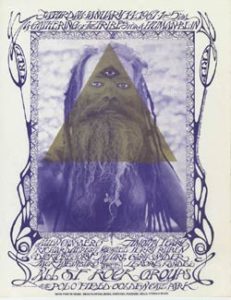 Today is the 50th anniversary of the Human Be-In that took place in San Francisco’s Golden Gate Park on Saturday, January 14, 1967.
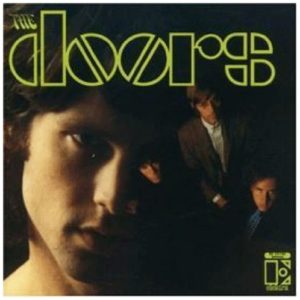 Today’s SotW will recognize another important milestone in Rock history – The Doors’ self-titled debut was released 50 years ago this month. Most rock fans agree that it is one of the best and most influential albums ever released.