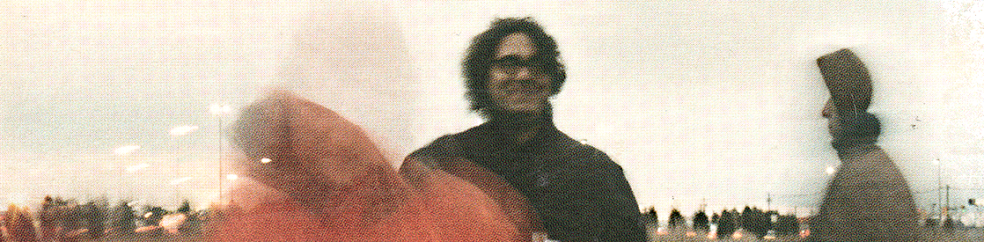
Mink Deville, Le Chat Bleu

This is Billy Borsey and his band’s third album, but at this point most of his original band was gone. Soul survivor Louie X. Erlanger on guitar was joined by Elvis Presley’s rhythm section, Jerry Scheff and Ron Tutt, in Paris, as well as keyboardist Kenny Margolis and others for an amazing adventure recording a record no one knew what to do with. Or, at least, Capitol Records was flummoxed when it was done.

This was a rock record that drew equally from hard rock, chanson, and Brill Building tunes filtered through Phil Spector, produced by Spector henchman Steve Douglas. Willy wrote some of the songs with Doc “Save the Last Dance for Me” Pomus, covered the Jive Bombers’ Bad Boy, and didn’t mind exploring the Cajun life, too. The wonderful thing is it feels all of a piece, a slice in time and eclectic taste, even as it slides from genre to style. I’ll admit, this record’s breadth reflects my

Listening to it again recently is to be reminded what a major figure Willy was, maybe not in his sphere of influence and celebrity, but in the pure fact of his craft, his musical skills and his songwriting talent. The other four CBGB house bands (Television, Blondie, Talking Heads, Ramones) were iconic figures in the punk eruption. Mink Deville was no less iconic in its way, but resisted the punk label, and while they were all just as talented and accomplished, he didn’t find a way to star quite so brightly as the others.

No disco for Mink Deville. (But he did have a huge hit from the soundtrack of the Princess Bride.)

Rolling Stone’s critics poll called Le Chat Bleu the fifth best album of 1980, for what that’s worth. What’s certainly worth your time is the whole album.

Here’s the first tune, This Must Be the Night, which echoes Springsteen’s sounds, but is a pretty fresh take on that sound. Or is it playing tricks on me?

Here’s the Borsey/Pomus collaboration on the World Outside.

A rocker.

Cajun, in French, a cover of a song from the great Queen Ida.

I’m not sure these are the best songs. Listen to the whole thing and make up your own mind:


Roots

Have we done anything on murder songs? We should. This one isn’t exactly murder but the threat is refreshingly explicit.

I wonder how many real murders have been directly – inspired isn’t quite the word here – influenced shall we say – by songs? It must have happened a few times. Music has been a major player in various murder cults of course, and war of course, but individuals who committed murder under the influence of a song – how rare is that? Inquiring minds want to know.

Anyway, Sonny Boy II has his very own blues style, and I happen to think that he’s one of the greatest singers ever, not to mention maybe the best harp player, both instantly recognizable at any rate, and his band swings the blues good.


LINK: Lou Reed Press Conference from 1974

Very funny five minutes of journalists asking questions. Lou answering.

Followed by some fine stripped bare hits live with excellent dancing by Lou.

LINK: The Prince Online Museum

Screenshot 2016-07-05 00.37.03

Prince is pretty famous for not licensing any of his music to any streaming service but Jay Z’s Tidal.

But he should also be famous for initiating many online services with various plans to serve music and publicity and other ideas over the years. After all, he was a major artist who went indy after his falling out with Warner Brothers.

He left the label, but they owned his music, so he presented himself as a slave and wouldn’t use the name Prince, since that was his slave name.

Prince’s various online ideas have now been collected at the PrinceOnlineMuseum.com. I’ve only browsed so far, so I have no tips, but this is stuff Prince did online.

The Young Rascals, “Mustang Sally”

My first experience of Mustang Sally was this single by the Young Rascals.

The history of white acts covering hits originally performed by black acts is long, deep and full of argument.

I mean, Pat Boone?

The Rascals, as they grew up to be known, were better than exploiters, but where you draw the line concerning cultural appropriation might color your opinion. What I’m sure of is the Rascals loved R&B music, and brought their own shape (my first thought was to say color, but that would be wrong) to it.

If you doubt the Rascals soul, try this:

Bonny Rice Died This Week

We could write tributes to those who have passed nearly every day. Today it is for Bonny Rice, whose biggest hit was released as Sir Mack Rice, who was a member of the Falcons in Detroit (with Wilson Pickett, Eddie Floyd, and Joe Stubbs), but who is best known for writing Wilson Pickett’s hit, Mustang Sally, and cowriting the Staple Singers’ Respect Yourself (with Luther Ingram).

The best anecdote from the NY Times’s obituary today: The song was originally called Mustang Mama, but Aretha Franklin, who played piano on the demo, convinced him to change the name.

Here’s the Wilson Pickett version, which was an R&B and pop hit. After the song there are some details about the writing of the song.


Scotty Moore Died This Week.

If there is an ur-moment of the birth of rock ‘n’ roll I would name the Sun Sessions with Elvis Presley. This is Elvis at his greatest, with a band that cranks it up.

If asked about the birth of rock I would chatter about Joe Turner and Little Richard. These are the giant creators of rock ‘n’ roll. And there was more going on at Sun than just Elvis in 1954.

But there are two records I put on when I want to hear the original stuff. The Sun Sessions with Elvis Presley and whatever compilation of Buddy Holly tunes I can find at hand.

Scotty Moore had jazz ambitions, but he gladly took the session backing Elvis. And you can hear in the finger picking that he inserts along with his rhythm part that his ambitions are greater than simply sideman.

Moore’s guitar is essential to Mystery Train.

What surprised me reading about this legend’s career was that his footprint wasn’t large. He made a deep impression early, and had influence forever, but there is not a big body of work out there that is Scotty Moore’s.

Still, this grab from Wikipedia explains his importance and his reticent impact:

“Moore is given credit as a pioneer rock ‘n’ roll lead guitarist, though he characteristically downplayed his own innovative role in the development of the style. “It had been there for quite a while”, recalled Moore. “Carl Perkins was doing basically the same sort of thing up around Jackson, and I know for a fact Jerry Lee Lewis had been playing that kind of music ever since he was ten years old.”[7] Paul Friedlander describes the defining elements of rockabilly, which he similarly characterizes as “essentially … an Elvis Presley construction”: “the raw, emotive, and slurred vocal style and emphasis on rhythmic feeling [of] the blues with the string band and strummed rhythm guitar [of] country”.[8] In “That’s All Right”, the Presley trio’s first record, Scotty Moore’s guitar solo, “a combination of Merle Travis–style country finger-picking, double-stop slides from acoustic boogie, and blues-based bent-note, single-string work, is a microcosm of this fusion.”[9]

Jonathan Richman, Velvet Underground

Everybody knows Jonathan loved the Velvet Underground. And John Cale produced the first Modern Lovers album, which is one of fewer than five epochal punk albums.

Later, Jonathan released this old-school rock ‘n’ roll sound, which has a fabulous sense of rhyme.

In Defense of Disco

Frankly, my defense of disco would last about 100 words. It was unapologetic dance music that was the soundtrack to a great public flowering of gay and interracial utopias, hedonistic, aspirational, happy, at a time when really the whole world was going to hell.

The funny thing is that it wasn’t too long before this culture, so flamboyant and energetic and just plain wonderful, was destroyed by the darkness of AIDS.

The music, which started out as dance music by Kool and the Gang and the Ohio Players and the Commodores among many others, really straight up R&B, evolved into that pulsing 128 BPM sheen, a music that sacrifices swing for relentless intensity and pistonlike movement. This wasn’t music for sitting around and contemplating, this was music for getting sweaty on the dancefloor and sweaty in the bathroom and more sweaty at home, if you know what I mean. Utilitarian music, dance music, sex music.

Alright, that’s 154 words. Here’s a link to a story by a younger guy from Macon who explains it more, if you’re interested. The story starts out at Duane Allman’s grave, which is kind of cool.

Here are a few songs I think of as liking from that time, when you would go into a club and everyone would feel like they were in the minority. Everybody felt like they were venturing out, being a little dangerous, and also connecting to a world that hadn’t ever really existed before, to people they may not have seen before. Oh, I should also mention cocaine and amyl.

I guess my point is that you can freely hate all this music, these tunes, the beats, the arrangements, the crappy clothes the singers wore, but it really isn’t fair to say Disco Sucks. That’s because Disco was so much more bigger than the music.


Oh The Times Square They are a Changing

Diane and I are in New York for our vacation. Actually, I came to participate in the FSTA football draft, which is great as it means seeing so many friends from the fantasy sports world. The draft was part of the annual summer convention put on by the organization and since we both love visiting our most vibrant city so much, the convention was an easy excuse to plan an hiatus around.

One of the things I always do when I am in the Big Apple is stop by Rudy’s Music, on W. 48th street. Aside from just loving to look at guitars, Rudy’s always has, or had, a bunch of beautiful vintage axes that are more than wonderful to gawk at.

Over the years, I have purchased stuff there, too. Before boutique pedals were as readily available as they are today, I got my “King of the Brits” pedal and also my Fulltone “Choral Flange” at Rudy’s who always had easy access to such stuff when all Guitar Center would carry was BOSS (not knocking that company, in fact I use their digital tuners for all my setups).

Even more, I fell in love with Hofner basses at Rudy’s, playing one there, and then knowing that was my next purchase (Diane actually bought one for me as a present some years back and I do indeed love it to pieces).

So, this trip, first day of stumbling around mid-town, we met my cousin Richard at Virgil’s for lunch (another serious ritual, and if you like wings, Virgil’s has the best ones on the planet) and were walking around just soaking the city in when I suggested walking over to Rudy’s. Last year, I got a leather necklace there with a little carved guitar, and somewhere the guitar got lost, so I wanted to get a new one.

Much to my shock and dismay, Rudy’s was gone, and all that remained was an empty storefront. There is still the Rudy’s in Soho, functioning away, but no more mid-t0wn. So, at least to get in a guitar fix, I walked up the street to Manny’s, a music store possibly more famous than Rudy’s as that is where the Ramones hung and bought their gear, for example.

But Manny’s too was gone, again leaving an empty storefront in its wake.

I talked to a couple of people and asked what happened, and, well, the Times Square area is indeed undergoing a major renovation, and property is being snatched up, and Rudy’s and Manny’s were part of the toll of progress.

I understand this: the past will inevitably fall behind and become quaint (although nostalgia does often foster a comeback from falling out of favor) and outdated and dismissed in lieu of the next big relative thing. And, of course, profit will always sneak into the equation as well.

Anyway, for some reason, as I mused the loss of Manny’s and Rudy’s, I kept coming to this 1965 hit by the Trade Winds, New York’s a Lonely Town which essentially has nothing to do with any of this save the NYC locale, and perhaps the thoughts of things lost.

So, here it is. The song is kind of hoaky, but in a perfect 60’s way, I think.
