Over the Christmas holiday I visited my cousins in FL and they turned me on to a magazine article and DVD they had recently discovered about Dr Hook and the Medicine Show. Yes, you remember the group that had a few hits in the early 70s with Shel Silverstein penned songs, most notably “Sylvia’s Mother” and “On the Cover of the Rolling Stone.”
Well, it all started with this long form article, “We Never Have to Be Alone”, by Will Sheff that describes (in lengthy detail) a performance by Dr Hook that was taped by a German TV station in 1974. (Besides being a fine writer, Sheff is also a member of the Alt Country band Okkervil River.) Sheff makes a passionate argument that Dr. Hook and the Medicine Show, Live 1974 is the best concert film ever recorded. Ever!
My cousins had a copy of the DVD I was able to view it before reading the article. I have to admit, it is something to behold. What you see is a band that clearly has the talent to put on a great performance, but a whole lot happens in the brief 9 song, 45 minute show. Songs start and stop, guitars go out of tune, band members get pissed off at one another, and one guy even pukes on camera. But amidst all this mayhem is a performance by a band that has self-deprecating charm, wit and, at least for certain moments, flashes of brilliance. They play like they’ve got nothing to lose and it is a delight to watch.
The Sheff article has a few YouTube clips from the TV show embedded into it. Here’s one of them:
But you have to read the Sheff article (all of it) and try to get your hands on a copy of the DVD so you can view the whole thing at once. You will not be disappointed.
This weekend marks two very important anniversaries for me. It is the 50th anniversary of the Beatles arrival in the US and their “where were you when…” performance on the Ed Sullivan Show. It is also the 6th anniversary of the SotW – originally inspired by the Beatles anniversary. (The very first SotW was the Ed Sullivan recording of “All My Loving.”)
In honor of my affection for all things Beatles, I’ve decided to celebrate these anniversaries by tackling a project that has been on my “to do” list for quite some time. I’m going to lay out the famous story of the recording of “Strawberry Fields Forever” complete with audio. So buckle up!
The story begins here in San Francisco, where on August 29, 1966 the Beatles played their last concert at Candlestick Park. Freed from touring, the band members had the time to pursue other (solo) projects. John went off to Spain to shoot the movie How I Won the War, with Richard Lester who also directed both A Hard Day’s Night and Help!. It was on location in Spain that John wrote and first demoed SFF under the working title “It’s Not Too Bad.”
On Thursday, November 24th, the band assembled at Abbey Road Studios to start their next recording session. In his fine memoir, Here, There and Everywhere, Beatles’/Abbey Road engineer Geoff Emerick describes how the session started.
Down in the studio, George Martin was perched, as usual, on his high stool, positioned in the midst of the four Beatles; he liked being looked up to, so he never sat in a normal chair during routining. John was standing directly in front of him, playing an acoustic guitar and singing softly. Because he wasn’t close to the microphones we had arranged around the room, I had to push the faders up quite high to hear him…
When he finished, there was a moment of stunned silence, broken by Paul, who in a quiet, respectful tone said simply, “That is absolutely brilliant.”
It must have sounded something like this.
This demo, released on The Beatles Anthology 2, was recorded at John’s home when he returned from Spain, sometime between November 7th and the November 24th recording session. Of note is that the demo version of the song is missing the famous intro and instead begins with the “no one I think is in my tree” verse (that will ultimately be the 2nd verse in the official release).
Immediately after hearing John’s demo, the boys got down to work. They spent the next several hours “routining” – figuring out who would play which instruments and which parts. They settled on John playing rhythm guitar, Paul played the band’s newest toy, the Mellotron, George was experimenting with slide guitar and Ringo manned the drums, but placed towels on the drum heads to give them the muffled sound he was after.
They laid down one take that night.
Take 1 is generally unremarkable – the Beatles were just trying to get the feel of the song on tape – but it did result in a couple of advancements. John had come up with the verse that would end up as the first verse – “living is easy with eyes closed” – and near the end, Paul came up with the Mellotron part that ultimately became the intro.
On the evening of Monday, November 28th, the boys were back at Abbey Road to continue working on SFF. Over a session that lasted about 7 hours, they laid down Takes 2-4.
2 and 4 were full rhythm tracks (3 was a false start with John scolding Paul for playing too loud) with more guitars, bass and maracas overdubbed onto the basic tracks. They deemed 4 as “best”, so John added a vocal track. By now, the song structure had evolved to include the intro followed by the chorus to start, but still had the first verse immediately followed by the second without another chorus in between.
On the afternoon of Tuesday, November 29th, work on SFF progressed further. Two more Takes, 5-6, were recorded.
Take 5 was a false start, but Take 6 was completed. Take 6 was then “reduced” to Take 7 with another Lennon vocal overdub.
This recording is the complete Take 7 with the drum edit piece from Take 26 tacked on. More on that later. Take 7 also added ADT (automatic double tracking) to John’s vocal. This mix was deemed the new “best” and sat idle until the band took up work on SFF again over a week later.
During this break John had been listening to the acetate of Take 7 and wasn’t fully satisfied with it. He told producer George Martin he wanted to take another run at it and suggested bringing in some outside musicians. Lennon and Martin worked together to create a score for trumpets and cellos. But before they could be overdubbed, the band would have to record new rhythm tracks.
On Thursday, December 8th the work began. Mark Lewisohn’s exhaustive book, The Beatles Recording Sessions, summarizes the session this way:
By the end of the session 15 more takes had been recorded, numbered nine to 24, all of them rhythm only (i.e., no vocals). But although nine of those 15 were complete (there was, for some reason, no take numbered 19, nor was there an 8), it was two of the incomplete versions – takes 15 and 24 – which were chosen to take the song into the next stage. Before the end of this long night George Martin and Geoff Emerick edited together the first three-quarters of take 15 with the last quarter of take 24. An attempt to mixdown the two four-track edits into take 25 was started but then aborted for the night, to be continued the next day.
The work was completed on Friday, December 9th.
On Thursday, December 15th four trumpets and three cellos were brought in to overdub the score onto the rhythm track – Take 26. Over this, John recorded a vocal that sounds manic compared to his original demo. This is where John utters the non sequitur “cranberry sauce” (twice) – not “I buried Paul” as the “Paul is dead” conspiracy theorists claimed.
Of interest is the much faster tempo (and different key), George’s addition of a swordmandel (an Indian instrument) part, and backward taped cymbals.
Finally, we come to the famous edits. On Thursday, December 22nd, Lennon told Martin that he liked both versions of SFF (Takes 7 and 26). He wanted to join the beginning of Take 7 to the ending of Take 26. When Martin explained that they were recorded in different keys and tempos, John said “Well, can you fix that?”
Again, from Lewisohn’s book:
George and Geoff carefully studied the two versions and realized that if they speeded up the remix of the first version (take seven) and then slowed down the remix of the second (take 26) they might match. They were originally a semitone different. “With the grace of God, and a bit of luck we did it,” says Martin. All that was left now was to edit the two pieces together and the song – almost a full month after it was started – was finally finished. “We gradually decreased the pitch of the first version at the join to make them weld together,” says Geoff Emerick.
The final, official release begins with the intro, chorus and first verse from Take 7. Then another chorus from Take 7 was edited in to bridge to verse 2 which is where Take 26 begins. This was necessary because on Take 7, verse 1 and 2 were consecutive, without a chorus in between. The next verse (2), chorus, verse (3), chorus, and coda are all from Take 26, making the final released version of the song a musical palindrome.
There was another “edit” during the coda at the end. Ringo was having trouble keeping up the intensity of his drumming during the coda. There was one short lapse, but the section after it was very good too. The solution? The false ending fade out, then fade back in.
Did anyone notice that it was Paul Williams that gave the acceptance speech for Daft Punk when the helmeted duo won the Grammy for Album of the Year? Williams, whose earlier career was derailed from alcohol abuse, hit the bull’s-eye with his comment “Back when I was drinking, I would imagine things that weren’t there and I’d get frightened. Then I got sober and two robots called and asked me to make an album.”
We oldsters all remember who Paul Williams is. But for the benefit of those of you under 50 I’ll let you in on his career highlights.
Williams was a very successful song writer in the 70s. His greatest success came with the two big hits he composed for the Carpenters – “We’ve Only Just Begun” and “Rainy Days and Mondays” (co-written with his partner Roger Nichols). He had another major triumph with “Evergreen,” a #1 hit from the Barbra Streisand movie A Star is Born which won him a Grammy. He also penned songs for Three Dog Night (“Old Fashioned Love Song”) and others. David Bowie recorded one of his songs (“Fill Your Heart”) on the album Hunky Dory. Williams also wrote the theme song for The Love Boat TV show and Kermit the Frog’s “Rainbow Connection” for The Muppet Movie.
But few who recall his background know that earlier Williams recorded with a pop/psych band called The Holy Mackerel. I have a (white label promo) copy of the 1968 album and at least one side isn’t half bad.
The SotW is “Scorpio Red.”
“Scorpio Red” is an astrology themed, cautionary tale about a “red headed lady” that “will not be tamed.” It contains all of the trappings of late 60s psych/pop rock – Eastern influenced chords, ringing guitars, reverb and group harmony.
Another song on the album worth hearing (though not written by Williams) is “Wildflowers.”
This could be the East/West hybrid sound George Harrison was shooting for on “Within You Without You.” Or maybe not.
Back in 1998, Mercury Rev, a band from upstate New York was about to record their fourth album. Their first three had received some critical acclaim, but virtually no commercial success at home in the U.S.
The band fell into drug and alcohol abuse, sold most of their instruments and could see their demise rapidly approaching. With that as the backdrop, the band members — essentially Jonathan Donahue (vocals, guitars) and “Grasshopper” (guitars, clarinet) — assumed the new album, Deserter’s Songs, would be their last. But in Deserter’s Songs the band delivered a gem. It garnered high praise in the UK where it was voted Album of the Year by both NME and Mojo. But the album has still been heard by few here in the U.S.
Deserter’s Songs is a very quirky album of music. Less reliant on guitars, the band used keyboards (piano and mellotron), flugelhorns and even a bowed saw. They sound a bit like the Flaming Lips (especially the thin vocals) or My Morning Jacket, but with more dreamy orchestration.
The SotW is “Hudson Line.”
The tune is about getting out of New York City on the Hudson Line train up to the Catskills, where the album was recorded, to “get back to the land and set my soul free.” In fact, Mercury Rev was able to take advantage of their proximity to other Catskill musicians and recruited Garth Hudson (The Band) to play sax on “Hudson Line.” They also persuaded Levon Helm to play drums on “Opus 40,” another great track on the album.
Most of the cuts on Deserter’s Songs were written and sung by Donahue but Grasshopper wrote and sang “Hudson Line” so it has a slightly different feel from the rest of the album. It’s both bluesy and jazzy.
Deserter’s Songs should really be experienced from start to finish in one sitting. It is available on Spotify for your listening pleasure, so give it a try.
I wanted to write a post about some influential, all women rock bands but I was having a hard time getting started. Where would I begin? Who would I include? More importantly, who would I leave out? The more I thought about it, the bigger the project became. To tackle the subject thoroughly, I would have to write a book!
OK, so here’s what I’m gonna do – I’ll focus on pioneering, all women bands of the 70s. So don’t go crazy because I don’t mention earlier woman rock artists like Wanda Jackson, Janis Martin, Aretha Franklin, Janis Joplin, Grace Slick (not all women “bands” anyway) or all of the early 60s girl groups (perhaps all women, but usually just singers). And while it’s tempting to include the GTOs (Girls Together Outrageously), were they really a band or just a novelty side project Frank Zappa put together for a bunch of his more interesting groupies? Genya Ravan’s Goldie & The Gingerbreads almost qualify, but they’re from the 60s – anyway, more on that later.
And even though I’m focusing on the 70s, I won’t be discussing folk acts like Kate & Anna McGarrigle (though they’re worthy of a SotW), women in or fronting rock bands like Patti Smith, Pat Benatar, Bonnie Raitt, the Wilson sisters (Heart), Tina Weymouth (Talking Heads) and so many more. And I’m not talking about The Go-Gos or the Bangles – they’re too popular and were 80s bands anyway.
So who’s left? How about Fanny, Isis and The Runaways.
Fanny consisted of sisters June and Jean Millington, Alice De Buhr and Nickey Barclay. They were the first self-contained, all women rock band to get a major label deal. They signed with Reprise and it wasn’t based on the novelty of being an all women group. These chicks (sorry for the sexist adjective, but it fits here) wrote their own songs and could really play. Lowell George (no slouch of a musician) used to hang out at their rehearsal studio.
“Seven Roads” is the closer on their 1970 debut album. It opens with a very cool Hammond organ intro and a heavy guitar riff. Primal tom-toms enter for the chorus. Enough room is left for heavy guitar and organ solos.
Isis was an all women band that formed out of the ashes of the earlier mentioned Goldie & The Gingerbreads. Former Gingrbreads guitarist Carol McDonald and drummer Ginger Bianco formed an 8 piece horn rock band and released their first album in 1974 on the Buddah label. But major success eluded the band, partly because they had a pretty eclectic repertoire that was hard to pin down; and partly because they promoted overtly gay themes at a time when that didn’t play outside of New York and San Francisco. (Their debut album cover had the band standing naked but covered in silver paint and one of their songs was called “She Loves Me.”)
The Shadow Morton produced “April Fool” is my choice to represent the band. (Morton also produced the mini operas by another girl group from the 60s – The Shangri-Las.) “April Fool” has that big, bluesy, horn rock sound. But it is also driven by infectiously funky, Latin percussion beats. It is so cool, that the drum break was sampled by De La Soul and used on their song “Big Mouf.”
The Runaways were an L.A. based, teenaged, all-female group whose career was launched by manager/producer Kim Fowley. There were personnel changes throughout their history, but the core lineup was Sandy West (drums), Joan Jett (guitar/vocals), Lita Ford (lead guitar), Cherie Currie (lead vocals) and Jackie Fox (bass). The band’s heavy mascara, street tough image converged with the burgeoning punk movement of the late 70s, landing them in the category of a female version of The Ramones (though in reality they were closer to a female version of Aerosmith).
“You Drive Me Wild” was penned by Jett and was on the band’s first album release in 1976. It sounds like it might have been inspired by T-Rex. Jett took the lead vocal on this one. I’m not sure who played the stinging guitar solo, but I assume it was Ford.
It is also interesting how these bands were interconnected in ways beyond the obvious. Kim Fowley was also an early supporter of Fanny and June Millington played guitar the Isis’ second album, Ain’t No Backin’ Up Now.
Last Saturday I was saddened to learn that Phil Everly died. I’ve always been partial to harmony vocals, so the Everly Brothers were one of my favorite groups. I’m clearly not alone in that. Rock bands from the 60s through today have paid tribute to the Everlys, incorporating their close harmony style into their own music or recording covers of their songs.
It’s been said the The Beatles once considered calling themselves The Foreverly Brothers – clearly a tip of the hat to Phil and Don. No less than Bob Dylan included two of their songs on his Self Portrait album that was recently given new life in 2013 due to a Bootleg Series reissue.
In the 1970s Simon and Garfunkle put a (live) version of “Bye Bye Love” on Bridge Over Troubled Water. Gram Parsons and Emmylou Harris covered “Love Hurts” and Linda Ronstadt sang “When Will I Be Loved.”
Skip ahead to the new millennium and you have Alison Krauss and Robert Plant doing “Gone, Gone, Gone.” “Cathy’s Clown” gets a shout out in Elliott Smith’s “Waltz 2 (XO).” And just this past Thanksgiving week, Green Day’s Billie Joe Armstrong and Norah Jones released a full album of Everly Brothers covers called Foreverly.
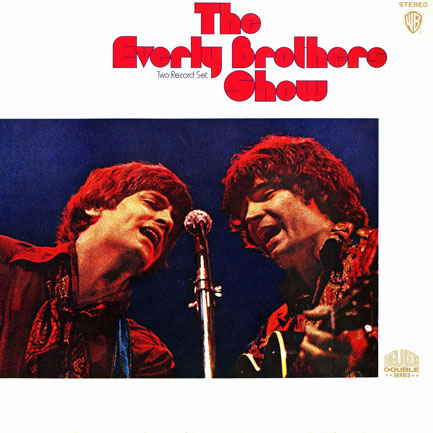
The SotW is a cut I discovered last year in MOJO magazine. There was a piece that had Will Oldham (aka Bonnie “Prince” Billy) describing one of his favorite pieces of music – the full album side, 18 minute “Rock and Roll Medley” from the Everly Brothers 1970 album, The Everly Brothers Show.
The Everly Brothers are supported by a really hot band that includes guitar wiz Sam McCue, bassist Robert Knigge and drummer Al “Tiny” Schneider. This medley is like a freight train rolling down the tracks at too high a speed. They round a couple of turns where things get a little wobbly, but always seem to catch up with one another and choogle ahead.
The clip offered here is just a 5 minute sampling of the performance. But the full “Medley” is available on Spotify. Listening to the whole thing is a commitment but, trust me, it’s worth it.
The albums label lists 7 songs in the medley: “Rock and Roll Music,” “The End,” “Aquarius,” “If I Were a Carpenter,” “The Price of Love,” “The Thrill Is Gone,” and “The Games People Play.” But there are more nuggets hidden in the piece. It’s like an Easter egg hunt trying to find them. I hear a bit of The Who’s Tommy near the beginning. Then, just after the drum and bass solos (yes, there are drum and bass solos) the band slips into the riff from “Ticket to Ride” for just a short moment. It’s beautiful.
The boys did have a 10 episode summer replacement television show (for The Johnny Cash Show) on ABC called The Everly Brothers Show, but album of the same name was not a soundtrack. The album was recorded from a live performance at the Grand Hotel in Anaheim, CA.
I really hate to admit that I don’t like most hip hop music. I like to think of myself as extraordinarily open minded to virtually all types of music but I’ve just never been able to get on board with hip hop. That’s not to say that I don’t like any. But I could probably fit a playlist of all my favorite hip hop songs on a single CD or cassette.
Since the early 2000s I’ve been following the career of The Roots. I like the way they play real instruments and mix traditional R&B stylings into their contemporary sound. They’re smart too.
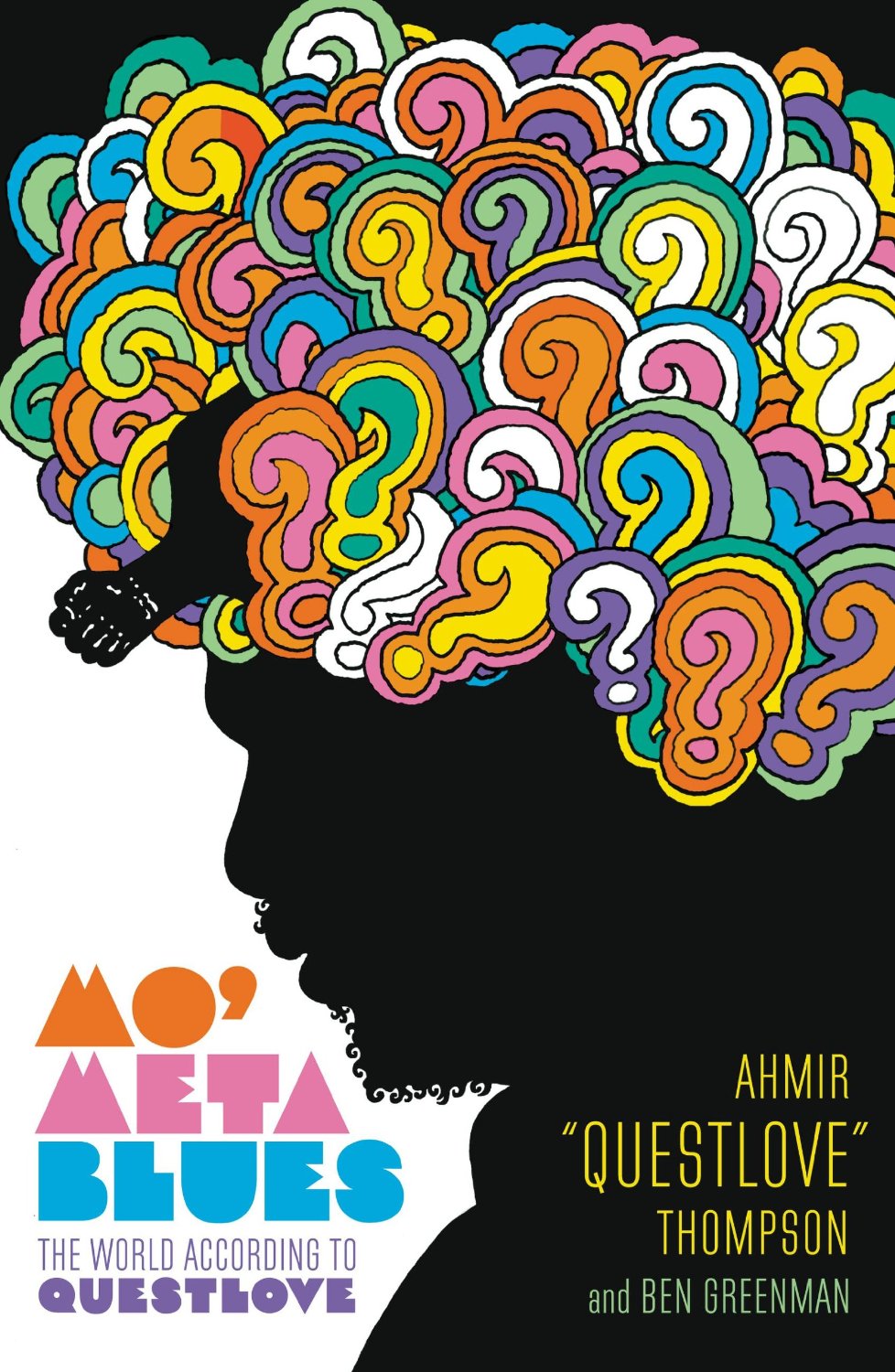
When I heard that their drummer and musical director, Ahmir “Questlove” Thompson, had written a book I decided to pick it up and give it a read. (I had also heard that he is an avid record collector and musicologist – my kind of guy!) The book, titled Mo’ Meta Blues – The World According To Questlove, is a good read. It gave me a greater appreciation for the history of hip hop music and specifically the career and influence of The Roots.
Today’s SotW is their best known song, “The Seed (2.0)” from the album Phrenology.
In the book Questlove tells the whole story of how the song came to be. He first heard the song’s writer on a demo CD that was played for him by his friend dream hampton who had received it from Ishmael Butler who made her promise not to identify the artist to anyone. But Questlove was able to sneak a peek at the CD case and identified the artist as Cody ChestnuTT. Through some clever sleuth work he was able to get a copy of ChestnuTT’s full album where he heard the song “The Seed.”
He contacted ChestnuTT and told him the Roots wanted to record a hip hop version with him for their new album. The session was arranged and the recording was cut in just two takes. That’s all that was needed to capture “the feel” that makes the song work.
Questlove writes:
“The Seed (2.0)” was a hit and a big part of our crossover success. It was also Don Was’s favorite record of the year. When he was making “A Bigger Bang” with the Rolling Stones, he played it for the band. “That’s the kind of sound we want,” he said. “This is what you need to be sounding like.”
I think they were on to something. The song came in at #43 on Rolling Stone’s list of the 100 Best Songs of the 2000s.
Now, when you listen to the words, be forewarned that they should not be interpreted literally. The Roots were a band that insisted on taking hip hop into new directions – merging various styles, including rock. The lyrics are a metaphor for the merging of musical styles and their disdain for the direction hip hop was taking at the time (a rote reliance on samples, and lyrics that promoted materialism and created a distance between the artist and audience). Well, that’s how I see it.
It only seems appropriate that I should dedicate the final SotW for 2013 to a song that was one of the best of the year. It is “Song for Zula” from Phosphorescent’s terrific album Muchacho. (Phosphorescent is the creative outlet for Matthew Houck.)
I was first introduced to the “band” through the terrific LA based music blog Rollo & Grady (www.rollogrady.com). (It’s a great resource for anyone interested in keeping current on emerging bands in the indie rock scene.) Every Phosphorescent song they’ve featured over the years has appealed to me. So I was very excited to learn that a new album, Muchacho, was dropping this year.
And a fine album it is. No, it doesn’t have radio friendly “hits.” No, the songs won’t garner millions of YouTube viewings. No, the album won’t sell hundreds of thousands of CDs. But it is a very well-conceived and executed album in the traditional sense. Not exactly a “concept” album, but still a collection of songs that hang together with a common theme – in this case a break up. Is it possible Houck can express anything new to this universal, but well worn, experience? The answer is a resounding YES.
“Song for Zula” is a beautiful example of the gravity of the songs on Muchacho.
The lyrics have a majestic beauty missing from most of today’s pop music.
You see, the moon is bright in that treetop night
I see the shadows that we cast in the cold, clean light
My feet are gold. My heart is white
And we race out on the desert plains all night
See, honey, I am not some broken thing
I do not lay here in the dark waiting for thee
No my heart is gold. My feet are light
And I am racing out on the desert plains all night
It has the atmospherics and soaring dynamic that Daniel Lanois contributed to U2’s “With or Without You.” You will hear it from the opening notes of the intro. Houck has a thin, fragile voice that compliments this song perfectly. It conveys his sadness and resignation with subtle intimacy.
Best wishes for a happy new year. I can’t wait to share more great music with you in 2014.
Christmas music is like Obamacare. Either you like it or you don’t – and no one is going to persuade you to change your mind about it. I happen to like holiday tunes. They even bring a smile to my face when one comes up on “shuffle” in July. But in deference to those of you that are on the other side, I offer a compromise.
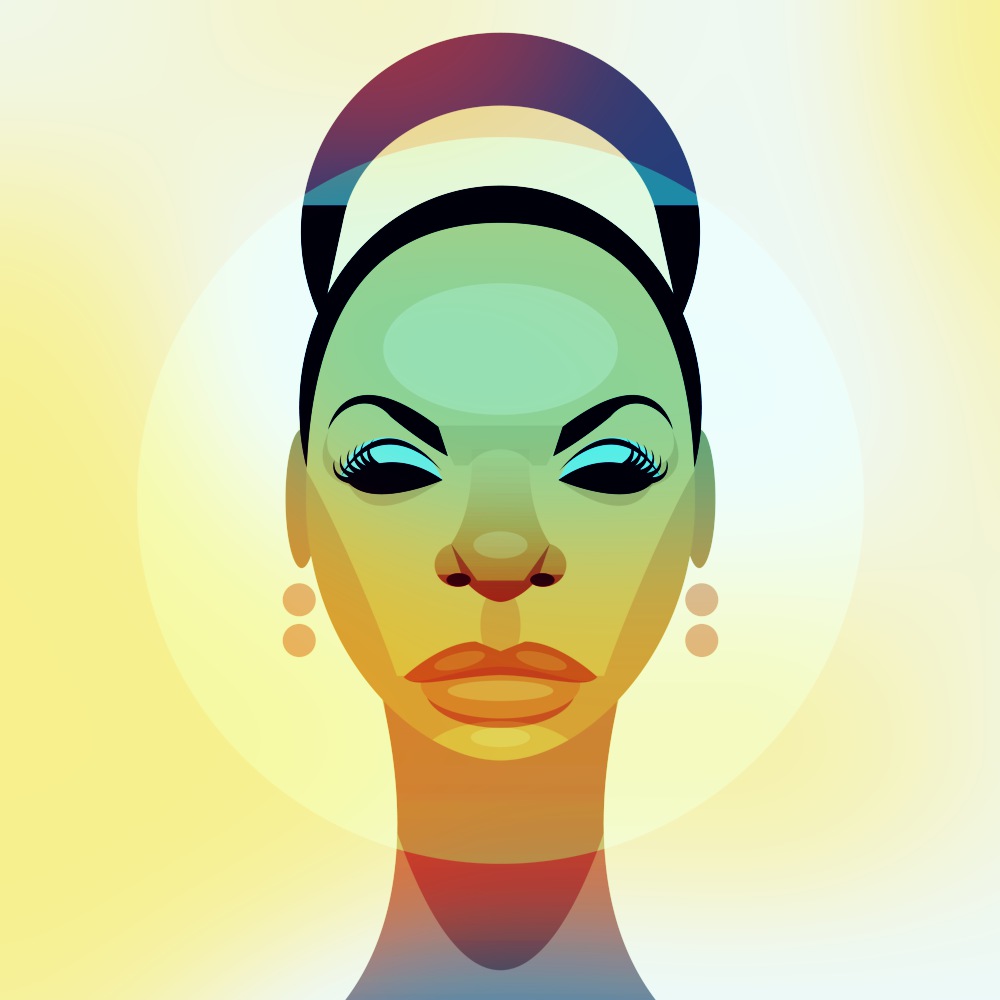
Today’s SotW is “Little Girl Blue,” one of Nina Simone’s signature songs. It is an American songbook standard, written by Richard Rodgers and with lyrics by Lorenz Hart in 1935 for the Broadway musical Jumbo. So what does this show tune about time passing have to do with Christmas?
In the hands of Simone, a classically trained pianist, it is transformed into a quodlibet – a song that uses a combination of melodies from different tunes. In this instance, Simone uses the Christmas carol “Good King Wenceslas” as the intro to the Rogers & Hart song.
This reminds me of the way Joni Mitchell used “Jingle Bells” to connect her breakup song “The River” to the wintry feel of the holiday season.
The SotW is a wonderful version of “Little Girl Blue,” beautifully played and skillfully sung by Simone. Whether you like holiday music or not, this recording will warm your holiday.
As a long time record collector, I can remember having a very long “want list” of records I knew to exist, but had never seen – never mind heard!
But technology caused things to change very quickly. First there was the CD boom of the 90s that made it economically viable for record labels to reissue long lost cult favorites. Soon you could by CDs by obscure groups, classic albums with bonus cuts and boxed sets with tons of previously unreleased cuts and alternate takes.
Next came peer to peer file sharing and blog sites that posted full albums “in the cloud” for download. The treasure trove of bootlegs available on the internet is incomprehensible. And now we have YouTube, Spotify, Pandora and other streaming services that put the entire history of recorded music at our fingertips – mostly for free!
There’s hardly any artist’s repertoire that can’t be found with a little persistence. The SotW would be impossible – or at least a whole lot less interesting – if it weren’t for these advancements.
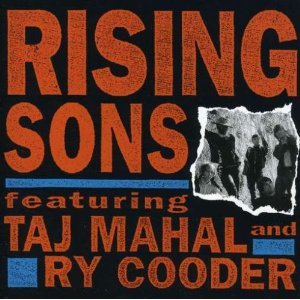
So then, what does all of this have to do with today’s SotW? Well, today I’m featuring a song by Rising Sons.
Rising Sons was a band formed in LA in the mid-60s. The band included Taj Mahal and a very young Ry Cooder (only 16 when the band was founded) in addition to Gary Marker, Jesse Lee Kincaid and Kevin Kelley. (Kelley replaced original drummer Ed Cassidy who went on to later fame with Spirit.)
The band played gigs all around LA and attracted kudos from a who’s who of record business stars. This led them to a signing by Columbia Records who quickly sent them into the studio to record. They laid down about 20 tracks of American roots music (blues, folk and country) and several originals penned by Kincaid. Columbia was unhappy with the results and never released the album. The band broke up in 1966 and the tapes languished in the Columbia vaults until 1992 when the album was finally released during the aforementioned CD boom.
Have a listen to their take on Charley Patton’s “Poor Me” retitled by Rising Sons as “By And By (Poor Me).”
This isn’t the most rockin’ cut on the album, but to my ear it’s the one that shines the brightest light on the early work of Mahal and Cooder. It has some very tasteful guitar interplay and a nice country-blues vocal by Mahal.
Thank goodness that this record was finally released so we can all hear and enjoy these early recordings.


 IGNORED OBSCURED RESTORED