Song of the Week – H2O Gate Blues, Gil Scott-Heron

csnyIGNORED OBSCURED RESTORED

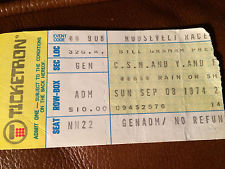
Today is the official 40th anniversary of Richard Nixon’s resignation from the Presidency in 1974. But as far as I’m concerned, yesterday, August 8th is the true anniversary because it was on prime time TV the night of the 8th that he announced to the country that he would resign at noon the next day. I remember where I was when that news broke… do you?

I was at Roosevelt Stadium in Jersey City, New Jersey, at the Crosby, Stills, Nash and Young reunion tour concert. The band had left the stage abruptly. At a time before smart phones, we in the audience just waited for them to come back out, unaware that something historic was unfolding. At least not until Graham Nash came back out onto the stage and announced “Nixon has just resigned” to the cheers of the largely anti-war crowd.

That 1974 tour was just documented in a new boxed set that was released in July. In a recent interview promoting the recordings Crosby said:

The most memorable moment for me was the Aug. 8 concert at Roosevelt Stadium in Jersey City, N.J. While we were on, President Nixon went on TV and said he was resigning the next day. When we heard backstage, we went bonkers. Graham announced it to the audience and the place went completely up for grabs. It was a moment of complete and utter joy, that a dark cloud was finally lifting and everyone there had somehow been a part of it. We immediately performed my “Long Time Gone.”

If I had a copy of the bootleg from that night (I know one exists) I would make it the SotW. But I don’t so instead let’s give a listen to “H2O Gate Blues” by Gil Scott-Heron.

Scott-Heron was a poet/rap pioneer and improviser with a strong political bent. “H2O Gate Blues” is a classic example of his work. This monologue is 8 ½ minutes of an intelligent and blistering attack on the Nixon administration – its politics and policies.

It’s amazing how so many of his words from 1978 still ring true today and that makes it a perfect SotW for this historic day.

Enjoy… until next week.

Song of the Week – I Won’t Be Hangin’ Round, Linda Ronstadt

IGNORED OBSCURED RESTORED

It’s been a very busy 12 months for Linda Ronstadt. Last summer she revealed she had Parkinson’s disease and is already unable to sing due to its effect. A few months later she began to promote her autobiography, Simple Dreams: A Musical Memoir, granting a substantial number of media interviews. Oh, and did I mention she was inducted into the Rock And Roll Hall of Fame this year.

Then just this week, President Obama awarded her a National Medal of Arts and Humanities. At the ceremony, the President said “I told Linda Ronstadt I had a crush on her back in the day.”

Today’s SotW is a Ronstadt song that you all may know, but one that I only recently discovered this year. “I Won’t Be Hangin’ Round” is my new favorite. It’s from her 1972, third solo album titled simply Linda Ronstadt (which I have a copy of) but I only really “heard” it for the first time on a various artist record called Country Soul Sisters. I’ve since learned it’s also on another compilation disc called Delta Swamp Rock Sounds From The South: At The Crossroads Of Rock, Country And Soul.

“I Won’t Be Hangin’ Round” was written by Eric Kaz who also wrote a couple of my favorite Bonnie Raitt songs (that Ronstadt also recorded) – “Cry Like A Rainstorm” and “Love Has No Pride” – among many others.

Ronstadt was fond of covering soul hits on her albums. “Heatwave”, “Just One Look” and “Rescue Me” come to mind. But even though she belted them out with credibility, she still sounded like a white girl singing soul covers. On “I Won’t Be Hangin’ Round” Ronstadt attains a truly soulful performance. The gospel infused background vocals provided by Merry Clayton, Diane Davidson and Miss Ona lend some authenticity to the sound, but it would be unfair to Ronstadt to imply that’s the only reason the performance works. She nails it.

The recording also benefits from the support of the Muscle Shoals house band including Barry Beckett on keys, Weldon Myrick on slide guitar and Roger Hawkins on drums. Those boys know a little bit about soul music.

Enjoy… until next week.

Song of the Week Revisited – I’m Hip, Blossom Dearie

debbie, me and bob doroughIGNORED OBSCURED RESTORED

Today I had the privilege of hearing and meeting a living legend, the 90 year old Bob Dorough. This puts me one degree away from Miles Davis. Check it out and you’ll see. It caused me to remember this SotW posting I originally made on May 30, 2009, soon after Blossom Dearie had passed away. I wanted to repost it to share my appreciation for this great man and jazz musician.

The song of the week is “I’m Hip” in it’s definitive version by “jazz pixie” Blossom Dearie. The song was written by Bob Dorough (music) and Dave Frishberg (lyrics) in the late 50s as the “demolition of a namedropping bohemian poseur” (Stephen Holden – NYT).

Dearie was known for her distinctive, girlish voice and pageboy haircut. Her crisp, impeccable delivery and an irrepressible sense of playful swing are perfect for this song (even though it’s sung from a distinctly male point of view). This version was recorded Live at Ronnie Scott’s in 1966. Sadly, Dearie died on February 7th, 2009, in her apartment in Greenwich Village. She was 84.

The Dearie/Dorough/Frishberg collaboration went beyond “I’m Hip”. All three were involved with some of the best songs in the early 70’s, ABC “Schoolhouse Rock!” series. Dorough wrote and performed about 30 of the songs, including “Three Is a Magic Number” (my favorite). Dearie sang “Figure Eight” and Frishberg wrote “I’m Just a Bill.” Kids are still learning from those songs 35 years later.

Enjoy… until next week.

Song of the Week – Mama Bake A Pie (Daddy Kill A Chicken), Drive-By Truckers

IGNORED OBSCURED RESTORED

There is a lot of violence in the world right now – in Nigeria, Syria, Iraq, Ukraine and more recently Gaza. “Can’t we all just get along?”

All this fighting got me thinking about one of my favorite antiwar songs. In the early 70s country artist Tom T. Hall wrote “Mama Bake A Pie (Daddy Kill A Chicken)” as his protest of the Viet Nam war. Hall earned the nickname “The Storyteller” for songs such as his most famous – “The Harper Valley PTA.” “Mama…” is another story song that has been covered by numerous artists over the years.

Today’s SotW is the version by The Drive-By Truckers.

The song is about a guy coming home from the war after his legs have been blown off. He’s sarcastic when commenting on his sacrifice.

The war is over for me
I’ve forgotten everything except the pain
Thank you sir, and yes sir, it was worth it
For the ol’ red, white and blue

He’s hiding a bottle of whiskey under the blanket that’s covering his legs and cracking jokes to cover his embarrassment.

I can see the stewardess make over me
And ask, “Were you afraid?”
I’ll say, “Why no? I’m Superman
And couldn’t find the phone booth quite in time”
A GI gets a lot of laughs
He remembers all the funny lines

Then comes the chorus. It describes the banality of how life will go on as it always has – for everyone but him.

Mama bake a pie
Daddy kill a chicken
Your son is coming home
11:35, Wednesday night

But the real tearjerker is in the next verses when the soldier tries to predict how the girlfriend that dumped him when he went to war will react to his plight.

The letter that she wrote me said, “Goodbye”
She couldn’t wait and lots of luck
The bottle underneath the blanket
Feels just like an old friend to my touch

I know she’ll come and see me
But I bet she never once looks at my legs
Now, she’ll talk about the weather
And the dress she wore the July 4th parade
Lord, I love her and I don’t believe
This bottle’s gonna get her off my mind

That is as poignant a sentiment that you’ll hear in any song.

Mama bake a pie, daddy kill a chicken…

Enjoy… until next week.

One Last Stones Top 10

I’m a little late to this game but here’s my list.

Satisfaction
Putting together a Stones Top 10 List has been difficult for each of us. It seems like an impossible task. But you know, if I had to put together a list of my all-time Top 10 Rock songs, something by the Stones would have to be on it… and that something would be Satisfaction. Now that I’ve got the easy one out of the way I can move on.

2120 South Michigan Avenue
This instrumental was named after the address of the Chicago’s Chess Studios where it was recorded but was also home to many of the electric blues artists the Rolling Stones revered. I was originally familiar with the version on the US album 12 X 5 (1964). In the 80s I picked up a British import vinyl called Around and Around that also contained a version of the song – but it went on longer than the 12 X 5 version. Hearing the longer version was like discovering the song all over again.

Off the Hook
I always liked this little straight ahead, party song. Maybe it’s because of the cool performance of that they did for the T.A.M.I. Show. It was on the US album The Rolling Stones Now! that was released in 1965. It made its way onto countless mix tapes I gave away in the 80s.

The Last Time
Killer riff on this gospel influenced number.

Ruby Tuesday
This was a big hit that I seem to favor because it was so different than everything else when it came out. Brian Jones was the mastermind behind this arrangement. He played the recorder part (and piano) that lends the song its iconic sound. The melancholy verses blend perfectly with the anthemic chorus.

Stray Cat Blues
Filthy!

Midnight Rambler
This song debuted at the July 5, 1969 concert the band performed in Hyde Park, just 2 days after Brian Jones died. It made its recorded debut toward the end of ’69 on the Stones album Let It Bleed. But the definitive version was the one on Get Yer Ya-Yas Out! with Mick Taylor on guitar.

Can’t You Hear Me Knocking
This 7+ minute cut begins like a pretty typical Stones song but after about 2:45 develops into an extended jam – they just kept the tape rolling, thank God. Fantastic guitar solos by Mick Taylor and Keith Richards, and a very nice sax solo by one of my heroes – Bobby Keys.

Hand of Fate
I’ve chosen this song because the guitar playing is so great. The guitar solos are fantastic, especially the one that burns through the final minute of the song. And who’s ripping off those cool riffs? Black and Blue’s mystery guitarist Wayne Perkins.

Shattered
The Stones at their most pissed off – calling out late 70s, squeegee NYC as they see it. “Go ahead, bite the Big Apple, don’t mind the maggots.”

Song of the Week – Meeting of the Spirits, Mahavishnu Orchestra

IGNORED OBSCURED RESTORED

Today’s SotW was written by guest contributor John Spallone. John and I first met through a mutual friend in the late 70s when he was in Optometry school in Boston. We instantly bonded over our shared interest in great music. We attended many memorable concert performances together (both national and local acts) and couldn’t begin to count the hours spent listening to records. Exposure to new music was a constant part of our lives back then (and still is to some extent). John has been living and practicing Optometry in San Francisco for some 35 years.

The opening track of a number of debut albums have announced, “Fasten your seat belt. You are about to experience something completely like you never have before.” “Purple Haze” by Jimi Hendrix and Led Zeppelin’s “Good Times, Bad Times” are two prominent examples from the 1960s. The SotW for this week was another of those signal moments in the popular music of the late 20th Century.

In 1971, John McLaughlin, a jazz guitarist who had moved from England to New York, decided to form a band. He had cut his teeth on the jazz scene of London in the early 60s, playing with Jack Bruce and Ginger Baker in the Graham Bond Organisation. After coming to New York, he teamed up with Tony Williams (drums) and Larry Young (organ) to play innovative music that combined the power of rock with the intricacy of jazz. The Tony Williams Lifetime briefly incorporated Jack Bruce (post-Cream) into the group, before breaking up. McLaughlin then recorded with Miles Davis, in sessions that would yield Bitches’ Brew, A Tribute to Jack Johnson and material that would appear on Miles’ albums for years to come. Miles encouraged him to strike out on his own. McLaughlin recruited: drummer Billy Cobham (who had also recorded with Miles), from Panama; bassist Rick Laird, from Ireland; pianist Jan Hammer, from the Czechoslovakia; and violinist Jerry Goodman, from Chicago (and The Flock, another of the jazz-influenced rock bands the emerged from the Windy City). They created a mix of Indian raga, English folk music, European classical music, funk, psychedelic rock, and high-energy jazz. They initially appeared as an opening act for a number of well-known rock bands. McLaughlin’s white suit and peaceful greetings at the introduction would at first draw hoots and jeers from audiences that were primed to “boogie, man!” Then, the band would launch into a wildly pyrotechnic set, played at a sound level that could become unbelievably loud. The music was sometimes pastoral, however, sometimes shimmering (especially when McLaughlin would play on the twelve string neck of his custom double-neck guitar), and the interplay among the band members was remarkable. At the peak moments, the five musicians would be playing complex, high tempo figures that fit together amazingly well. By the end of the concert, the audience was left limp and cheering for more.

Soon, the Mahavishnu Orchestra was a headline act, and the pressures of touring and big money rapidly took its toll. The first incarnation of the MO disbanded in late 1973. McLaughlin took the Orchestra through a few other iterations before changing directions completely with Shakti. Although jazz-rock fusion music soon took on a reputation for rapid riffing without any real soul, in its early days (i.e. before journalists starting calling it “fusion”), there were moments of the excitement of hearing something that had not been done earlier.

This week’s SOTW, “Meeting of the Spirits”, is the opening track on the first MO album, The Inner Mounting Flame.

The piece opens with power chords by McLaughlin, Hammer and Laird, soon joined by Goodman, with Billy Cobham’s frenetic drum fills between the chords. There is a moment of McLaughlin’s shimmering guitar before the band takes the tune into warp drive. Over forty years later, it can be difficult to remember that there was a time that music such as this could not have even been imagined, much less created.

For those interested in checking out video footage of the band in its early days, the link below takes you to a recording made in April of 1972.

Although the picture quality is not great (washed out black and white), the audio quality is fairly good for a live recording made at that time. Also interesting to see is the interaction among the band members, before the tensions of touring had set in.

Enjoy… until next week.

Another Beatles Top 10

A few days ago Gene McCaffrey posted a list of his top 10 favorite Beatles’ songs. In the next few days each of the other contributors to Rock Remnants will be posting theirs. Here’s mine.

Please Please Me
When the Beatles first arrived in the US, radio seemed to be playing only 3 songs — I Want to Hold Your Hand, She Loves You and Please Please Me. Please Please Me is my favorite of the Big 3 that introduced me to The Beatles and changed my life. Really.

There’s A Place
It’s all about the vocal harmony. Man, these guys could sing! (And not just John and Paul — George could hold his own too.) The harmonies they created are beautiful and There’s A Place is a wonderful example.


What You’re Doing

A terrific rocker with a cool arrangement that demonstrated the band’s continual development. The drum intro, the chanted first word on each line of the verse, the syncopated rhythm guitar — all perfect for the song. Oh yeah, don’t forget the honky tonk piano behind George’s guitar solo.

Day Tripper
This song kicks butt. Again, they got me at the intro. I love the way The Beatles were using tambourine during this period of their recording history. The 16th notes lead to a rattlesnake shake that is emphasized by a perfectly placed drum roll and cymbal splash. I makes you want to get up and move.

Run For Your Life
John famously had a mean streak and this is him at his worst. “I’d rather see you dead little girl, than to be with another man…” More tambourine and harmony, but add in acoustic guitar and a country flavored solo.

For No One
Paul wrote a trio of songs that were in a very similar style both lyrically and musically — Eleanor Rigby, She’s Leaving Home and For No One. For No One is the most beautiful. Each tells a story accompanied by an arrangement with classical influences. In For No One this is accomplished with a French horn solo that is repeated later in the song as a counter melody to Paul’s vocal. It’s beautiful.

With A Little Help From My Friends
Paul spent hours and hours alone in the studio working on his bass parts to the Sgt Pepper’s set. It shows on this song. It’s a great song that Joe Cocker interpreted superbly, but it’s on my list for Paul’s clever bass part.


While My Guitar Gently Weeps

This is George at his finest. It’s such a beautifully written song. Most people point out Clapton’s guitar playing as the anchor to the song and it is terrific. But there’s a demo version where George plays it (essentially) solo — just voice and guitar. If you listen to that, you hear just how well the song stands on its own. (And there’s an extra verse not heard on the White Album version too.)


Here Comes the Sun

It’s the perfect pop song. What more needs to be said to defend a choice like this.


I’ve Got a Feeling

As everyone now knows, the Lennon/McCartney songwriting team didn’t really exist. Aside from some very early songs (The One After 909) and a few where one wrote the verses and the other contributed a chorus or bridge (We Can Work It Out, A Day In the Life), the boys wrote songs independently. I’ve Got a Feeling is another example of a true collaboration — the combination of three unfinished songs.

And that’s how I choose to end my list.

Song of the Week – Cleveland Rocks, Ian Hunter

cleveland rocksIGNORED OBSCURED RESTORED

I finally got to Cleveland to visit the Rock & Roll Hall of Fame last week. It lived up to my expectations with tons of cool memorabilia to check out. We spent 5-6 hours there and easily could have gone back the next day to do it all again.

(BTW, Cleveland may get a bad rap, but I found it to be a very nice city. It was clean, has beautiful architecture and artwork, and there were lots of people out for the ballgame versus the Yankees or getting dinner and drinks.)

Of course the city of Cleveland has been all over the news for the past 24 hours due to LeBron “King” James’ decision to return to that city instead of renewing his contract to play basketball for Miami.

So with all this Cleveland stuff running through my consciousness, I’m taking the easy route and making Ian Hunter’s “Cleveland Rocks” today’s SotW.

Conventional wisdom is that Hunter originally wrote the song in tribute to his home country, England, but changed the reference to Cleveland to help improve the city’s self-image. But the leader of Mott the Hoople has been known to tell the story differently in recent years, implying the song was written to give kudos to Cleveland fans for embracing Glam Rock ahead of the rest of the country. In an article by John Petkovic, of Cleveland’s The Plain Dealer, Hunter is quoted as saying:

“I was watching TV one night when this comedian starts making fun of Cleveland… Cleveland had the coolest rock fans in the country — I wrote ‘Cleveland Rocks’ for them, because they were always so great to me.

Cleveland was the first city in America to embrace Mott the Hoople… The East and West coasts had their heads up their [expletive], but Cleveland was hip to us and Roxy Music and David Bowie right away.”

The recording certainly doesn’t suffer from the help Hunter received from Mick Ronson on guitar, and the E Street Band’s Gary Tallent on bass, Roy Bittan on keys and Max Weinberg on drums.

A version of the song by The Presidents of the United States of America is probably familiar to many of you as the theme song to Drew Carey’s mid 90s ABC sitcom.

Enjoy… until next week.

Song of the Week – California Girls, The Beach Boys

IGNORED OBSCURED RESTORED

Today’s SotW is a little out of the ordinary. That’s because it really only focuses on part of a song rather than the whole thing – the intro.

This idea popped into my head recently when I was watching a TV show and a commercial for AT&T Wireless came on. I wasn’t paying much attention but they use the Beach Boys “Wouldn’t It Be Nice” and the song’s intro instantly caught my ear. It’s really nice.

When used correctly, a pop song’s intro acts like a mini overture – it sets the mood for what follows. I’ve read a lot of “best of” lists for song intros on the internet and they’re littered with Led Zeppelin, Deep Purple and Rolling Stones songs. Don’t get me wrong, they list countless great songs with great guitar “intros” but to my ear they mostly just establish the riff that get played throughout the rest of the song. That may be your criteria for a great intro, but not mine. I want something a little different and more sophisticated.

Brian Wilson was the master. My all-time favorite song intro is on “California Girls.” I know, “California Girls” doesn’t seem to qualify as Ignored Obscured Restored, but the intro certainly does. Beside, what’s more American than the Beach Boys on 4th of July weekend?

Where the hell did that intro come from? It’s so simple yet so perfect. It uses the notes of a B chord, repeated four times – first just guitar and piano, then with bass, then a horn in harmony, then the swell of a horn section in a more complex harmony – before moving down a step to A.

This wistful piece of music is a perfect contrast to the easy rolling feel of the song’s main verse/chorus structure. Brilliant!

In the harder rock genre, Joe Walsh had a good instinct for writing intros. Check out “Funk #49” when he was with The James Gang and “Rocky Mountain Way” for a couple of examples.

Enjoy… until next week.

Song of the Week – Soulshake, Peggy Scott & Jo Jo Benson

IGNORED OBSCURED RESTORED

Back in the late 70s and early 80s my roommates and I used to host a lot of parties — Christmas parties, Kentucky Derby Day parties, Patriots’ Day (Boston Marathon) parties and summer barbeques. One of the features that made these bashes so popular was that everyone danced.

I would work on party mix tapes for weeks ahead of time, planning for just the right songs to come on at just the right moment. One of my “tricks” was to find a relatively obscure butt shaker that I knew would keep everyone on the dance floor.

Today’s SotW — Peggy Scott & Jo Jo Benson’s “Soulshake” (1968) – is a perfect example.

This is a flat out, foot stompin’, butt wigglin’ soul romp that’s made more interesting by using a sitar (I think) played with a country twang and pedal steel guitar played by Nashville’s Pete Drake. It’s so much fun that when it fades out after a brief 2:30 you just want to hear it again.

Scott and Benson actually had a couple of bigger hits with “Pickin’ Wild Mountain Berries” and “Lover’s Holiday” but “Soulshake” is the one I need to hear the most.

Delaney & Bonnie, no slouches when it comes to making black music, must have agreed. They released their own version of the song just about a year after the original came out on their album To Bonnie From Delaney. It had the great Duane Allman on guitar.

I can practically feel the sweat soaked bodies jiggling on the dance floor. Oh, the good old days!

Enjoy… until next week.