OBIT: Bowie

Like many, I was not open to David Bowie when he appeared in my circle in 1974 or thereabouts.

In fairness to Bowie, when I first saw a picture of the Stones, I remember at the age of 12 thinking the band was going just a little too far with the hair and clothing, and later, when I first heard of Johnny and the Sex Pistols, again, I thought it was a joke. Needless to say, both bands became all time favorites.

But, going into my senior year at college I had the lucky fortune to live in a house with three women (sigh, those were the days), one of whom, Evie Gandleman (at the time, not sure if she got married and changed her name), and her boyfriend, Rebel (see why it was hard to take seriously?) were nutso for Bowie, calling him the “man of the future.”

It was embarrassing to see them go into the chant of the ever circling skeletal family, seeming more like Moonies than rockers.

However, the album they chanted–Diamond Dogs— contained the fantastic song Rebel Rebel, a tune I could not deny then, and still dig, and eventually Bowie won me over (if Evie and Rebel are still together, are they now One Direction fans?).

As a result, I saw Bowie twice, once in the late 70’s on the Low tour, and again 20 years later when Bowie toured with Trent Reznor and his band Nine Inch Nails.

The Low show was great, it being my favorite period of Bowie’s, and the NIN one so interesting as there was no formal set change. NIN started the show, and seven or eight songs in, one-by-one, a member of Reznor’s band would leave the stage and a member of Bowie’s replaced him.

This went on till Reznor was the only member of his band, at which point Bowie came on and they did a song together.

I saw that NIN/Bowie show with my late pal, Cathy, whom I had been dating for about three months and I will never forget Reznor kicking into the song Closer, snaking my fingers through Cathy’s, and saying, “This is our song” (I got a squeeze back).  So, well, I have to drop that video in just because (if you don’t know the song, listen to the words and think that Cathy was, in some ways, a very shy and modest woman).

Back to Bowie, aside from a long and interesting and influential career of great songs, it is because of Bowie that I got to know Mick Ronson who is one of my three all time favorite guitar players (Bill Frisell and Richard Thompson being the others).

Like many other great artists, part of what made Bowie great was his desire to change paths along with his art and try to go somewhere new. And, being more of a rocker than anything, it is why Ziggy Stardust and Tin Machine are among my favorite albums by the artist (with Low and Diamond Dogs) while his more dance-based projects (Dancin’ In the Streets, Young Americans) ranked lower on my love list.

I think the real power of Bowie, though, is in that word, his name. For, he is iconic enough to be regarded by just one, like Dylan and Cher (sorry, but she is huge). Which is kind of a big deal.

I had planned on finding some choice Bowie tune to drop here, but there have been plenty in the previous posts. Plus, while looking for a song, I stumbled onto this fabulous interview with Mick Ronson, who explains (sort of) his band’s guitar sound, and then demonstrates. It’s awesome, and for sure you get both late great artists, Bowie and Ronson.

Earth misses both of you!

David Bowie has died. Blackstar.

Blackstar, David Bowie’s latest album, came out last week. I’d read the warm, enthusiastic reviews but only sampled small pieces before word came this morning that he’d passed on. I was waiting until I found the whole album, Google Music didn’t have it, but it turns out YouTube did. We’ve written about many Bowie songs and projects here over the years. This cut is a worthy piece of ambitious and pleasurable music suffused with the mythmaking heart found in everything David Bowie created. A look backward into a dark future without him (but with his art) that starts today.

Song of the Week – A New Wave, Sleater-Kinney

IGNORED OBSCURED RESTORED

Today’s SotW guest contributor is Haley Flannery. I was first introduced to Haley when her father, a lifelong friend of mine, asked me to add her to the SotW distribution list. I have since come to know her as the outstanding author of the Emphatic Hands blog where she professes a fondness for girl bands amongst other things.

Carrie Brownstein published a memoir last year. Though she is now arguably better known as an actress (see Portlandia, Transparent), as well as a writer and cultural critic (for NPR and others), Brownstein devoted the majority of the memoir’s pages to Sleater-Kinney, the punk band that she founded with Corin Tucker in 1994, dissolved in 2006, and reformed in 2014 to release one of 2015’s best albums, No Cities to Love.

It is not surprising that Sleater-Kinney is so vital to Brownstein’s life story. They’re a vital band that has made some of the most singular, electrifying music released in the last two decades. No Cities to Love picks up right where their last album, 2005’s The Woods, left off, exploring the anxieties of living in the modern world, making music, and relationships.

The songs on No Cities to Love are powerful and catchy, none more so than mid-album track “A New Wave,” which is Sleater-Kinney at its most upbeat. Even the music video, a collaboration with the animators of Bob’s Burgers, is pure fun.

No one here is taking notice
No outline will ever hold us
It’s not a new wave
It’s just you and me

When Brownstein sings these lines, and when she sings later of “inventing our own kind of obscurity”, it brings to mind the band’s career-long refusal to be defined. Sleater-Kinney are shapeshifters. They are punks, feminists, mothers (literally and figuratively). They are world-class musicians and intellectuals. They are entertainers. They are uniquely themselves. They were, and still are – as Greil Marcus once called them – America’s best rock band.

Enjoy… until next week. TM

Meet the Metz

Canadian noise rockers. What could go wrong? Maybe nothing.

The interesting thing for me, listening to their second album today, called II, is that they sound great, awesome, excellent, and yet it was hard not to think that I might like Nirvana or the Pixies more. Or more than 20 years ago.

I listened to their whole II album while making dinner tonight, and there isn’t anything about their sound I don’t like. Will I ever go back? Probably not. Musicianship is cool, a retro sound, too, but there should be something new. That’s not here.


Song of the Week Revisited – Break It Up, Patti Smith

IGNORED OBSCURED RESTORED

I originally wrote this post in May 2008. I decided to repost it because it refers to a concert I saw 40 years ago today. It brings back great memories.

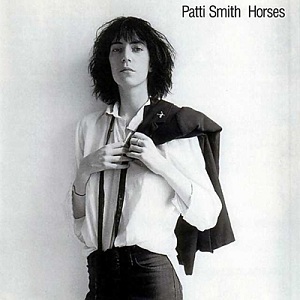
PattiSmithHorsesI was a DJ at Boston College’s radio station, WZBC, when Patti Smith’s album Horses was released on November 8th, 1975. I remember seeing the record in the “new releases” bin and being immediately drawn to it. Who was the androgynous woman in the black & white photo on the cover, wearing suspenders, with her coat hanging defiantly over her shoulder? (Of course at the time I wouldn’t have recognized the name of her photographer, Robert Mapplethorpe, even if it had been pointed out to me.)
I listened to that album, and listened again. I’m still listening to it and get a rush every time I hear it, though I acknowledge it is one of those love it or hate it records.

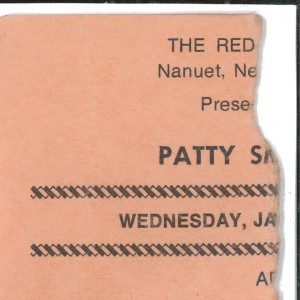
302590_2382373359995_6379699_nA few weeks later I was back home for Christmas break in Newburgh, NY and learned that Patti would be playing the Red Rail, a small club in Nanuet, NY. A few buddies and I made a white knuckled drive the 40 miles to Nanuet in a massive blizzard. My parents were pissed that I insisted on risking the drive through that terrible storm.

The concert was unbelievable. Patti was in rare form, improvising her beat poetry to the three chord garage punk of her backing band. She was high as a kite and kept complaining that “some dude poured orange juice in my hair backstage.” This YouTube video from 1976 will give you an idea of what it was like to see her that night:

This week’s song is “Break It Up” from that debut record.

It was co written by Tom Verlaine of Television and was supposedly inspired by a dream about visiting Jim Morrison’s grave. It starts with a gentle piano intro. When Verlaine’s guitar comes in at the chorus, it sounds like a ghost haunting a cemetery. I’ve always loved the effect on Patti’s voice when she literally beats her chest during the lyric:

Ice, it was shining.
I could feel my heart, it was melting.

This is emotional stuff. Patti sings as if possessed, her words finding their own rhythm within the steady beat of the music. By the end her wailing sounds like she’s speaking in tongues at a Pentecostal revival. The piano pounds away with the guitars and keeps building all the way through the fade.

I hope you enjoy getting reacquainted with this song as much as I have.

Until next week…


HANZ KRYPT: Real Remnants

Hanz Krypt (or HANZ KRYPT) is rockremnants.com.

These guys had big ambitions in the mid 80s, and snagged the lead vocalist from Vermin. The future was written.

Things didn’t work out that way. They’ve posted their elpee on YouTube and it isn’t totally outlandish to call them the American Black Sabbath. That’s how good they sound.

Here’s their YouTube bio:

The band Hanz Krypt was formed in 1984 by bass player Mark Hayes and guitarist Phil Pedritti along with Larry Farkus on guitar. They were soon joined by vocalist Vincent Farrentino who left the band Vermin to join Hanz Krypt. Hanz Krypt has been called the American Black Sabbath. Although they do have a doom and gloom sound, they really sound like no one else.
The band performed throughout Southern California opening for such major acts as Foghat, Robin Trower, and Slayer. Along the way built a strong following and were friends with Metallica, Slayer, and Saint Vitus. Now 20 years later the band has reunited with all original members. The band is set to record a new CD and tour throughout the world. Hanz Krypt look forward to a very exciting new year please check us on Facebook and Youtube.

On the other hand, their most popular song, Rainbow Goblins, isn’t a hit by any means. And the sound of their album isn’t that good. On the other other hand, it sounds pretty rockin’. And I love the stills that make up the video.

The better story here is that a band of rockers, in 1984-1986, find themselves 30 years later, commenting on YouTube about all the hot new stuff they’re going to release. Bring it on!

I don’t mention this to mock their commitment, though objectively it is probably misguided, but to celebrate their sound and embrace of the rock. I love finding a band like Hanz Krypt, a band with history and a big sound, then learning more about those who love them and their sound.

More live video please, Mr. Hanz.


Afternoon Snack: For Lemmy, Knopfler, and all Guitar Players Everywhere

I started looking for this video the day Lemmy left us, with the intent of posting it as my little tribute to the guy.

When I looked on YouTube, I could not find it (apparently the skit was on a BBC series and the posting was a copyright violation) so I had to scrounge.

The video really speaks for itself and, it is way funny and cool (and must have been a blast to do).

http://www.liveleak.com/view?i=7e3_1375973597


Song of the Week – Travelin’ Shoes, Elvin Bishop

IGNORED OBSCURED RESTORED

Back in the early 70s the Macon, Georgia based Capricorn Records was the home to the country’s best Southern rock bands. The kings of Phil Walden’s label were the Allman Brothers, but it was also the label for The Marshall Tucker Band, The Outlaws, Wet Willie, Grinderswitch and Cowboy. Country bluesman Elvin Bishop joined their roster for his fourth album, Let It Flow (1974).

The best song on Let It Flow was the 7+ minute “Travelin’ Shoes”, today’s SotW.

On “Travelin’ Shoes” Bishop makes use of the twin lead guitar style that was the Allman’s trademark.

The album’s liner notes credit a who’s who of rock stars — Dickey Betts (Allman Brothers), Toy Caldwell (Marshall Tucker), Charlie Daniels, and Sly Stone! – but doesn’t specify who played on which cuts. It has to be Betts playing that second lead guitar on “Travelin’ Shoes” but I can’t discern if any of those others also play on it.

Some of you may recognize Bishop from his 60s work with The Butterfield Blues Band and his collaboration with Michael Bloomfield/Al Kooper, when he was steeped in traditional blues. Others may be more familiar with his #3 commercial hit “Fooled Around and Fell in Love” (1976). “Travelin’ Shoes” finds him covering the territory somewhere smack in between.

Enjoy… until next week.

Patti Smith, M Train and Radar Love

(click the image to go to the book’s Amazon page)

This is a lovely book, a meditation on creation and loss, a travelogue that takes us on pilgrimages around the world and through Patti Smith’s mind, and an oblique and moving portrait, in the shadows mostly, of Fred Sonic Smith, her mourned late husband.

I came to Smith sharing many of her enthusiasms. I read Burroughs and Ginsberg and Rimbaud in high school, and Sylvia Plath and Genet in college. I loved Jackson Pollock and Diego Rivera and Frida Kahlo, too, before I encountered Smith, though perhaps not as much as Smith has. But I’m sure that’s the connection I made when I heard Horses for the first time, in a book/record store in San Francisco. It was so moving and the sense of this thing happening in New York back then so strong, that I immediately began plotting a way back east.

Which is to say, this book is written for me. It isn’t a music book, barely qualifies as autobiography in more than the sketchiest way. It has lots of funny details, many about cups of coffee, and floats many helpful ideas about connection and community and personal commitment to art, to people, to neighbors, that should resonate for any reader who wades in. But these thoughts come in a poetic, digressive way, the result of a series of trips she makes, not chronologically, to maintain her connections with her spirits around the world.

Fred Sonic Smith, Patti Smith tells us, was a baseball fan. He’d been scouted by his beloved Tigers as a shortstop. “He had a great arm,” she says, “but chose to use it as a guitarist, yet his love for the game never diminished.”

She and Fred bought a decrepit boat with the intent to fix it up, Fred loved boats, and they would sit on it listening to the Tigers games, she with a thermos of coffee, he with a six pack of Budweiser. If there was a rain delay, she notes, they would listen to Coltrane, but if the game were rained out they would switch to Beethoven. Huh?

Baseball writing is not Patti Smith’s forte and the sequence ends with her misspelling Denny McLain’s name, but all credit to her for trying.

There is a great scene in which, because she’s in Reykjavik, she arranges to photograph the chess table used during the 1972 Bobby Fischer/Boris Spassky match. She then receives a call from Fischer’s bodyguard on Fischer’s behalf. He would like to meet at midnight. At first they spar, he insults her, she insults him back, but by they end they’re drunk and singing Buddy Holly songs together like old comrades. (I almost spelled Fischer’s name wrong.)

There’s a lovely scene I wanted to quote in whole, just because it gives such a good sense of this book’s charms, but apparently I didn’t dogear the page and I can’t find it. The scene is simple. The Smiths go on holiday, maybe to the Upper Peninsula, and stay in a cabin. In the cabin they find a record player, open the lid and there is a record on the turntable. It is the only record they have, so they spend their holiday playing a whole lotta Radar Love. Must have been the offseason.