Iowa Caucus, Politicians, The Boss and Seeing Clearly

I was streaming KTKE on my way to the links the other morning and Bruce Springsteen’s fantastic Brilliant Disguise  came streaming through the car radio, allowing me to sing my ass off along with the Boss, finishing just as I pulled into the Buchanan Fields parking lot.

No question, Bruce sticks largely to his working class roots and experience when composing lyrics, and he is indeed a strong songwriter with respect to words, meter, and rhyme.

Springsteen’s Darkness on the Edge of Town LP made our initial Top 60, and still is my favorite album by Bruce, but Brilliant Disguise, and Out in the Streets (from The River) are my two favorite songs by the artist.

Brilliant Disguise, which riffs of the early days of Rock’n’Roll in two nice little homages, is really a great tune about relationships, honesty, how we present ourselves to others, and most important, how we see others and how they see us.

The Boss implores a lover’s confusion about barriers for two choruses asking “tell me what I see, when I look in your eyes?” but concludes his last chorus turning the tables asking “tell me who you see when you look in my eyes?”

Brilliant Disguise riffs  in its nod to the beat of The Drifters’ Save the Last Dance for Me, and then as the words complete, makes reference to Lou Christie’s The Gypsy Cried, both tunes from 1962.

Anyway, just before latest Republican debate and the Donald Trump travelling sideshow, days before the Iowa Caucus, well, let the words of the Boss ring in the back of our minds.

Lauryn Hill, Lost Ones

Everytime I hear news about Guantanamo I think about the song Guantanamera, which Lauryn Hill’s sings on a Fugee’s elpee.

But when I think about Lauryn Hill I think of this song, the first track (apart from the silly skit tracks–whose idea was that?) on her great album (if you get rid of the skit tracks, which you can do) The Miseducation of Lauryn Hill.

I also think about taking my daughter to the Brooklyn Museum when she was three or so, to a show about rock ‘n’ roll, and she toddled through the exhibit and hugged Fugee Wyclef Jean’s Fender, which caused some serious grief among the guards. Hey, it’s their jobs and rightfully so. To this day she has not hugged another guitar in a museum, but she’s started to work out the chords on our electric.

Rediscovering Supershit

Was putting together my playing wish list for the new forming band I’m in last night. Honestly, I’m pretty excited. Two guitars – Gibson/Marshall, good singer too (not me).

Realized how long it had been since I spun the Supershit 666 EP, so I stopped in my tracks and did it. Retains the title of best piece of recorded music ever. And, consequently, it must be the most underrated piece of recorded music ever, because I never see it mentioned – anywhere. I’ll bet 99.99999999 percent of the music world doesn’t even know it exists. This has to play at my funeral after-party as my last statement to the world. (Am I full of shit or what? Glenn Frey and Don Henley have nothing on me.)

Take a listen to this original song by The Rods. The first Rods album is supposedly an underrated classic in and of itself. Never got it, because what I sample sounds a little too 80s for my liking.

Now take a listen to the Supershit cover. They run it over like a snowplow burying Peter Kreutzer’s car after a Brooklyn blizzard (quite the colorful writer, I am).

The “slight” change to the opening lyric line says it all:

Stranger In My Own Home Town

Some years ago I stumbled across a great album called Poet of the Blues, by a songwriter/singer named Percy Mayfield.

Mayfield should be most famous as the writer of the massive Ray Charles hit song, “Hit the Road Jack,” but that song isn’t on Poet of the Blues. Charles signed him to Tangerine Records, where he wrote other hits for Ray, and this song, which was made a hit by Elvis Presley in 1970, on his Back in Memphis elpee.

I didn’t know about this song until today, since it also is not on Poet of the Blues, and I have to say that if I’d only heard the Presley version I would probably wouldn’t have wondered about who wrote the song. It sounds like one of those big star blues jams, fun and all, but without a signature.

But signature is what Percy Mayfield had, always, and especially when he sang. Here’s his version of Stranger in My Own Home Town, which is deeply satisfying, but makes me want to hear Jerry Lee Lewis’s version, too.


Song of the Week – Run, Boy, Run, Longbranch Pennywhistle

IGNORED OBSCURED RESTORED

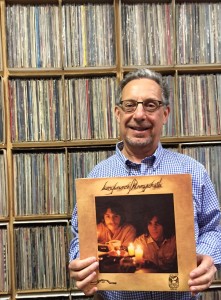
lb photoFirst it was Bowie, then Glenn Frey of Eagles. I have to admit, Eagles weren’t my favorite band. There were times that they rocked out and I could relate, but their soft rock ditties like “Peaceful Easy Feeling” and “Best of My Love” just don’t do it for me.

But Frey’s passing allows me the opportunity to pay him tribute by posting about another group he was in – the duo Longbranch Pennywhistle. The self-titled album has been long out of print so it is the second installment of my “Rare Record Series.”

Longbranch Pennywhistle
was released in 1969 on the independent Amos label and was the work of Frey and his longtime friend and collaborator, John David (JD) Souther. In fact, they teamed up to write several of Eagles big hits including the aforementioned “Best of My Love”, “New Kid in Town”, “Victim of Love” and “Heartache Tonight.”

SotW is “Run, Boy, Run.” It was chosen because it was written by Frey and reminds me of my favorite Eagles song, “Already Gone”, which was sung by Frey (although written by Jack Tempchin and Robb Strandlund) and contains some of his best ripping guitar solos.

On “Run, Boy, Run” (and “Already Gone”) you can hear some of that working class rock and roll style that Frey must have learned growing up in Detroit and playing with Bob Seger (guitar and vocals on “Ramblin’ Gamblin’ Man”). The song/album also doesn’t suffer from the musical backing they get from session players including James Burton, Larry Knechtel, Jim Gordon, Ry Cooder, and Doug Kershaw. Not a shabby group.

Enjoy… until next week.

Rubble Kings: a movie

Gene and I lived in New York in the late 70s, and I can say I was shaped by the decay and civil breakdown of that time. Ford to City Drop Dead made loyalists of us all. I’m reading Garth Risk Hallberg’s massive novel, City on Fire, which takes place in New York in 1977. So far–I’m only 250 pages in–the punk scene is his focus, but in those years, in the Bronx, another Do It Yourself movement was taking shape. Today we call it Hip Hop.

This bit about a movie called Rubble Kings makes the case that the gang summit in The Warriors was a real event, and the peace that followed (in the real world) is what created the culture that helped Hip Hop grow.

I don’t know about that history, I was downtown, but what I do know is that the music coming out of the South Bronx was as captivating as that percolating in the East Village. Here’s a trailer for the movie Rubble Kings, which surely looks like its worth a peak.

Los Punks, a trailer

Los Punks, We Are All We Have is a film about the punk rock scene in the Hispanic communities of East and South LA.

No judgement on the music, I haven’t heard it yet, but what interests me is the language of community and shared support for the outcasts, which turned out to be a serious message of the original punks (though I’m pretty sure none of them set out to promote that). But it happened. (Maybe in the second wave, and the one after that.)